
Last updated November 15, 2026
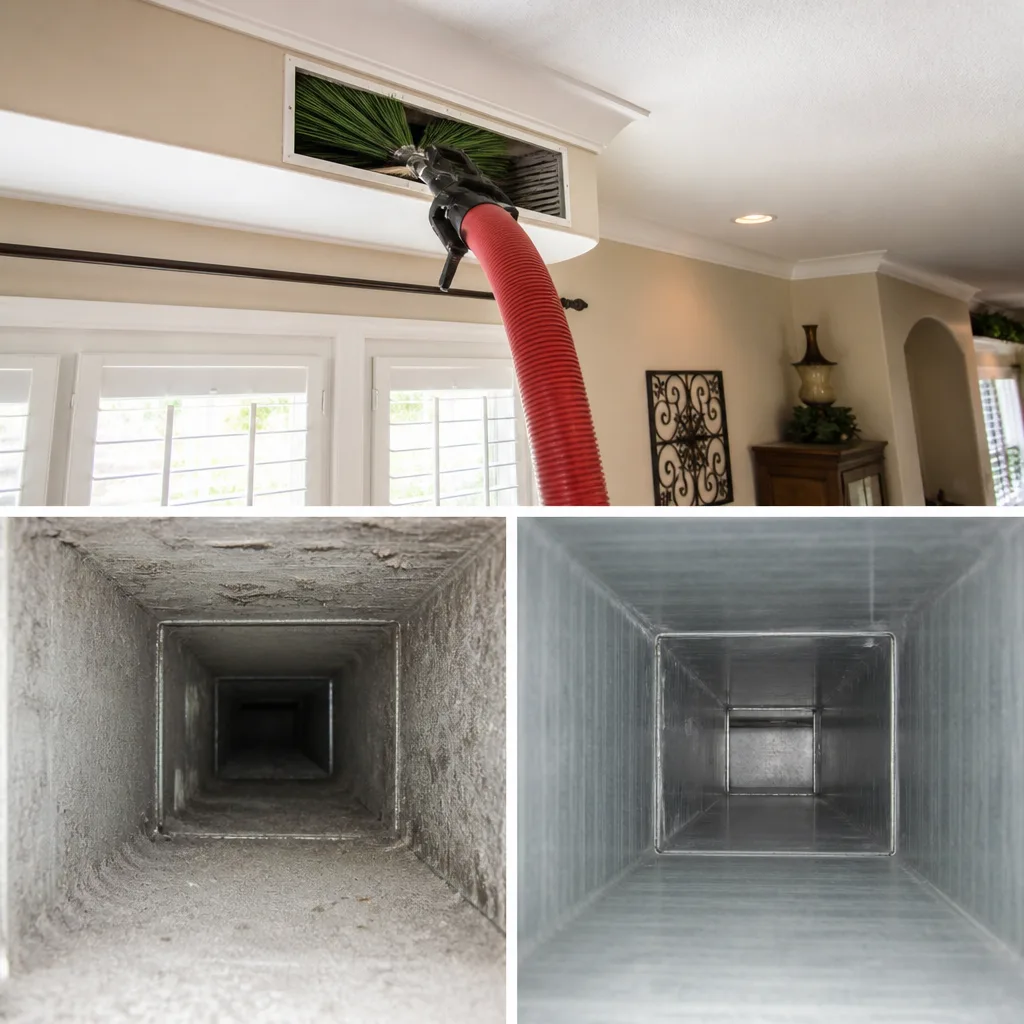 Whole-home duct cleaning
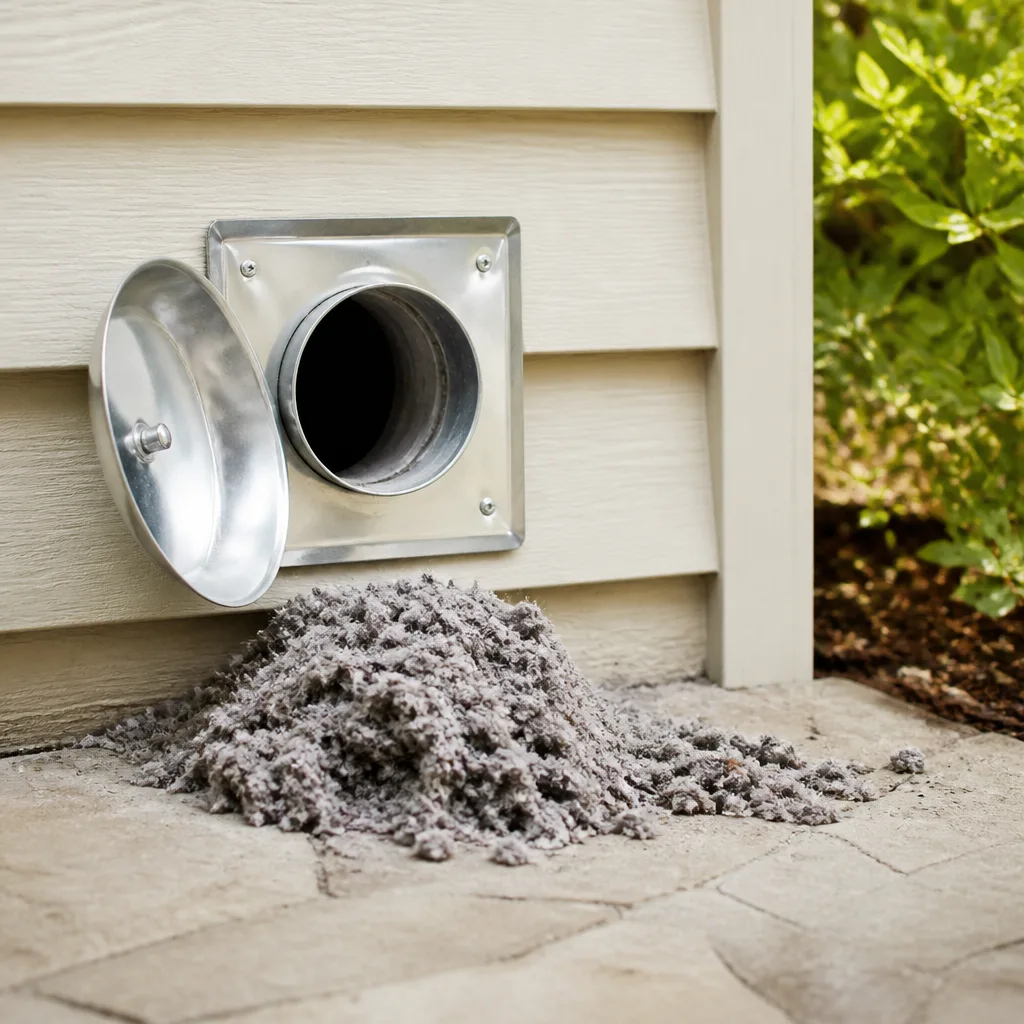 Dryer vent cleaning
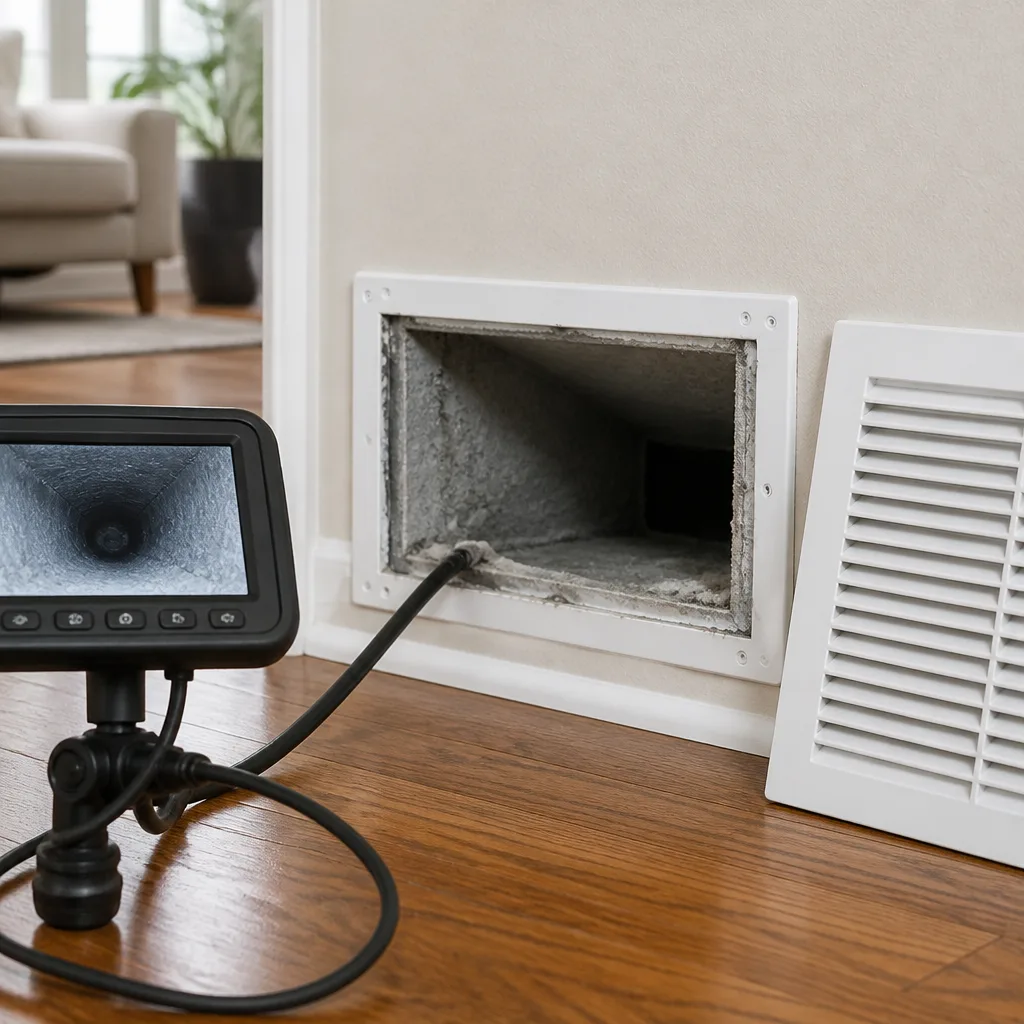 Camera inspection
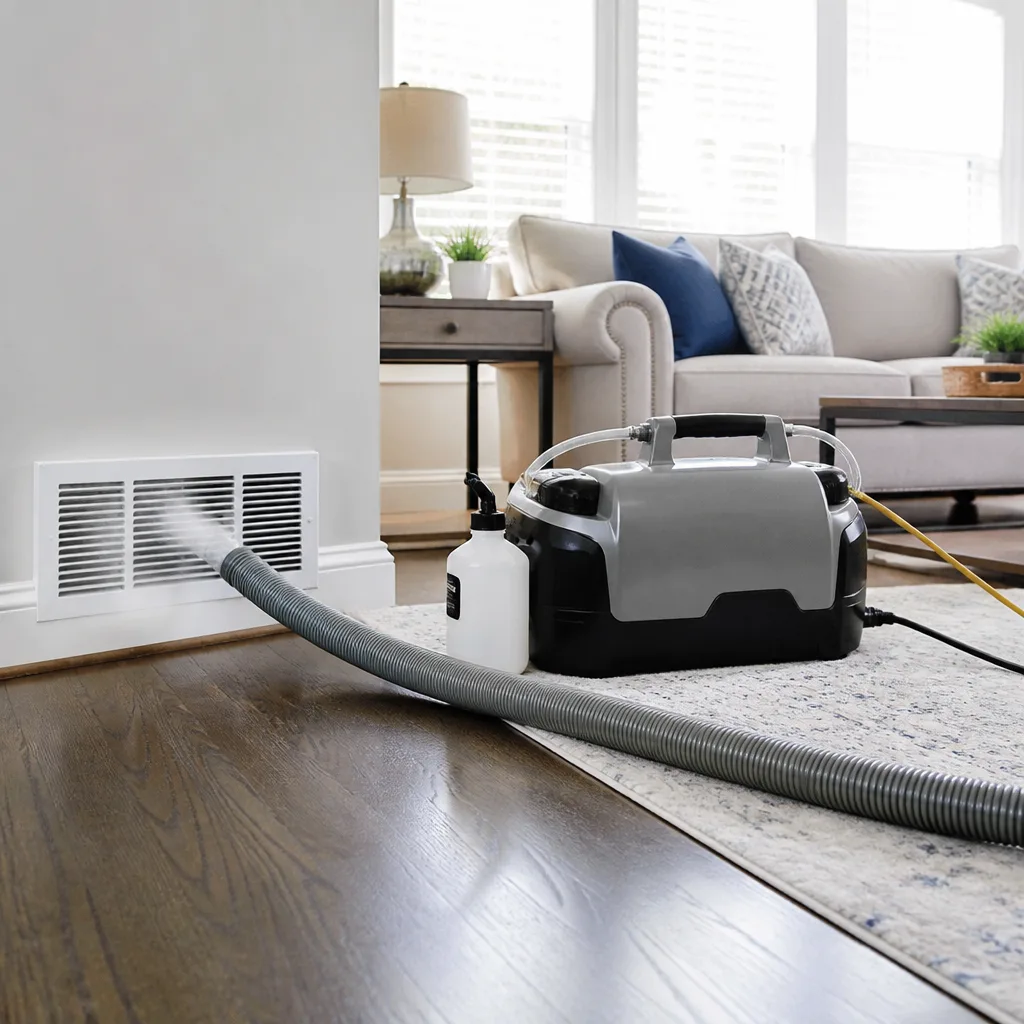 Sanitizing & deodorizing
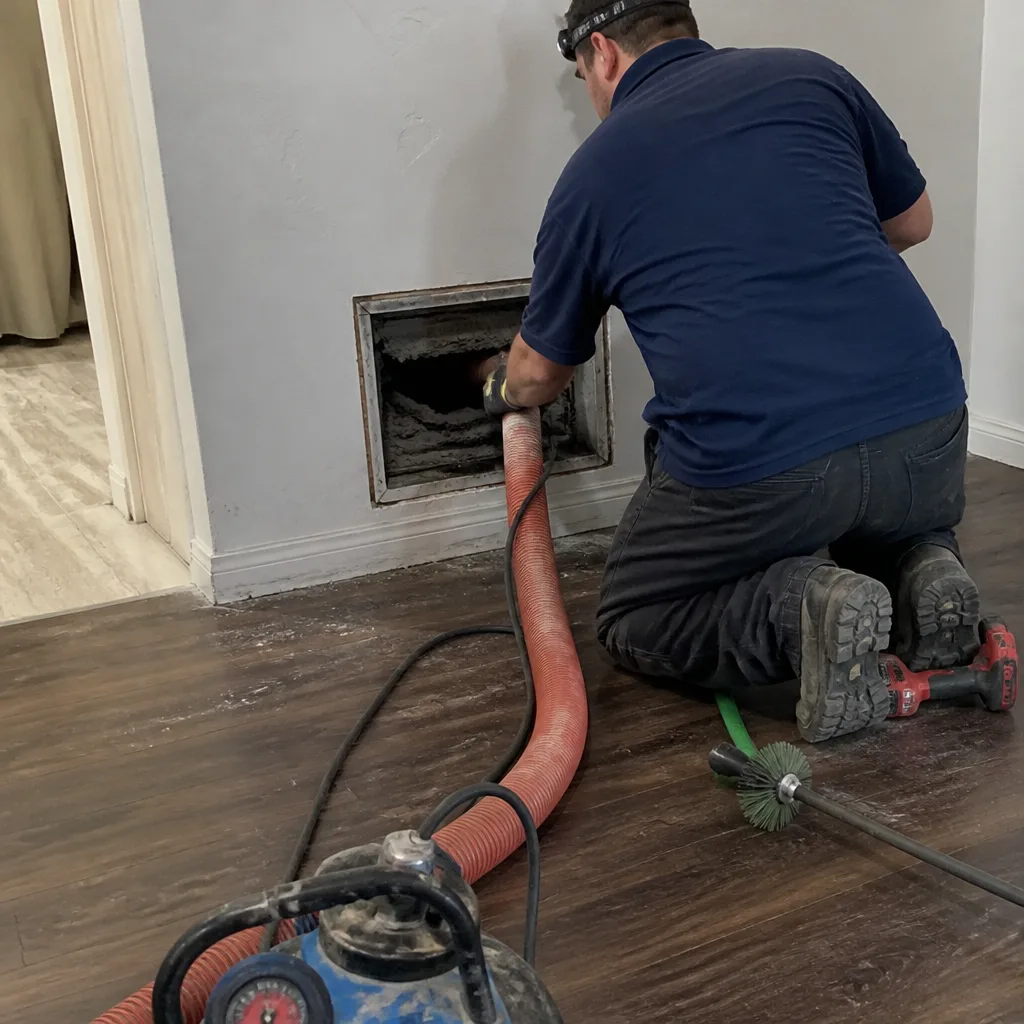
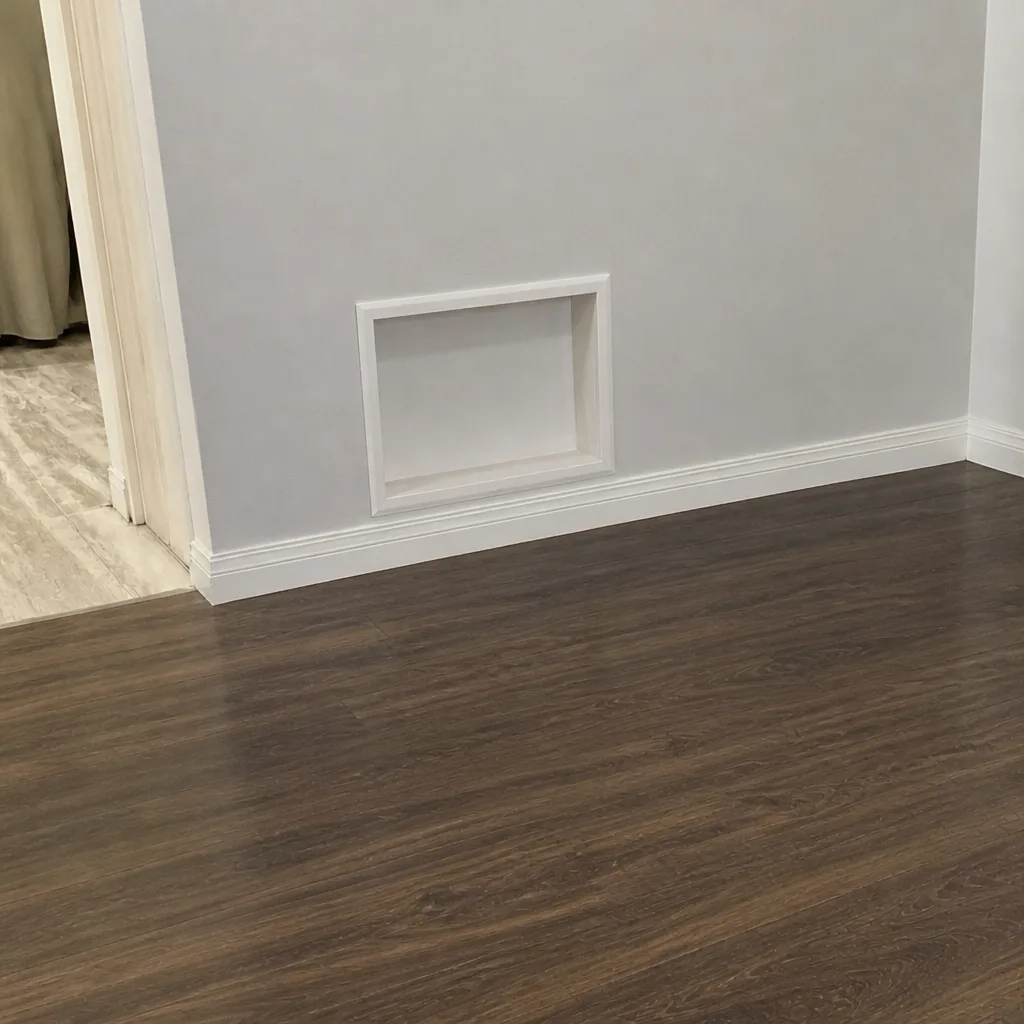
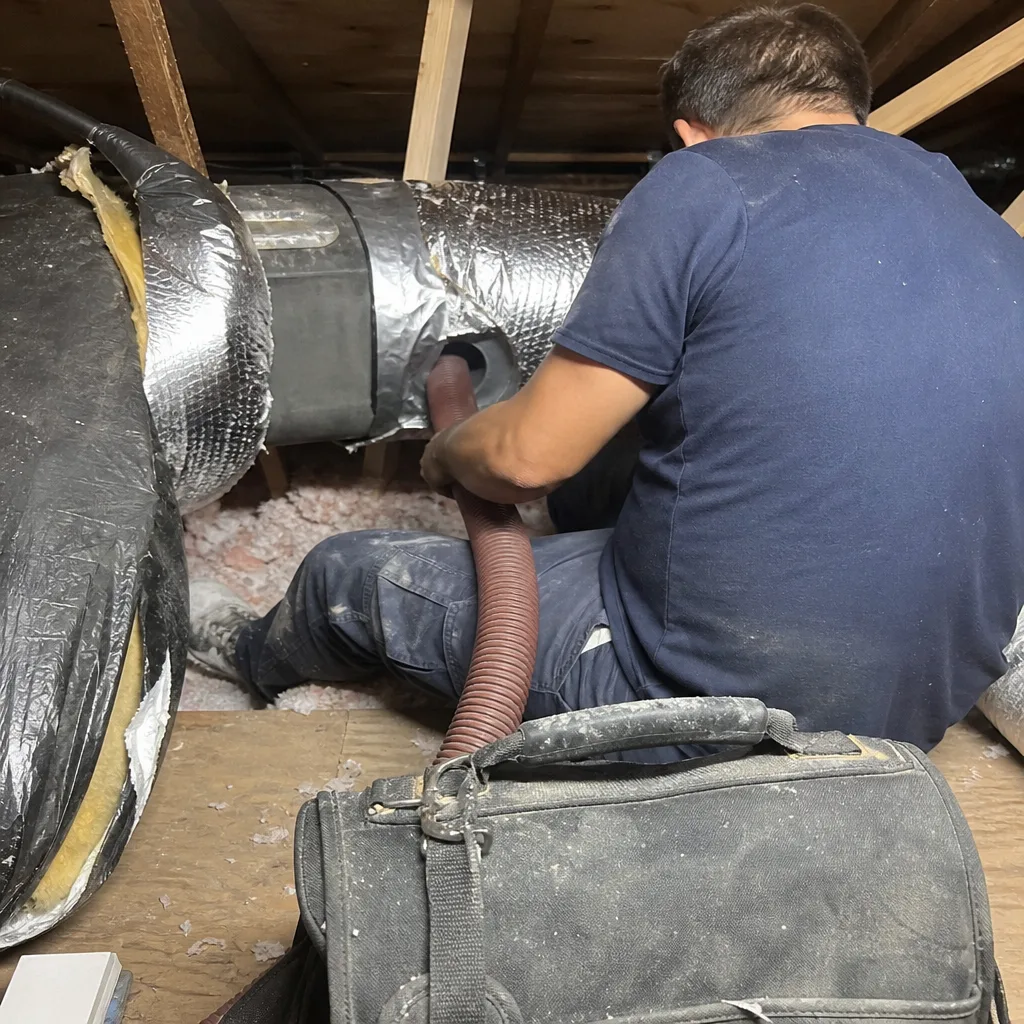
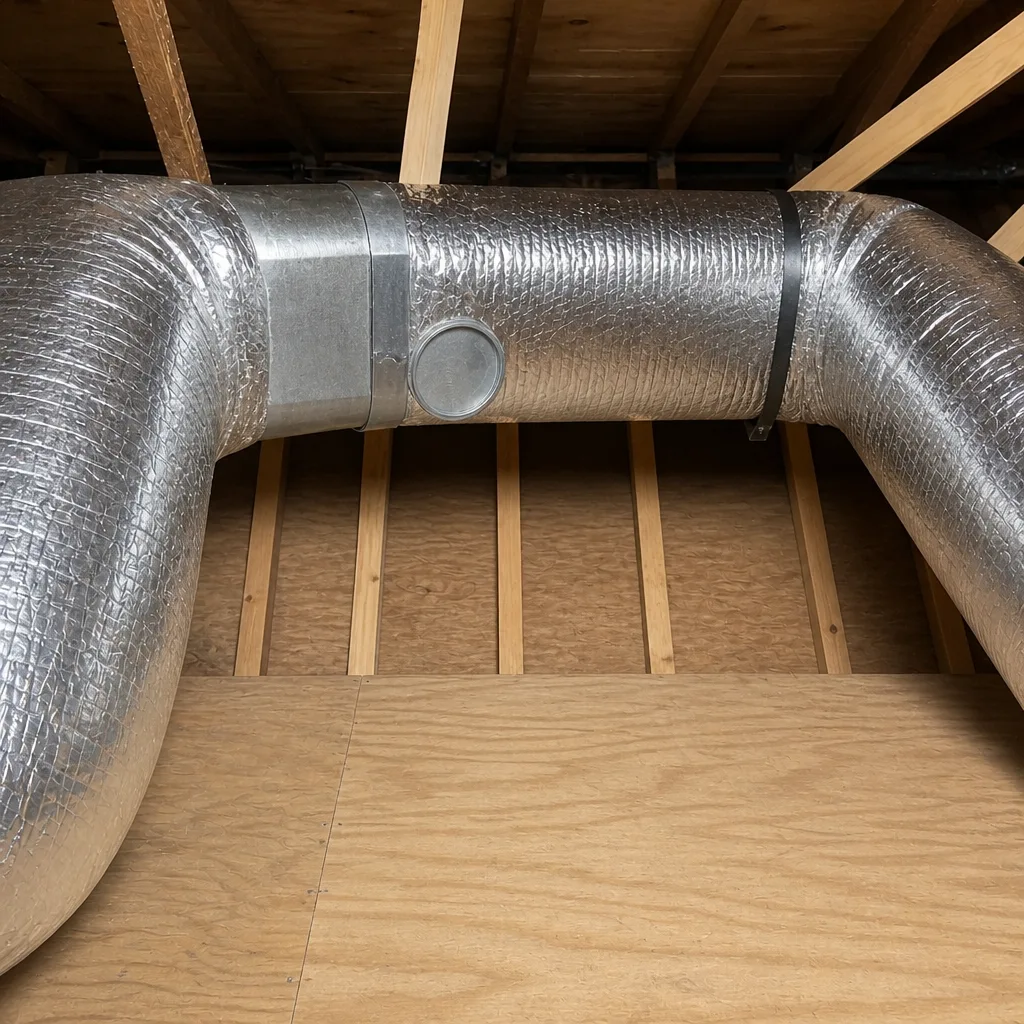
Whole-system duct and dryer vent check with before-and-after photos - you see exactly what came out of your vents
That "$99 whole-house special" is a bait ad - the real number appears once they are in your hallway, or the "clean" is a shop-vac at the register. We photograph the inside of your ducts before and after instead.
Air Duct Cleaning Maintenance Schedule: What to Do and When
The industry-standard “every three to five years” recommendation wasn’t written for a St. Petersburg home. It was built for a climate-controlled house in a temperate region, one that runs its heating and cooling maybe half the year and never spends a summer at 90 degrees with humidity that never drops below muggy. St. Petersburg homes run their air handlers most of the year, and that changes everything about how fast ducts load up with dust, debris, and biological growth. A fixed calendar interval ignores the actual variables that drive contamination: pets, renovation dust, allergy sufferers in the household, and the subtropical humidity cycle itself. In this guide, we’ll show you how to build a maintenance schedule around your specific home instead of a generic number someone pulled out of thin air, and we’ll explain the St. Petersburg timing that matters more than any single interval.
Quick Answer
There’s no universal schedule that fits every home. A better rule: most St. Petersburg homes need professional duct cleaning every three to five years as a baseline, but that interval shrinks significantly with pets, recent renovation, allergy or asthma sufferers, or an older duct system. Time the cleaning between late dry season and early hurricane season, roughly March through June, before humidity peaks. Then maintain the system between cleanings with filter checks, register wiping, and humidity monitoring.
Styles & brands we work with
- Whole-home duct cleaning
- Dryer vent cleaning
- Camera inspection
- Sanitizing & deodorizing
Table of Contents
- Why the Standard Cleaning Interval Falls Short
- The Variables That Set Your Real Interval
- St. Petersburg Timing: The March to June Window
- What to Do Between Professional Cleanings
- Reading Your Utility Bill as a Maintenance Signal
- The Post-Cleaning Documentation Checklist
- Common Mistakes to Avoid
- When to Call a Professional
Why the Standard Cleaning Interval Falls Short
Walk into any big-box store or scan any home maintenance blog and you’ll see the same number repeated: clean your ducts every three to five years. That figure circulates so widely it’s treated as fact. It isn’t. It’s a rough average that assumes a house with moderate dust, moderate climate, and moderate use of its HVAC system. Most St. Petersburg homes don’t fit that profile.
The problem is that duct contamination doesn’t happen at a fixed rate. It happens at a rate that’s a function of what’s introduced into the air, how long the system runs, and the conditions inside the ductwork when it isn’t running. Here in St. Petersburg, air handlers often run nine or ten months of the year. That’s far more air moving through the same square footage of ductwork than a house up north that runs its system seasonally. More air movement means more dust carried in, more debris deposited on duct walls, and more strain on the filtration system.
Then there’s humidity. In a hot, humid climate, duct interiors are dark, enclosed spaces, and when moisture gets involved, that dark space becomes an ideal habitat for biological growth. So the “three to five years” rule isn’t wrong so much as it’s incomplete. It gives you a starting point, not a schedule. The real schedule is what we help homeowners in St. Petersburg build from their specific situation. Anyone who tells you a fixed number without asking about your home is selling a package, not a maintenance plan.
The Variables That Set Your Real Interval
Think of the three-to-five-year baseline as a starting number, then adjust it based on what’s actually happening in your home. Each of the variables below is independent, and they stack. A home with two dogs and a recent renovation isn’t just a “pet home” or a “renovation home” – it’s both, and the interval shrinks accordingly.
Pets
Pets add dander, hair, and tracked-in soil to the indoor air stream. Homes with one or more shedding pets typically should move toward the shorter end of the baseline. Homes with multiple long-haired pets, or pets that spend time outdoors, belong at the shorter end of that end.
Smoking
Indoor smoking deposits residue that ordinary dusting can’t address, and that residue settles into duct surfaces over time. A household with indoor smoking warrants a shorter service interval and a more involved cleaning approach. This is one of the few variables where we’d recommend erring aggressively rather than conservatively.
Recent Renovation
Drywall dust, sawdust, insulation particles, and construction debris are pulled into the return system and settle throughout the ductwork during and after a renovation. A professional cleaning shortly after construction wrap-up is the right move, then begin your normal interval from that clean baseline. Skipping the post-renovation clean means building your schedule on top of a system that’s already loaded.
Allergy and Asthma Sufferers
If someone in the home has allergies, asthma, or another respiratory sensitivity, the acceptable level of duct contamination drops. Move toward the shorter interval, and prioritize filtration upgrades alongside cleaning. If your filtration system is a Honeywell or Aprilaire whole-home unit, its performance depends on the ductwork behind it being reasonably clean.
Home and System Age
Older duct systems, especially those built before duct sealing practices were common, tend to leak and pull in unconditioned air from attics or crawlspaces. That introduces additional particulate and, in humid climates, additional moisture. Older systems with known leaks should be inspected and repaired, not just cleaned on a schedule.
Here’s how the variables stack in practical terms:
- Baseline home, no pets, no health concerns, newer ducts: three to five years.
- One pet, otherwise baseline: roughly two to three years.
- Multiple pets or indoor smoking: every one to two years, or sooner if visible debris accumulates.
- Recent renovation: clean immediately after construction, then resume your normal interval.
- Allergy or asthma in the household: shorten your interval by roughly half.
- Older home with leaky ductwork: inspect and repair first, then set an interval based on the repaired system.
St. Petersburg Timing: The March to June Window
When you clean matters almost as much as how often. In St. Petersburg, the ideal service window is between the end of the dry season and the start of hurricane season, roughly March through June. Here’s the reasoning.
Late dry season means lower ambient humidity and less moisture in the air stream. Cleaning during this window removes accumulated dust and debris before the humid summer months push indoor humidity up and create the conditions in which biological growth thrives inside ductwork. If you clean in June, you’re starting the wet season with a clean, dry system. If you wait until September, you’ve spent the entire humid season running a system that was already loaded with debris and moisture-attracting particulate. Cleaning after the fact means cleaning what you could have prevented.
The same logic applies to the hurricane season shadow that hangs over St. Petersburg from roughly June through November. Deferred maintenance tends to pile up during storm season because attention goes elsewhere. Getting your cleaning done in the March to June gap means you’re not trying to schedule maintenance while you’re also tracking a storm. It’s a bit of advance planning that most homeowners never think about, and it makes a real difference in how the system runs through the summer.
If you’re unsure where your system stands, the honest answer is that a free estimate will tell you more than guessing. Our team here at Shield can look at the system and tell you whether the timing is right or whether you can wait. That’s the whole point of building a schedule from variables rather than averages. For homeowners ready to book, air duct cleaning in the March to June window is the smartest scheduling decision you’ll make all year.
What to Do Between Professional Cleanings
A clean system stays cleaner with simple upkeep. These are the habits that make the biggest difference between professional service intervals, and none of them require special tools.
Filter Check Intervals
Check your filter monthly. Replace a standard one-inch filter every one to three months depending on what’s in your home. Homes with pets or during high pollen season should replace closer to the one-month mark. Homes using a thicker media filter, including those in a Honeywell or Aprilaire cabinet, can typically go longer, but check the manufacturer’s stated interval and check it more often during heavy-use months. A clogged filter forces the system to work harder and reduces the amount of dust the filter can capture, which means more contamination reaches the ducts.
Register Wipe Schedule
Wipe supply registers and return grilles every two to three weeks. This isn’t cosmetic. Visible dust on registers signals that dust is moving through the system, and wiping it off gives you a rough gauge of how quickly it’s accumulating. If you find yourself wiping the same register every few days, that’s a sign to look deeper at the system.
Humidity Monitoring
Keep indoor relative humidity below 60%. Above roughly 60% RH, biological growth accelerates, and ductwork becomes a more favorable environment for it. A simple hygrometer costs little and tells you what you need to know. If your indoor humidity routinely sits above 60% during the summer, the fix usually involves your air conditioning running correctly and possibly a whole-home dehumidifier component, not just more cleaning. Duct cleaning removes contamination; moisture control prevents it from returning. Shield-standard clean means protecting what’s in the system, and that protection includes humidity control.
Regular Visual Checks
Check the accessible supply and return vents periodically for visible dust streaks, debris, or pest activity. Look at the outdoor condenser unit and clear any debris. If you notice a musty smell when the system starts, that’s a signal that moisture has gotten where it shouldn’t be and warrants an inspection.
Reading Your Utility Bill as a Maintenance Signal
Your utility bill is one of the most underused maintenance diagnostic tools available. When a duct system is compromised – loaded with debris, leaking at joints, or restricted by a failing component – the HVAC system has to work harder to deliver the same comfort. That extra work shows up as higher cooling costs, and it shows up before you notice anything else.
Here’s the signal to watch for: a 10% or greater increase in cooling costs without a corresponding change in utility rates, household occupancy, or thermostat settings. That’s a meaningful jump, and it’s measurable. If your summer bill climbs by that much and nothing about your usage changed, your duct system is one of the first places to check. Debris accumulation restricts airflow. Leaky ductwork in older systems loses conditioned air to attics and crawlspaces. Restricted airflow at the air handler forces the system to run longer. All three translate into higher bills.
To use this as a maintenance indicator, compare the same month year over year rather than month to month. Cooling costs naturally rise and fall with outdoor temperatures, so the comparison has to be seasonal. If your July bill this year is meaningfully higher than July last year with the same rates and the same household, and you haven’t changed your thermostat habits, start looking at the duct system. Combine this with a visual check and you have a decent early-warning system. The bill won’t tell you exactly what’s wrong, but it will tell you something is off, and that’s enough to justify a professional inspection.
The Post-Cleaning Documentation Checklist
A credible duct cleaning company leaves you with something you can use next time: documentation of what the system looked like before and after, and what was actually done. Without it, your next service cycle starts from guesswork. Here’s what to expect. If you’re looking at Shield Air Duct Cleaning, this is the standard we set for every job.
- Before-and-after photos of your own ducts. Photos of the actual ductwork in your home, not stock images. These establish a genuine baseline you can compare against in future years.
- A written summary of what was cleaned. Supply trunks, return trunks, registers, grilles, and any accessible components. A summary tells you exactly what was addressed so you know what wasn’t.
- The equipment and method used. A credible company will tell you what was used – a Rotobrush or Nikro system, and if containment was involved, an Abatement Technologies setup. When a company can’t tell you what equipment was run, that’s a signal worth noting.
- Any findings that affect the schedule. Leaky duct joints, disconnected sections, deteriorated insulation, moisture intrusion, or areas of heaved material should all be noted. Those findings may mean the system needs the air duct repair side of the service and not just a clean.
- Filter condition and filter recommendations. The filter’s condition at the time of service, and guidance on what replacement interval makes sense for your home.
- System condition at close. A short record of the system’s condition after the cleaning – this is your starting state for the next cycle, and a credible company will leave it documented without you having to ask.
Keep these materials. Over a couple of service cycles, they become a real maintenance record, and that record is worth far more than any single cleaning receipt.
Common Mistakes to Avoid
- Treating “every three to five years” as gospel. That number assumes a climate-controlled house in a moderate climate. A St. Petersburg home runs its system so much more of the year that the baseline is a starting point, not a plan. Build your schedule around your actual home, not the default.
- Cleaning at the wrong time of year. Cleaning in September means starts the wet season with a loaded system; cleaning in May means starting the wet season with a clean, dry one. The March to June window isn’t marketing – it’s the difference between prevention and remediation.
- Skipping the post-renovation clean. Construction dust from a renovation settles through the entire return system. Booking a cleaning right after the project finishes gives you a clean starting state and stops the dust from becoming a permanent deposit.
- Ignoring the utility bill signal. A 10% or greater jump in cooling costs without a rate change is a measurable indicator that the system is working harder than it should. If you see it and do nothing, you’ll pay for the delay in operating costs.
- Hiring on coupon price alone. A low teaser price often turns into a far larger invoice once the technician is on site. Look for a company that sets one flat price per system before the work starts, not a per-vent price that rewards upselling.
- Treating cleaning as a substitute for repair. If the ducts are compromised by leaks, disconnections, or deteriorated insulation, cleaning alone won’t fix the performance problem. The system needs repair, not just a clean.
- Cleaning once and never documenting. Without before-and-after photos and a written summary, you have no baseline for next cycle and no way to know whether the work was actually done. A credible company should leave documentation without being asked.
When to Call a Professional
Some situations need a professional rather than a filter change and a wipe-down. If you’re seeing visible dust or debris blow out of registers when the system starts, that’s a system loaded beyond what routine maintenance can address. If a musty smell appears when the air handler starts, moisture is present somewhere it shouldn’t be, and that warrants an inspection. If you’ve recently completed a renovation or moved into a home with unknown maintenance history, a professional inspection and cleaning establishes a clean baseline. If anyone in the home has allergies or asthma and the symptoms worsen indoors, duct condition is worth checking.
For dryer vents, there’s an additional fire-safety consideration worth taking seriously. Lint accumulation in the vent line is a fire risk, and cleaning it also restores efficiency that’s typically lost when the line clogs. We handle dryer vent cleaning in St. Petersburg and treat it as a fire-prevention service rather than a cleaning chore.
Here at Shield, our technicians have up to 12 years of experience, we use professional-grade equipment – Rotobrush, Nikro, and Abatement Technologies for containment work – and we set one flat price per system before work begins. Shield Air Duct Cleaning offers free estimates in St. Petersburg – call (855) 967-4983.
See the difference
 Before
 After
 Before
 After
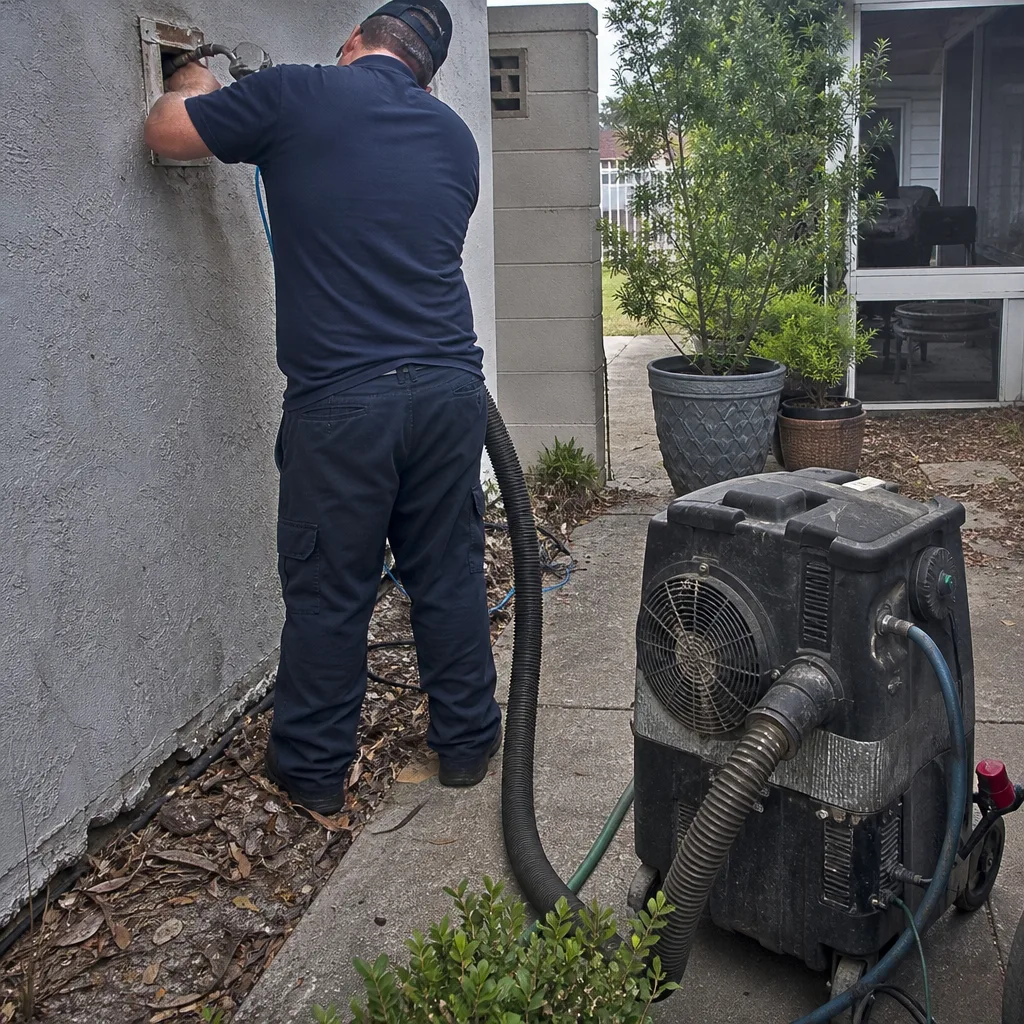 Before
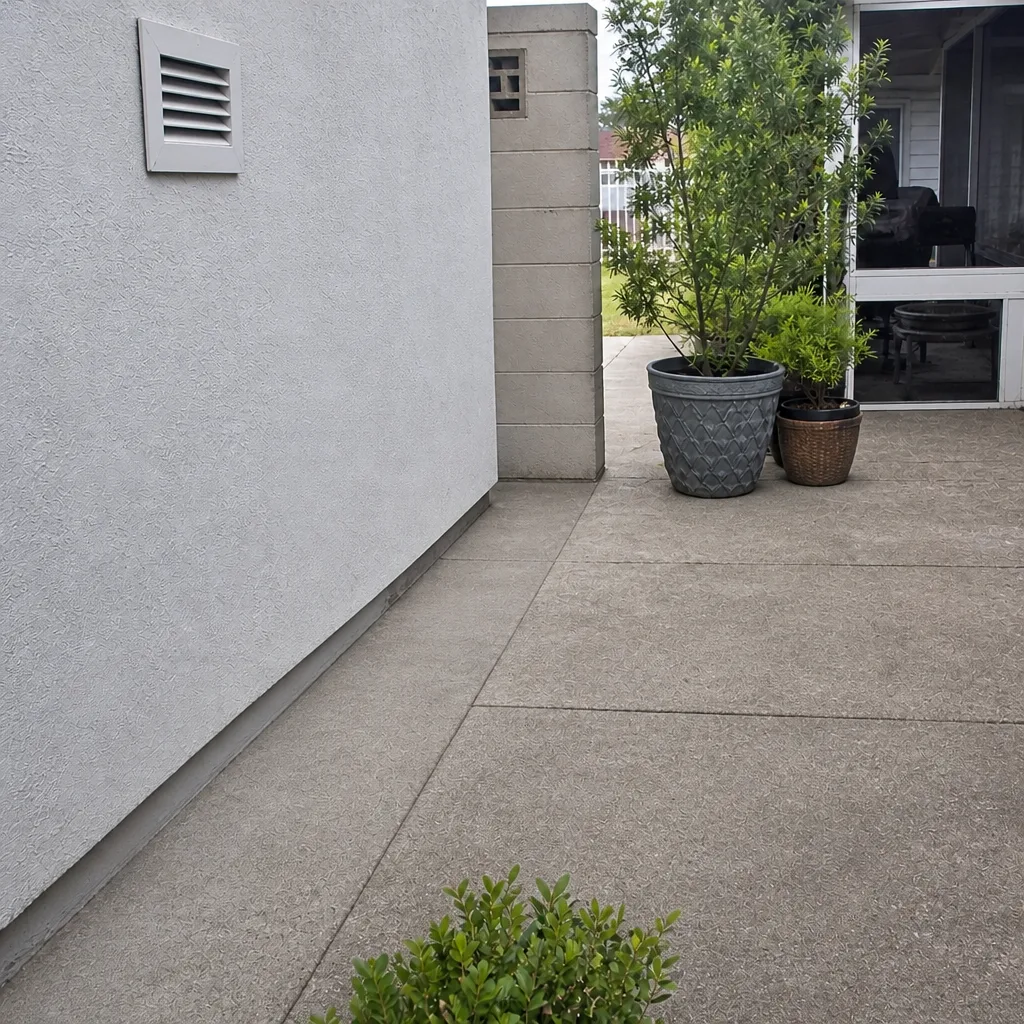 After
Frequently Asked Questions
Most St. Petersburg homes should plan on professional duct cleaning every three to five years as a baseline, but that interval shrinks with pets, recent renovation, allergy or asthma sufferers, or an older duct system. The combination of a long cooling season and humid air means St. Petersburg systems tend to need attention sooner than the generic interval suggests. Call (855) 967-4983 for an exact assessment of your system; estimates are free.
March through June falls between late dry season and the start of hurricane season, when ambient humidity is lower and the duct system can be cleaned and dry before the wet summer months arrive. Cleaning during this window removes accumulated debris and moisture-attracting particulate before biological growth conditions peak. Waiting until fall means spending the entire humid season running a system that was already loaded. Call (855) 967-4983 to book in that window.
Keep indoor relative humidity below 60%. Above roughly 60% RH, biological growth accelerates inside ductwork, and the system becomes a more favorable environment for it. A hygrometer gives you a read on this, and if your indoor humidity routinely sits above 60% during the summer, the fix is usually airflow and dehumidification, not more cleaning. Call (855) 967-4983 if you think moisture is already in the system.
A credible company leaves before-and-after photos of your own ducts, not stock imagery. It also leaves a written summary of what was cleaned, the equipment and method used, findings that affect your schedule, and the system condition at close. If a company can’t provide that documentation, you have a fair reason to ask why. Call (855) 967-4983 to schedule service with a company that provides it as standard.
Yes, provided nothing else has changed. A 10% or greater increase in cooling costs year over year without a rate change, occupancy change, or thermostat change is a measurable signal that the system is doing more work than it should be. Debris accumulation, leaky ductwork, and restricted airflow are all common causes. If you see that pattern, call (855) 967-4983 for a free estimate before the problem compounds.
We can assess both during the same visit, and cleaning plus air duct repair under one company means you’re not hiring a separate contractor for related work. Leaky or disconnected ductwork undermines the value of cleaning, so when we find repair issues we flag them in the same written summary. Call (855) 967-4983 to talk through what your system needs and get a free estimate.
The Bottom Line
Build your duct cleaning schedule from variables, not averages. The generic three-to-five-year interval is a starting point, but pets, renovation, allergy concerns, and home age all shift it, and in St. Petersburg the March to June window is when the timing counts most. Keep filters fresh, registers wiped, and humidity below 60% between professional cleanings. Watch your cooling costs year over year for a 10% or greater jump without a rate change, and demand before-and-after photos and a written summary after every service. Every job here at Shield is framed around protecting the air quality of the home, not just completing a line item. For a free estimate in St. Petersburg, call (855) 967-4983. We answer 24/7. Fast dispatch from 7am to 7pm, Sunday through Friday.
Written by the team at Shield Air Duct Cleaning.