
Last updated November 15, 2026
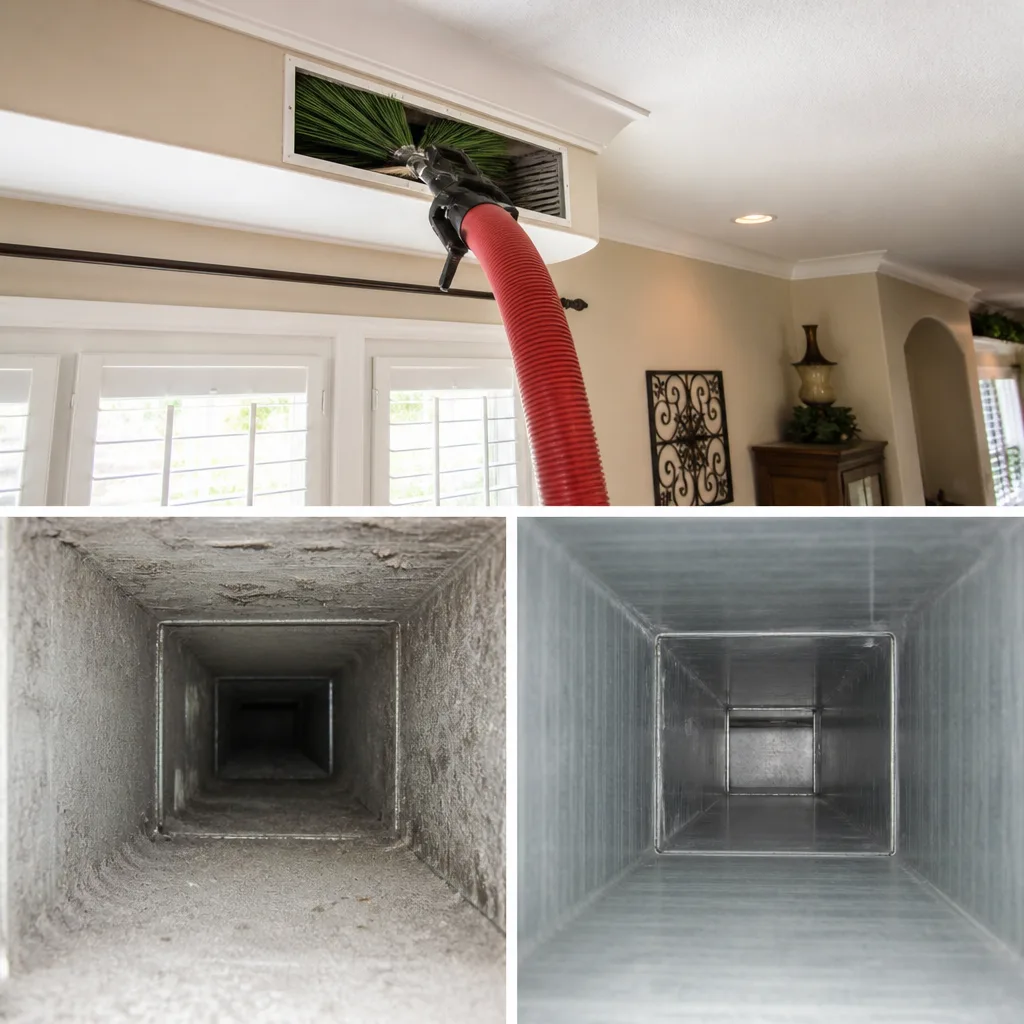 Whole-home duct cleaning
 Dryer vent cleaning
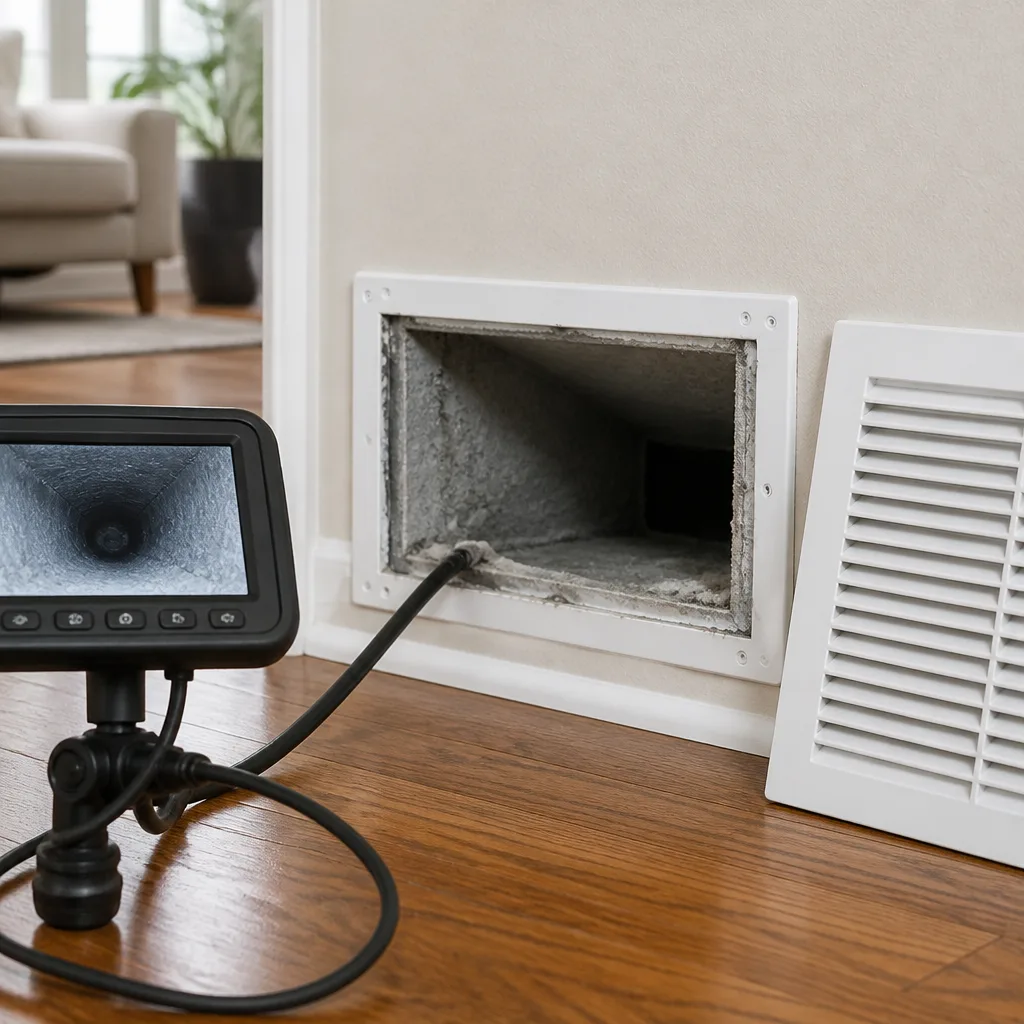 Camera inspection
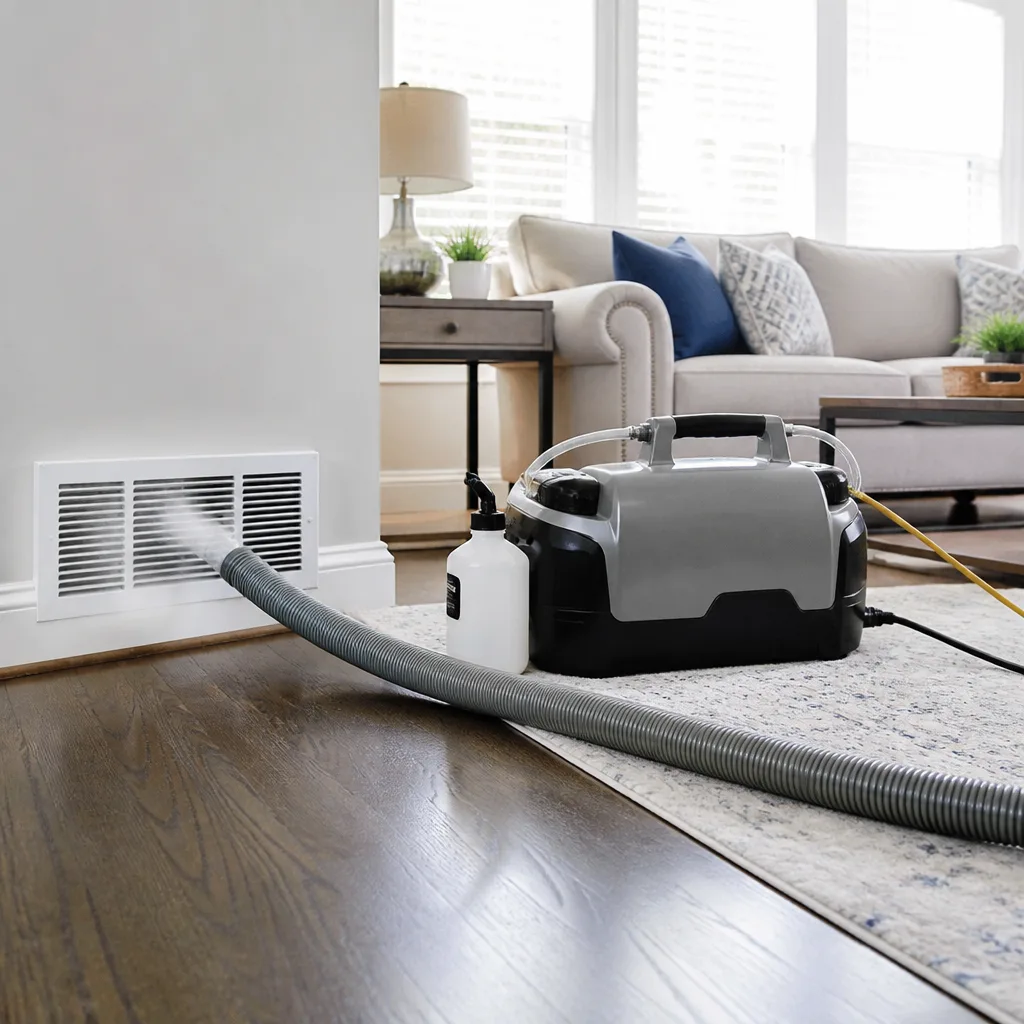 Sanitizing & deodorizing
Whole-system duct and dryer vent check with before-and-after photos - you see exactly what came out of your vents
That "$99 whole-house special" is a bait ad - the real number appears once they are in your hallway, or the "clean" is a shop-vac at the register. We photograph the inside of your ducts before and after instead.
Air Duct Cleaning Warning Signs: A St. Petersburg Homeowner’s Reference Guide
If you can see dust puffing out of your supply vents, the problem has already been building for months. By the time duct contamination becomes visible, it has usually spread through the entire system, settled into the insulation, and started recirculating through every room in the house. The warning signs that actually matter show up much earlier, and they’re pattern-based: a room that never quite cools, a smell you notice only when the air first kicks on, a filter that clogs faster than it used to. This guide walks through the subtle signals a St. Petersburg homeowner can learn to read, what each one suggests about the source, and when the evidence points to a professional assessment.
Quick Answer
The earliest warning signs of a compromised duct system in St. Petersburg are rarely visible dust or mold. They’re patterns: uneven cooling in specific rooms, musty or metallic odors at startup, worsening allergy symptoms in the mild winter months when windows stay closed, filters clogging faster than usual, and condensation that shows up in places it shouldn’t. Any one of those is a signal worth investigating. Two or more appearing together usually means the system needs professional evaluation, not another filter change.
Styles & brands we work with
- Whole-home duct cleaning
- Dryer vent cleaning
- Camera inspection
- Sanitizing & deodorizing
Table of Contents
- Uneven Room Cooling: A Duct Signal, Not Just an HVAC Sizing Problem
- Smell Profiles: What Musty, Metallic, and Burnt Odors Tell You
- Why Winter Allergy Symptoms Point to Recirculating Duct Contaminants
- Rapid Filter Clogging and What It Reveals About Upstream Duct Condition
- Normal Duct Sweating vs. Moisture Intrusion in St. Petersburg Humidity
- A Step-by-Step Homeowner’s Duct Inspection Walkthrough
- Why Equipment Matters: Professional-Grade Systems vs. Consumer Tools
- When a Warning Sign Crosses Into a Repair Call
Uneven Room Cooling: A Duct Signal, Not Just an HVAC Sizing Problem
A bedroom that stays three or four degrees warmer than the rest of the house is the single most common complaint we hear from homeowners in St. Petersburg, and it’s the sign most often misdiagnosed. The instinct is to blame the air conditioner’s size or the thermostat location. Sometimes that’s fair. But when one room is consistently cooler or warmer than the others across an entire cooling season, a restriction or contamination problem in the duct serving that room is a real candidate, and it’s rarely the first thing checked.
Duct systems are sized on paper. What actually reaches a room depends on the interior of the ductwork: whether the branch line is still fully connected, whether it’s been crushed by a renovation, whether a damper is stuck, or whether a buildup of debris has narrowed the effective pathway. A duct doesn’t have to be fully blocked to feel wrong. A partial restriction changes how much conditioned air the room receives, and that shows up as a temperature gap.
The pattern is what matters. Note the following:
- Which rooms run warm or cold, and whether the pattern is stable or shifts with the weather.
- Whether the gap closes when the system runs continuously versus cycling.
- Where the affected rooms sit relative to the air handler and the longest duct runs.
- Whether the airflow at the register feels weak compared to other rooms, using your hand, not a tool.
If a room has always been a problem, sizing or duct design is the likelier culprit. If a room that used to be fine has drifted warm over a season or two, that shift points toward something changing inside the duct system. In a St. Petersburg home, a duct restriction on a long run behind drywall or in the attic space is common, and it’s the kind of thing that gets worse quietly. Our technicians have up to 12 years of experience reading these patterns and can tell the difference between a sizing issue and a restriction once they’re on site.
Smell Profiles: What Musty, Metallic, and Burnt Odors Tell You
Odors are the most specific diagnostic a homeowner has access to, and most people ignore them because they’re intermittent. The smell you notice in the first thirty seconds after the system starts is the smell of the ductwork itself. Once air has been moving for a while, the nose stops registering it. That first-blast smell is the signal, and the type of odor narrows down the source considerably.
Musty
A musty, damp-earth smell at startup usually points to organic growth or standing moisture somewhere in the system. In St. Petersburg’s humidity, the interior of a duct run that stays cooler than the surrounding air is a natural condensation surface. Where condensation is persistent, the conditions favor biological growth on the duct lining or on the plenum surfaces. A musty smell near a specific register is a strong hint that the problem is in the run serving that room, not the whole system.
Metallic
A metallic or sharp, almost dusty-metal smell often comes from deteriorated interior duct insulation or from debris that has oxidized against galvanized sheet metal. It can also indicate a loose fitting or a section where the duct has separated and is pulling air from a wall cavity or attic space. When the smell is metallic, the question isn’t just “is the duct dirty” but “is the duct intact.”
Burnt or Electrical
A burnt or hot-plastic smell is never a duct-cleaning question. Shut the system off and have the air handler and any nearby electrical components inspected by a qualified HVAC technician. Duct contamination causes odor; electrical failures cause fires, and no cleaning scope should substitute for that diagnosis.
Write down when you notice each smell: at startup, only in one room, only after a rainstorm, only on hot afternoons. That pattern is worth more to a technician than a general description, and it shortens the assessment considerably.
Why Winter Allergy Symptoms Point to Recirculating Duct Contaminants
Here’s a counterintuitive pattern: in St. Petersburg, allergy complaints often get worse in the cooler months, not the warmer ones. The reason is behavioral. When temperatures drop into the comfortable range, windows get closed, and the air conditioner cycles far less than it does in July. The home becomes sealed, and the air that circulates through the house is largely air that has already passed through the ductwork, sometimes many times over.
During the cooling season, a running AC creates ongoing filtration and dilution. In the winter, that dilution drops off. If the ducts have accumulated dust, pollen that entered during spring, insulation particles, or biological growth, the winter months are when a homeowner notices the effect, because the indoor air is recirculating with less fresh-air exchange. Sneezing that starts an hour after waking, or allergy symptoms that follow the air handler’s schedule, is a pattern worth paying attention to.
What to watch for:
- Symptoms that correlate with the HVAC cycle. Do you feel worse shortly after the system starts, or in rooms that are farthest from the air handler?
- A shift in seasonal timing. If allergy seasons have started sooner and lasted longer than they used to, and windows are closed, the ducts are a candidate explanation.
- New occupants. A new baby or a recently purchased home changes how much you notice indoor air quality, and both are common triggers for wanting a duct assessment.
- Recent renovation. Drywall dust and construction debris settle in a duct system and recirculate for years if not removed.
None of this is a medical diagnosis, and we don’t present it as one. But in our experience, the annual winter allergy pattern is one of the strongest signals a homeowner has that the duct system deserves a look.
Rapid Filter Clogging and What It Reveals About Upstream Duct Condition
Filters are the cheapest diagnostic in your home. They’re also the one homeowners monitor least. A filter that used to last three months and now loads up in three weeks is telling you something specific: the dust reaching the filter is coming from upstream, and there’s more of it. That’s a duct condition signal, not a filter brand problem.
Filter life is set by how much particulate the airflow carries and how evenly the filter is being loaded. Two things change when ducts get compromised. First, the total volume of dust entering the return side increases. Second, airflow turbulence created by debris buildup in the return ducts stirs up more of what’s already settled, which means the filter sees more particulate per hour than it used to.
What rapid clogging suggests about where the problem is:
- Filter loads heavily on one side or in specific patches: a duct break, a disconnected joint, or a poorly sealed return near an attic or wall cavity is pulling unfiltered air from outside the conditioned space.
- Filter loads evenly but much faster: contamination throughout the return and trunk ductwork, or recent renovation that hasn’t been addressed.
- Filter looks fine but rooms are dusty: the filter isn’t catching what’s being distributed through the supply side, which can indicate debris in the supply trunk past the filter.
- Filter clogs and the system ices up or struggles: airflow restriction severe enough to affect the air handler, which needs prompt attention.
Track your filter changes for three months on a calendar. The rate of change is worth more than any single observation. If the rate has doubled or tripled, book an assessment before buying another round of filters. In St. Petersburg homes with long return runs through unconditioned attic space, this pattern shows up frequently, and it usually points to a return duct problem that’s cheaper to fix early than late.
Normal Duct Sweating vs. Moisture Intrusion in St. Petersburg Humidity
Duct sweating is normal here. Any duct carrying cooled air through warm, humid St. Petersburg air will form condensation on its outer surface, especially in attic and garage installations where the surrounding temperature and humidity are high. The condensation itself isn’t the problem. The question is whether the condensation is on the duct jacket, where it belongs, or inside the duct, where it doesn’t.
You can tell the two apart by pattern. Sweating on the outside of a properly insulated duct jacket is expected and typically dries when conditions shift. Moisture showing up on the wrong side of the equation, or water stains in unexpected places, is a warning sign that something in the system has breached its containment.
Compare the two:
- Normal external sweating: visible condensation on insulated duct runs in the attic or garage on high-humidity days, drying when humidity falls, no staining nearby.
- Moisture intrusion: water stains or a damp ceiling patch near a register or return, a musty smell that persists across multiple days, condensation appearing on a register face on days that don’t feel humid, or moisture pooling near the air handler even when it hasn’t rained.
- Interior duct condensation: persistent musty smell at the register with no visible external moisture, which can indicate that cool air inside the duct is meeting warm, unmixed air that shouldn’t be entering the system.
Interior duct moisture combined with Florida humidity is the setup for biological growth. If you find persistent interior moisture, or a musty smell that doesn’t improve after a filter change, the next step is a professional assessment rather than another round of guesswork. The same logic applies to dryer vent cleaning, where trapped humidity signals restricted airflow rather than tidiness.
A Step-by-Step Homeowner’s Duct Inspection Walkthrough
You can do a meaningful amount of inspection yourself with nothing more than a flashlight, a notebook, and an hour of attention. What you can’t do without professional equipment is look inside the duct runs themselves, but you can document what the system’s external signals are telling you. That documentation makes a professional assessment faster and more accurate.
Here’s how to walk your own house through a pattern check:
- Start at the filter. Write down the date it was installed, its condition when you checked it, and when you last changed it. Note whether it loads evenly or in patches.
- Do a room-by-room temperature and airflow pass. With the system running, hold your palm at each supply register and note which rooms feel strong, weak, or none. Write the pattern down. Note any register that pushes noticeably less air than its neighbors.
- Do the startup smell test. Turn the system off, wait thirty minutes, then turn it on and stand near a central register. Note the first smell you notice and which room you were in when the smell was strongest.
- Check around the air handler. Look for standing water, water stains, dust trails around the seams, or insulation that has pulled away where ducts connect to the plenum.
- Inspect visible registers and returns. Look for dark staining around the register face, visible dust trails that fan out from the register into the ceiling or wall, or rust spots on the metal.
- Move through the attic or garage duct runs with a flashlight. Note any visibly disconnected sections, sagging flex duct, torn outer jackets, or sections resting directly on the deck or structure rather than supported properly. Look but do not touch. Duct connections under attic insulation can be fragile and are not a place to work without professional help.
- Check whether allergy symptoms line up. Note if symptoms correlate with the HVAC cycle, with winter, or with a specific room. Patterns matter more than any single observation.
Bring that notebook to the assessment. A list of which rooms are weak and which days the smell is strongest is worth more than a general memory of “the house feels dusty.” If you’d like to understand what a full air duct cleaning visit involves before the assessment, that page walks through the scope.
Why Equipment Matters: Professional-Grade Systems vs. Consumer Tools
Most homeowner duct-cleaning attempts fall short for the same reason: the equipment can dislodge dust but can’t contain it. A shop vac pulls loose debris from the register face and moves it into the room, which is not a solution. A consumer-grade machine generates swirl inside the duct and leaves the settled layer behind. The result is the same contamination, slightly rearranged.
Professional duct cleaning works because it combines three capabilities:
- Mechanical agitation that actually removes the bonded layer from the duct walls rather than vacuuming the loose surface layer above it.
- High-volume extraction that pulls the dislodged contamination into a contained system rather than blowing it into the room.
- Containment, including negative-air and HEPA-level filtration where contamination control matters, so what’s removed stays removed.
That’s why we use Rotobrush and Nikro professional duct-cleaning systems rather than consumer vacuums, and why for jobs with heavier contamination we deploy Abatement Technologies equipment for HEPA-level containment. Our technicians are also familiar with Honeywell and Aprilaire filtration and indoor air quality systems, which matters because duct condition, filter selection, and airflow design are one conversation, not three.
Equipment also affects what can be done when the ducts are damaged rather than dirty. A duct that has pulled loose at a joint or torn its outer jacket isn’t going to be fixed by cleaning. That’s why we also handle air duct repair: identifying a breach and sealing it is a different job than cleaning it, and both usually belong to the same visit when the evidence is found together.
When a Warning Sign Crosses Into a Repair Call
Some warning signs are “watch this.” Others are “call now.” The ones that move into the call-now column are the ones where the risk is growing, not stable: persistent interior moisture, a burnt or electrical smell, a musty smell that doesn’t respond to a filter change, a filter loading so fast that airflow is visibly restricted, or visible disconnection or tear in an attic duct run. Any of those moves the question from “is cleaning due” to “is there repair work to do this visit.”
If you’re in St. Petersburg and any of those patterns apply, Shield Air Duct Cleaning offers free estimates. Using the checklist above, note the specific rooms, smells, and patterns you’ve observed. That’s the information we work from, along with an on-site look at the system itself, and it lets us tell you honestly whether cleaning, repair, or a different answer is the right next step. Call (855) 967-4983. We answer 24/7. Fast dispatch from 7am to 7pm, Sunday through Friday.
Common Mistakes to Avoid
- Mistaking a room temperature gap for an AC sizing issue every time. Sizing matters, but if the gap appeared after the room was fine, the change points to the duct. Rule out the duct before replacing equipment.
- Buying a new filter every time the house feels dusty. A filter that keeps clogging fast is a duct signal. Replacing it in a loop keeps the symptom at bay without addressing the source.
- Ignoring a smell because it goes away. The first-startup smell is the smell of the ductwork itself. It goes away because your nose adapts, not because the source has stopped.
- Attributing winter allergies to the season and leaving it there. When windows are closed and the AC cycles less, the ducts are carrying more of the indoor air. That correlation is a signal worth investigating.
- Treating all condensation as a humidity nuisance. External sweating on well-insulated runs is normal. Interior moisture or water stains near registers are not, and they get worse the longer they sit in St. Petersburg humidity.
- Hiring a duct cleaner who arrives with a shop vac and a promise. If the equipment doesn’t include Shield Air Duct Cleaning‘s professional-grade approach to agitation and containment, ask what the truck actually carries before the visit is booked.
- Skipping the repair question entirely. A loose joint, torn jacket, or disconnected run needs a repair scope, not just cleaning. Seek out a company that does both so a fix gets made the same visit rather than deferred.
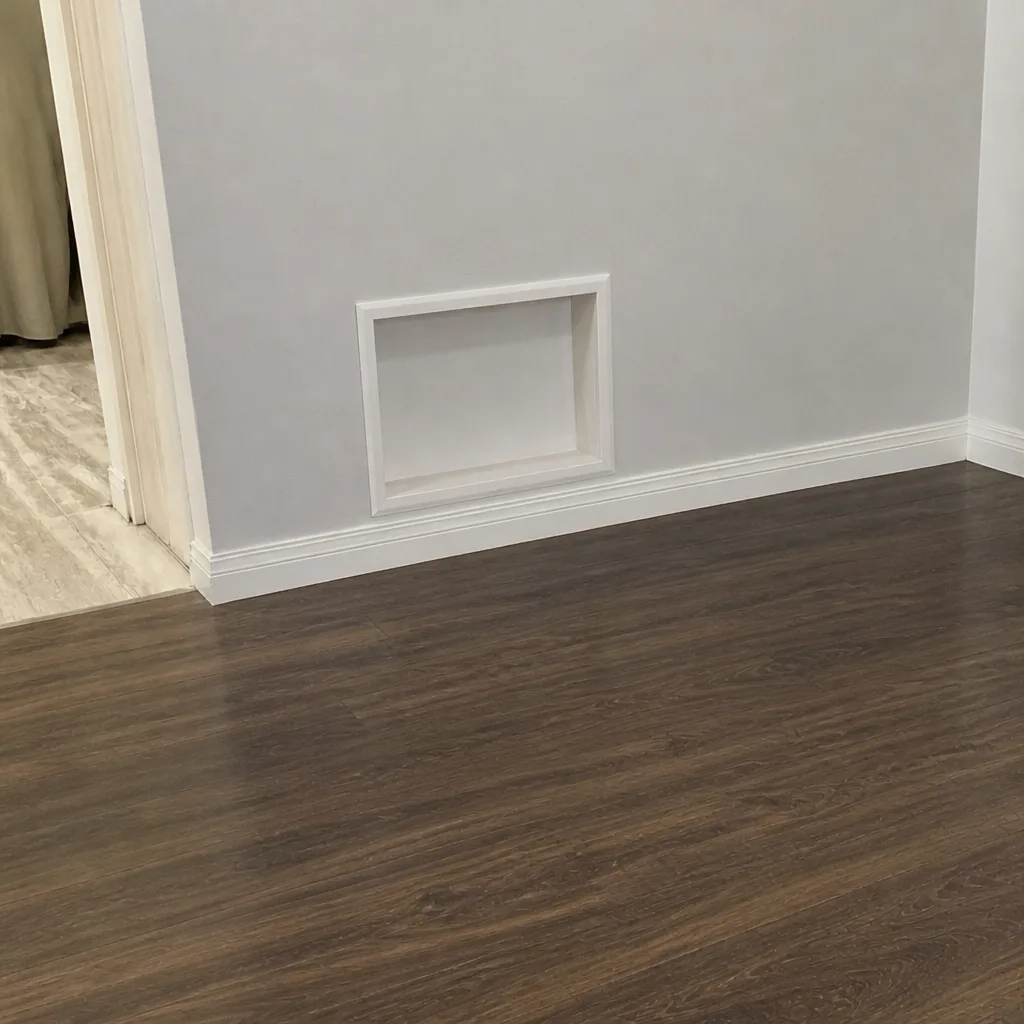
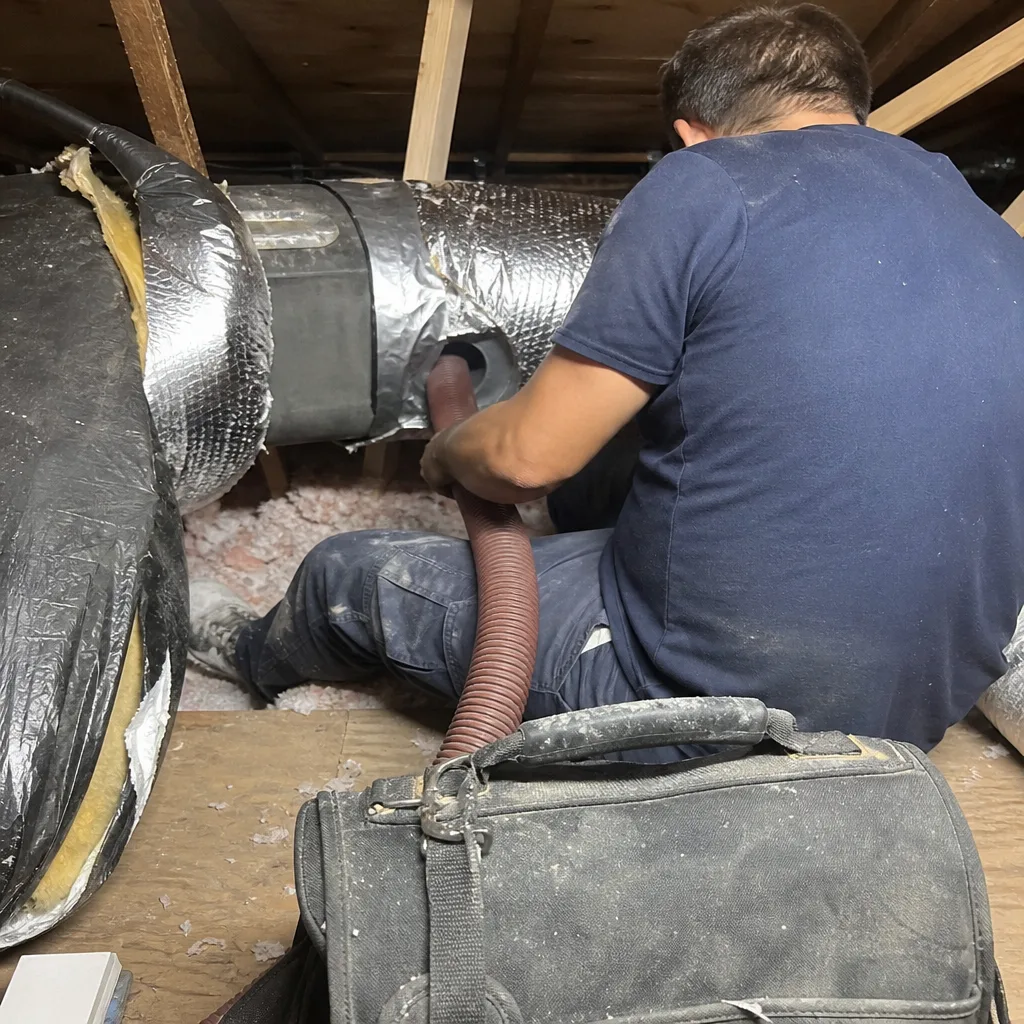
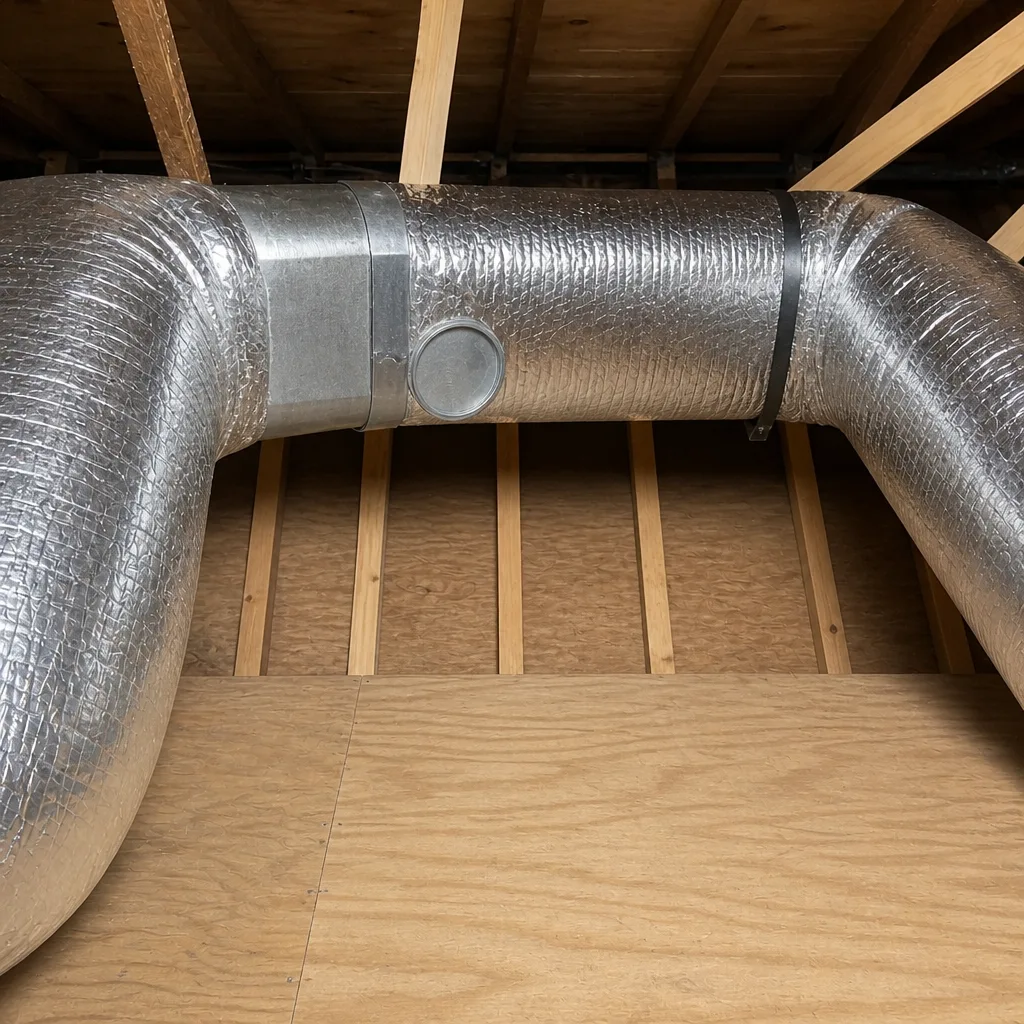
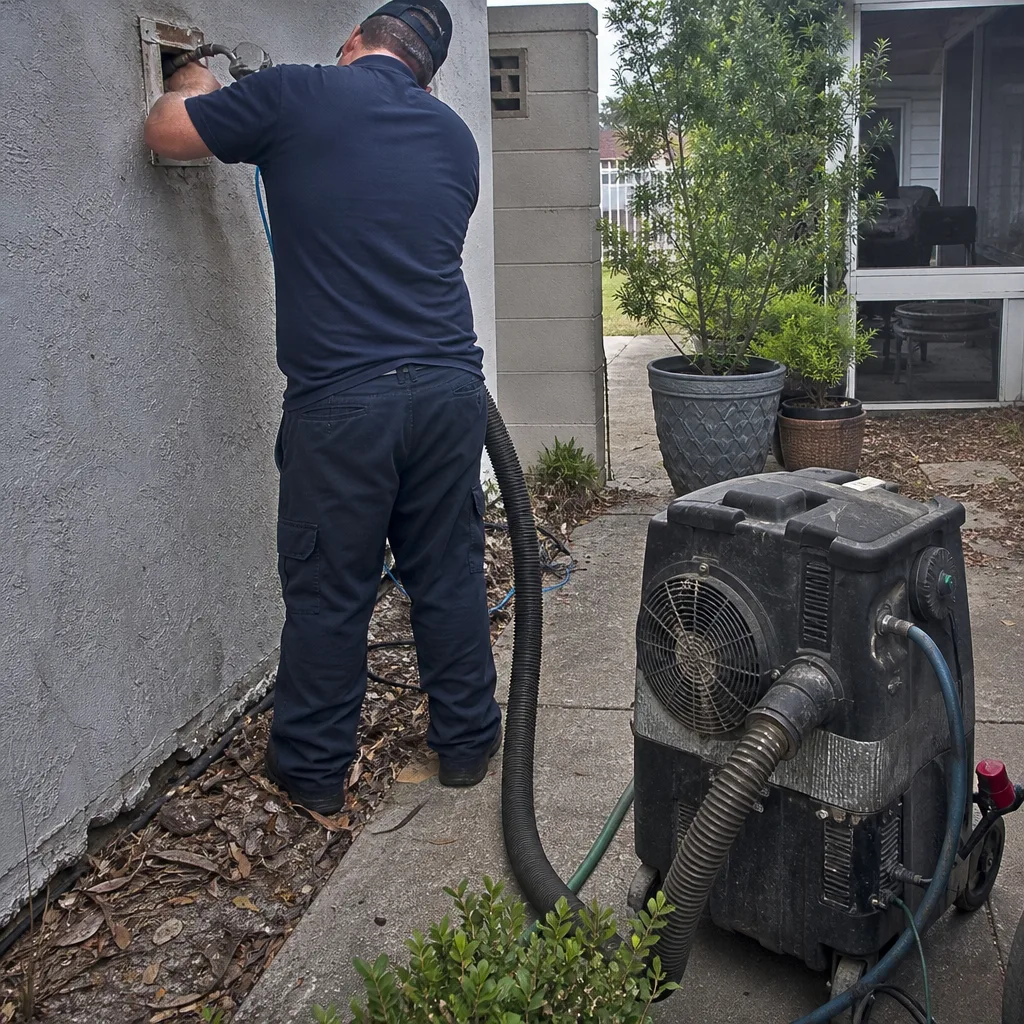
See the difference
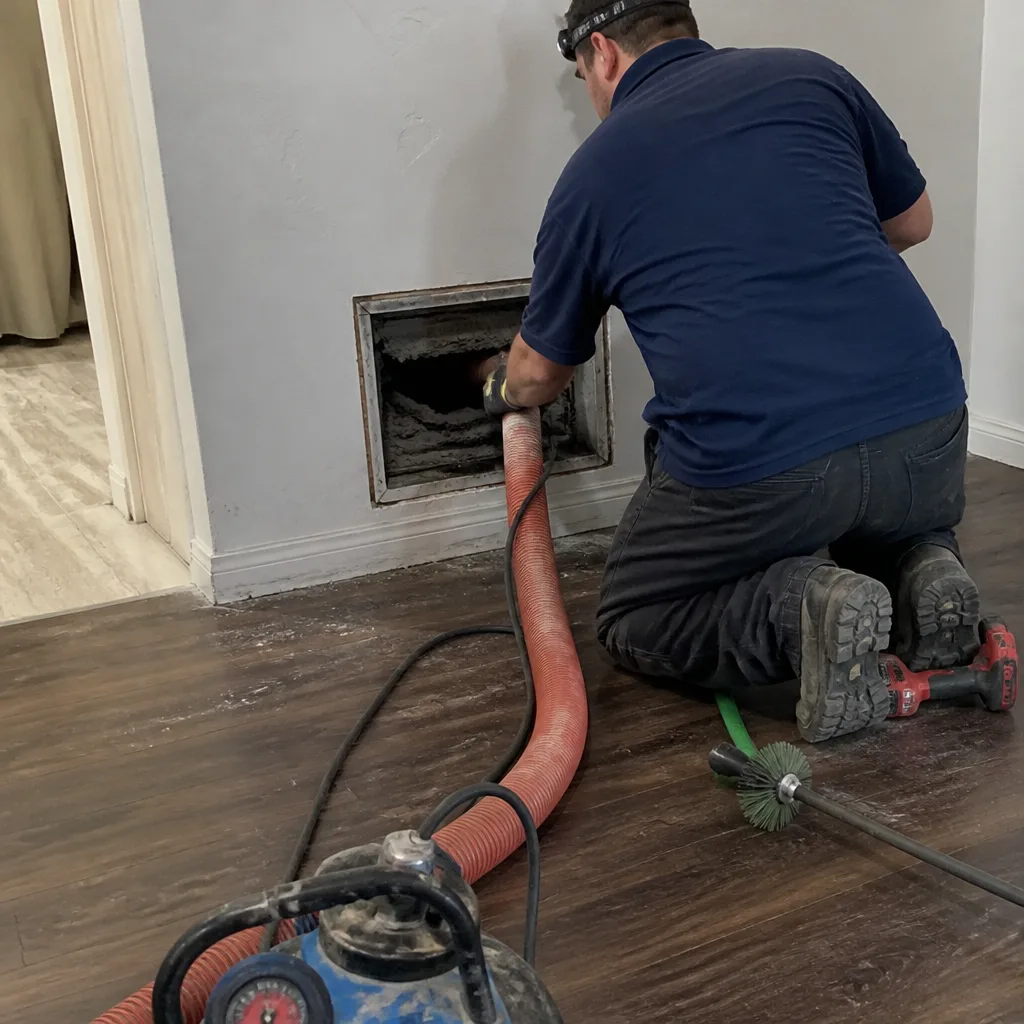 Before
 After
 Before
 After
 Before
 After
When to Call a Professional
Call for a professional assessment when two or more of the pattern signals appear together, when any single signal has gotten worse over a season, or when the evidence points to a breach rather than a cleanliness issue. A persistent musty smell, water stains near a register, visible duct disconnection, or filters that have doubled their clog rate are all reasons to bring a trained eye to the system. Homeowner inspection finds the pattern; professional inspection with proper equipment confirms the source and the fix. Shield Air Duct Cleaning offers free estimates in St. Petersburg for St. Petersburg homeowners. Call (855) 967-4983. We answer 24/7. Fast dispatch from 7am to 7pm, Sunday through Friday.
Frequently Asked Questions
The earliest reliable signal is a startup odor you notice in the first thirty seconds after the system comes on, especially a musty or metallic smell, combined with a room that’s drifted warmer than the rest of the house over a season or two. Visible dust at the register means contamination has been building for months. If either pattern is present, call (855) 967-4983 for an exact quote. Estimates are free.
Because winter is when St. Petersburg homes seal up. Windows close, the air conditioner cycles less, and the air recirculates through the ducts with less fresh-air exchange. If contaminants have accumulated, the winter pattern is when you’ll notice the effect most. Call (855) 967-4983 to book an assessment. Estimates are free.
External condensation on insulated duct runs in an attic or garage is normal in St. Petersburg humidity and usually dries as conditions shift. Interior moisture, water stains near a register, or a musty smell that persists regardless of humidity is not normal and points to a breach or containment failure. Call (855) 967-4983 for an exact quote on an inspection. Estimates are free.
Filter life varies by system, filter rating, and household, but the useful number is the change in rate. A filter that used to load up in three months and now loads up in three weeks is telling you that upstream conditions have changed. Track your changes for three months on a calendar and compare. Call (855) 967-4983 to book an assessment. Estimates are free.
Sometimes, and it depends on why the room is uneven. Cleaning removes the debris restriction that can narrow airflow. Air duct repair addresses a duct that has pulled loose, torn its jacket, or been crushed. What cleaning can’t do is fix a duct system that was undersized or poorly routed when it was installed. A proper assessment distinguishes the three. Call (855) 967-4983 for an exact quote. Estimates are free.
A cleaning-only company can remove contamination but usually leaves a breach for someone else to fix. A company that handles both cleaning and repair can identify a compromised duct during the assessment and address it in the same scope. That’s why we run air duct cleaning and air duct repair under one name. Call (855) 967-4983 for an exact quote. Estimates are free.
There’s no universal number, and anyone quoting one without inspecting the system isn’t giving you a real answer. The honest triggers are evidence-based: visible contamination at a register, persistent odor, a filter clogging faster than before, recent renovation, or a property change like a new baby or a recently purchased home. Use the pattern checklist in this guide as your timing guide. Call (855) 967-4983 when two or more signals appear together. Estimates are free.
The Bottom Line
The warning signs that matter most for a St. Petersburg homeowner are the ones you can only read as a pattern. Uneven room temperatures, startup odors grouped by type, winter allergy cycles that follow the air handler, filters clogging faster than before, and condensation that shows up on the wrong side of the duct jacket are all quieter than visible dust, and all more useful. One signal is worth noting. Two together means the system deserves an assessment. If the evidence points to breach rather than buildup, cleaning alone won’t fix it, and that’s where a company that also handles structural repair earns its keep. Bring your notes and call.
Shield Air Duct Cleaning uses professional-grade Rotobrush and Nikro systems, deploys Abatement Technologies equipment for jobs requiring HEPA-level containment, and handles cleaning, repair, and dryer vent cleaning across St. Petersburg under one name. Free estimates. Call (855) 967-4983. We answer 24/7. Fast dispatch from 7am to 7pm, Sunday through Friday.
Written by the team at Shield Air Duct Cleaning.