
Last updated November 15, 2026
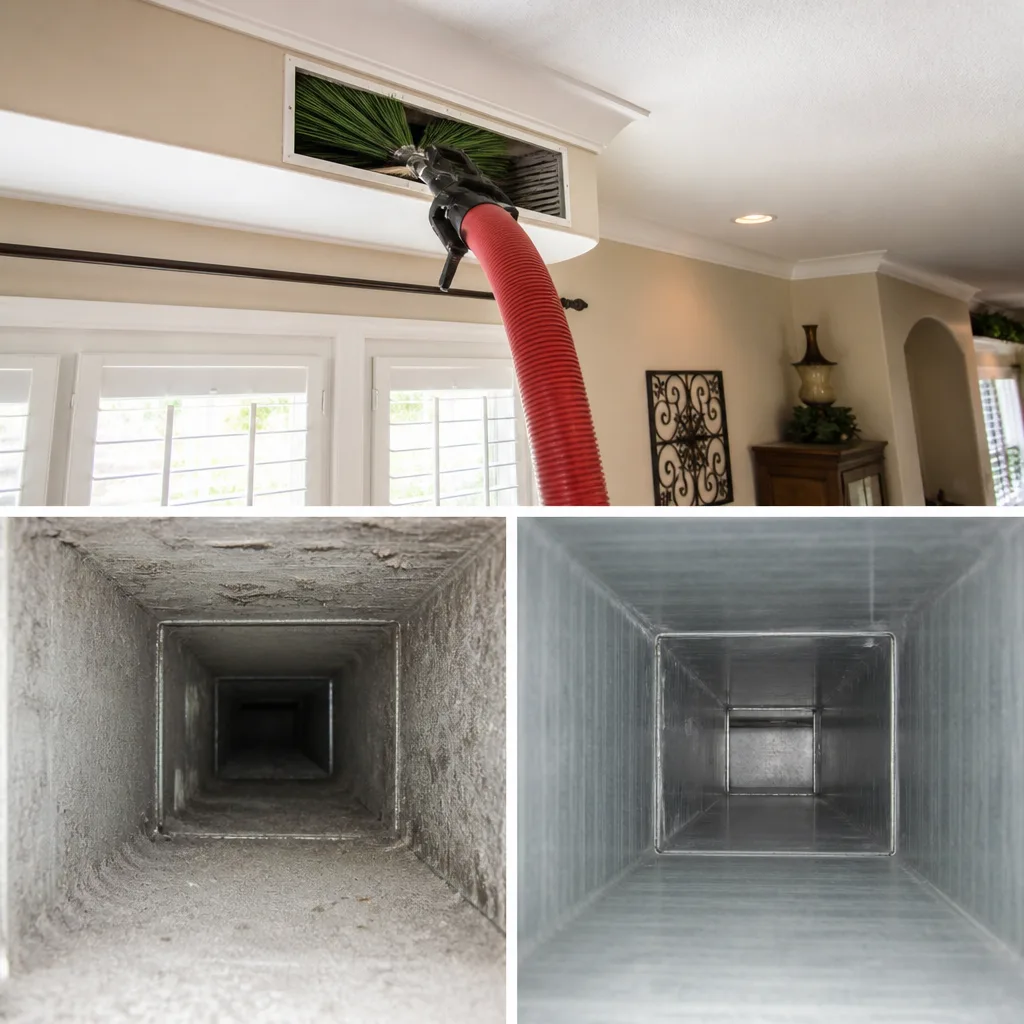 Whole-home duct cleaning
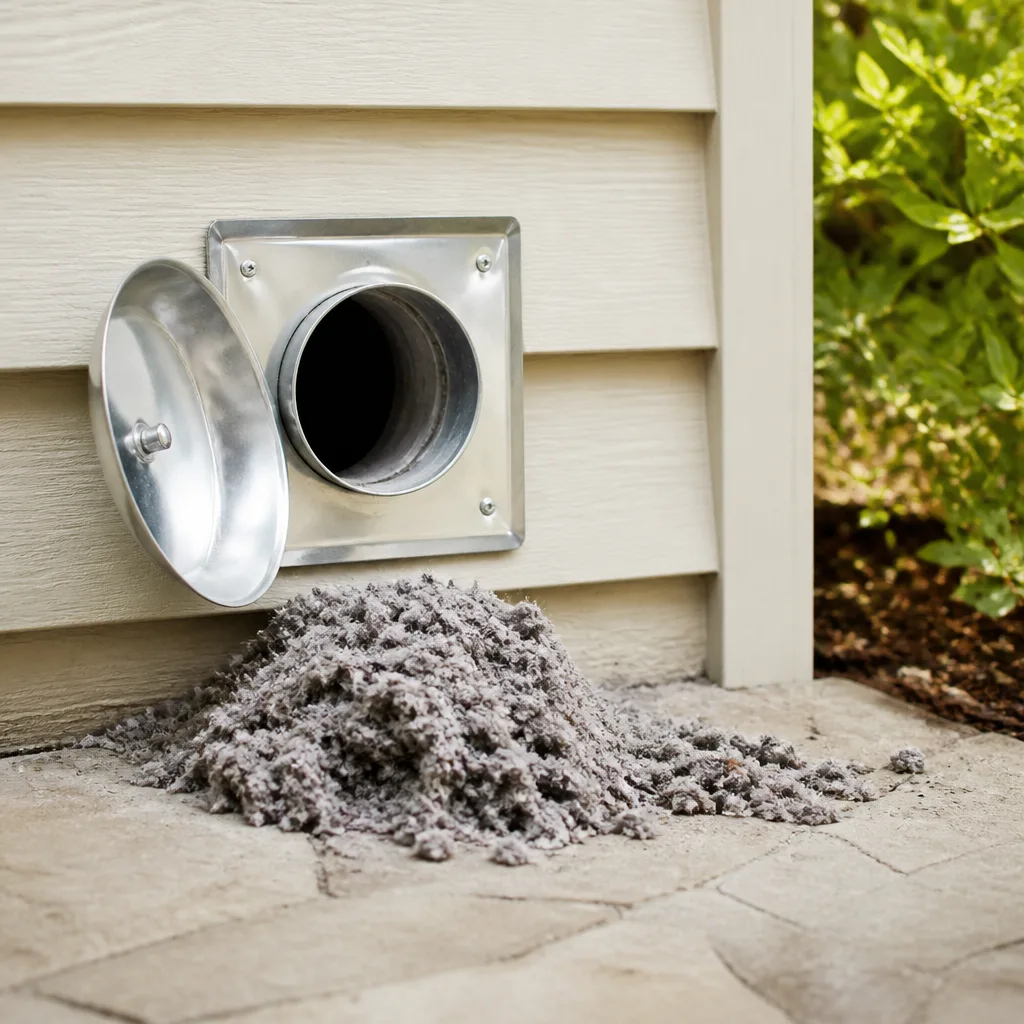 Dryer vent cleaning
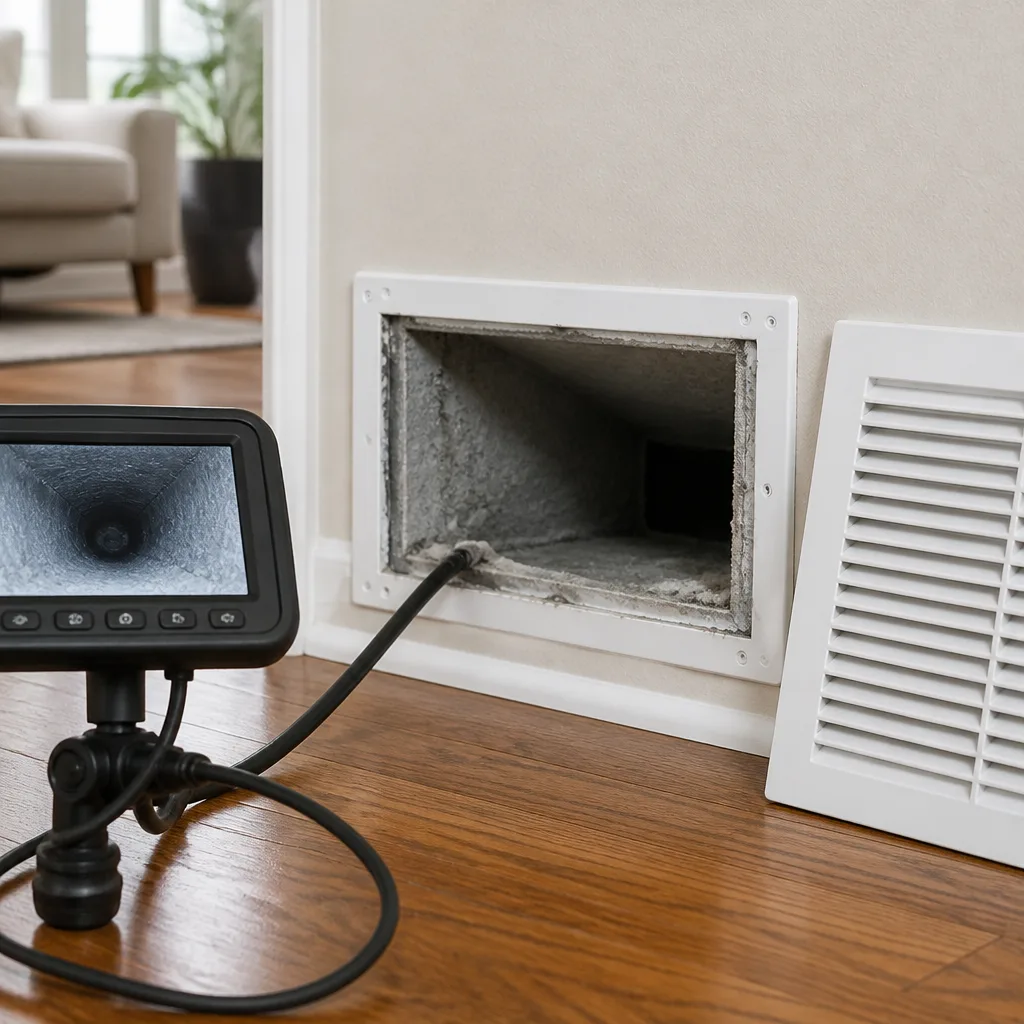 Camera inspection
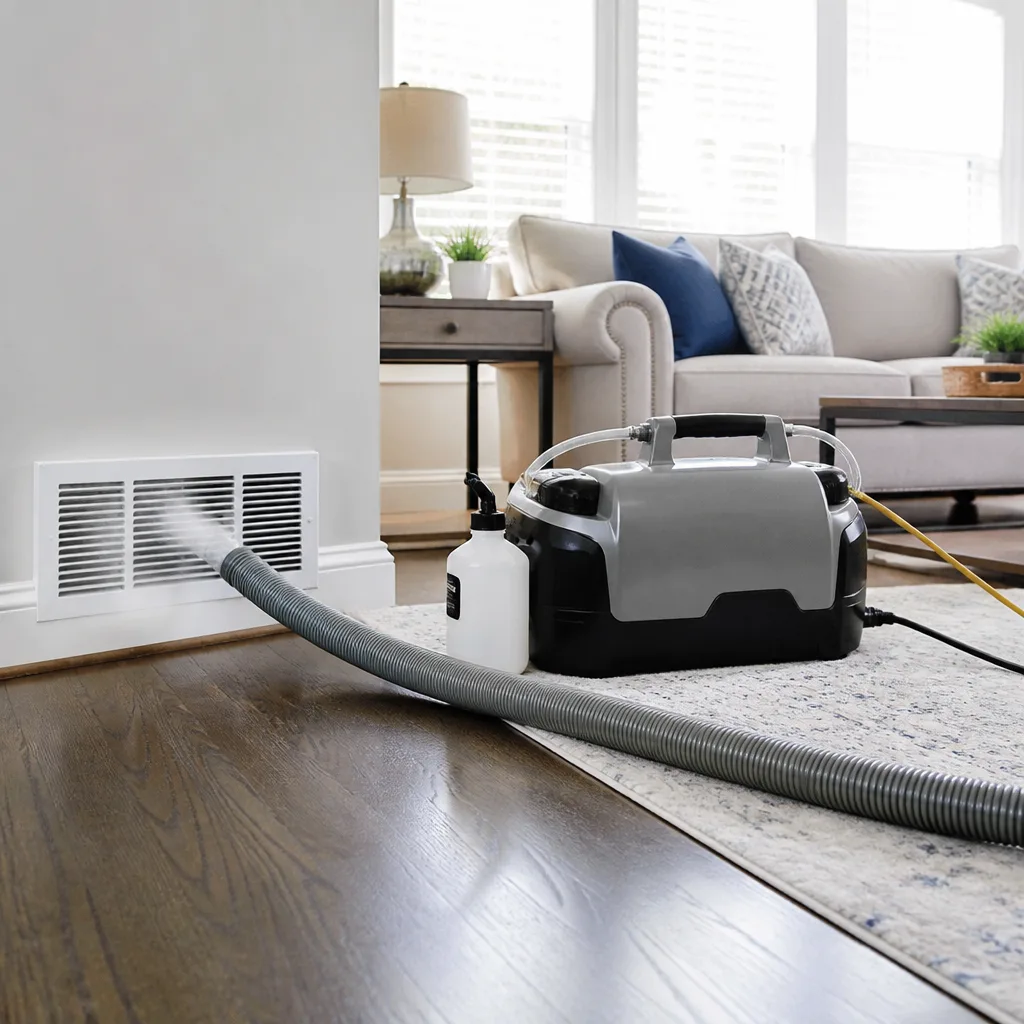 Sanitizing & deodorizing
Whole-system duct and dryer vent check with before-and-after photos - you see exactly what came out of your vents
That "$99 whole-house special" is a bait ad - the real number appears once they are in your hallway, or the "clean" is a shop-vac at the register. We photograph the inside of your ducts before and after instead.
The Complete Guide to Air Duct Cleaning in St. Petersburg
Most homeowners think of duct cleaning as a spring-cleaning item, something you get to when the house feels dusty. In St. Petersburg, it works the other way around: your ducts are the record of everything your house has breathed. A home here runs its air handler through nearly every week of the year, and the system recycles the same air over and over. Whatever settles inside stays inside, cycling back through the rooms until someone removes it. This guide explains how duct contamination actually develops in St. Petersburg homes, how to read the warning signs before you book anyone, what professional equipment should look like on site, and what a legitimate job includes from start to inspection. We’ll cover the local housing patterns, the humidity factor, the contaminants specific to this market, and the questions that separate a real cleaning from a vacuum-and-go.
Quick Answer
Air duct cleaning in St. Petersburg means mechanically agitating and extracting the debris that has built up inside your supply and return ductwork, then verifying the result with a post-cleaning inspection and photos. Professional-grade equipment (Rotobrush and Nikro systems, with Abatement Technologies containment on heavier jobs) does the work, not a shop vac. Whole-system pricing is agreed in writing before the technician starts, and a legitimate job ends with proof: before-and-after photos of your own ducts.
Styles & brands we work with
- Whole-home duct cleaning
- Dryer vent cleaning
- Camera inspection
- Sanitizing & deodorizing
Table of Contents
- Why St. Petersburg Homes Need Duct Cleaning More Often
- How Humidity and AC Dependency Drive Contamination
- Older Housing Stock and Duct Configurations That Need Agitation
- The Contaminants Specific to This Market
- Reading Your HVAC Filter as a Diagnostic Tool
- What a Professional Duct Cleaning Actually Involves
- What a Post-Cleaning Inspection Should Show You
- How Pricing Works and Why Cheap Quotes Cost More
Why St. Petersburg Homes Need Duct Cleaning More Often
Duct contamination in St. Petersburg follows a different pattern than it does in most of the country. In colder climates, the heating and cooling system runs seasonally, and ducts get long stretches with no airflow to push debris around. Here, the system runs almost continuously. That constant circulation means every particle that enters the return side has a chance to settle somewhere in the supply side, and once it settles, it stays until it’s physically removed.
The practical consequence is that duct cleaning intervals shorten. A St. Petersburg home with pets, a recent renovation, or anyone with allergies may need attention well before the usual five-to-seven-year mark that national guides suggest. Homes near busy corridors, older properties with less sealed ductwork, and houses where the previous owner never had the ducts serviced all collect debris faster.
We’ve also noticed in our experience that new St. Petersburg homeowners often inherit a duct system with no service history at all. A pre-purchase inspection covers the HVAC unit and the roof, but nobody opens the supply registers and looks inside. What’s in there can include construction dust from the last remodel, deteriorated flex duct insulation, and years of accumulated debris from everyday living. Before you book anyone, it helps to understand what Shield Air Duct Cleaning actually looks for on a first visit.
The bottom line for St. Petersburg: treat the system as a diagnostic record, not a maintenance checkbox. If the ducts look worse than the house does, that’s information about how the home has been breathing.
How Humidity and AC Dependency Drive Contamination
Humidity is the single biggest difference between St. Petersburg duct cleaning and duct cleaning almost anywhere else. The air handler pulls return air from the living space, cools it through the evaporator coil, and pushes it back out through the supply ducts. Condensation forms on the coil as part of normal operation. If that moisture isn’t drained and vented correctly, it migrates into the duct interior, and once the humidity inside a duct system stays elevated, the components that were designed to be dry become a substrate.
Flex duct is the most vulnerable. Its inner liner is a thin plastic layer over a wire helix, and insulation wraps the outside. Small tears, poorly sealed joints, and crushed sections all let humid air into the insulation layer, where there’s no airflow to dry it out. Over months and years, that’s where microbial growth begins. In St. Petersburg’s climate, the growth window is open most of the year, not just in summer.
What this looks like to a homeowner:
- A musty, earthy smell that’s strongest when the system first kicks on
- Visible dark staining at the edges of flex duct, often seen through a gap in the insulation
- Condensation drips from supply registers or a soft, damp feel around them
- Allergy symptoms that follow the airflow pattern of the house rather than the season
- Higher-than-expected electricity use as the coil fights a partially blocked airflow path
If any of that is familiar, the ducts deserve a look. Addressing humidity damage early is far simpler than repairing a duct system after the insulation has broken down. That’s the difference between cleaning, repair, and replacement, and it’s why our air duct cleaning scope here always includes checking the duct structure as well as the interior.
Older Housing Stock and Duct Configurations That Need Agitation
St. Petersburg has a large share of homes built before 1990, and their duct systems rarely match what a modern installer would build. That matters because the cleaning method changes with the duct configuration. A system with long runs of smooth sheet-metal duct responds well to high-volume suction. A system with rigid flex, short connectors, tight elbows, and partially crushed sections does not: the debris clings to the walls, and suction alone pulls only what’s loose.
Homes from the mid-twentieth century and later often share these features:
- Rigid flex duct runs with tight bends where debris collects and compacts
- Return paths that pull from a single central grille rather than multiple returns
- Original sheet-metal trunks connected to newer flex branches with mismatched sizing
- Fiberglass duct board sections that trap dust in the porous surface and require careful agitation rather than aggressive brushing
- Joints taped with material that has dried and lost adhesion, letting air leak out and humid air leak in
The method that works on these systems is mechanical agitation combined with negative pressure. That means a rotating brush or whip driven through each run by a Rotobrush or Nikro system, while an Abatement Technologies vacuum holds the return side under negative pressure so loosened debris moves toward the collection point instead of into the living room. A vacuum-only cleaning on a system like this leaves behind a layer on the duct walls that will look identical to the pre-cleaning state within a season.
If you live in an older St. Petersburg home, ask any contractor specifically how they plan to agitate the ducts and how they’ll verify the result. A clean interior wall and a fresh layer of settled dust look the same in a phone photo unless the photo was taken after agitation. Air duct repair is a close cousin of this work, and a good cleaner knows when a compromised duct run is a repair problem rather than a cleaning problem.
The Contaminants Specific to This Market
Every market has its own mix. In St. Petersburg, the most common contaminants we see inside residential ducts are surprisingly consistent between homes, and they’re not the generic dust-and-pollen story that national duct-cleaning pages describe.
Palmetto bug debris. These insects seek out dark, humid cavities, and duct systems offer both. Frass, shed wings, and the residue they leave behind can build up inside return ducts and at the evaporator coil housing. This is not a pest-control substitute, but a duct cleaning removes the physical material that pest treatment alone won’t touch.
Construction and renovation dust. St. Petersburg has seen extensive renovation activity, and remodel dust is finer and more persistent than household dust. Drywall dust in particular is alkaline and mildly abrasive, and it settles into duct interiors where suction alone can’t lift it once it’s bonded to the liner. Homes that had work done without sealing the registers during the project often show this for years.
Deteriorated duct insulation. Fiberglass liner that has broken down releases particles into the airstream. On a pre-1990 home, this is common and worth checking before any cleaning.
Biological growth. As covered above, humidity-driven microbial growth is the local marker. Any legitimate cleaner should be willing to show you photographic evidence of what’s in the ducts, not just describe it.
Filtration accessories matter here too. If your home has a Honeywell or Aprilaire filtration or IAQ system, the duct cleaner should understand how it’s installed and how it interacts with cleaning. A contractor who cleans around a whole-home filter without accounting for it is doing half the job.
Reading Your HVAC Filter as a Diagnostic Tool
Your air filter is the cheapest diagnostic tool you own. Before you schedule any duct cleaning in St. Petersburg, take a look at the filter that’s been running for its normal interval and read what it’s telling you.
- Pull the filter and hold it up to a bright light. A filter that’s uniformly gray with a light dust load is behaving normally. A filter that’s dark in one area and light in another suggests uneven airflow, which often means a partially restricted duct run or a collapsing flex section.
- Look at filter loading rate. If a filter that used to last three months is now visibly dark in three or four weeks, something in the system is shedding or accumulating faster than it used to.
- Check for fibrous material. Visible fiberglass strands or insulation fibers on the filter face are a sign of duct liner breakdown. That’s a repair finding, not a cleaning finding.
- Smell the filter. An earthy or musty smell on the filter medium suggests the contamination upstream is biological and the duct interior deserves inspection.
- Match filter rating to system design. Higher MERV is not automatically better. Systems designed around a lower-pressure-drop filter can experience reduced airflow if the filter is too restrictive, which accelerates dust settling in the ducts. Getting this right is part of a proper whole-system assessment.
If the filter is telling you the system is loading up, the next step isn’t a coupon. It’s an assessment of the ducts themselves. For homes in this area, our St. Petersburg service overview covers what that assessment includes.
What a Professional Duct Cleaning Actually Involves
A real cleaning is a sequence, not a gesture. Anyone who shows up with a vacuum and a promise and is gone in forty-five minutes is not doing the job this market requires. Here’s what a Shield-standard clean looks like.
- Assessment and written scope. The technician inspects the system, identifies the duct construction, notes any compromised sections, and sets one flat price per system in writing. No per-vent pricing, no surprise add-ons once the work is underway.
- System isolation. Returns and supplies are connected to the collection equipment, and negative pressure is established inside the ductwork before agitation begins. This is where Abatement Technologies equipment matters on heavier jobs: the containment keeps contamination out of the occupied space.
- Mechanical agitation. Each duct run is worked through with a rotating brush or whip driven by a Rotobrush or Nikro system. This is the step that breaks debris free from the duct walls; suction handles the transport, agitation handles the removal.
- Component cleaning. The evaporator coil, blower housing, and drain pan are accessed and cleaned where the system design permits. These are often where the biological material lives.
- Register and grille cleaning. Supply and return registers are removed, cleaned, and reinstalled. Grilles are the public face of the system; if they’re still dirty when the technician leaves, the job isn’t actually finished.
- Filtration check. The filter and any IAQ accessories are inspected, and the homeowner gets an honest read on whether the current setup matches the system.
- Verification and photo documentation. Before-and-after photos of the actual ducts, taken during the job, are shared with the homeowner. Not stock photos. The ducts that were just cleaned.
If the assessment turns up compromised ductwork, that’s where repair enters the picture. Finding a broken connection during cleaning and addressing it before it becomes a mold problem is a very different outcome from excavating a fully compromised run later.
What a Post-Cleaning Inspection Should Show You
The post-cleaning inspection is where a legitimate contractor separates from a vacuum-and-leave operator, and most homeowners don’t know what to ask for. Here’s the comparison.
What a legitimate inspection includes:
- Photos of each major duct run, before and after agitation, taken from inside the duct
- A visual check of the evaporator coil and blower housing, with photos of both
- A check of every accessible duct joint for separation or tape failure, with findings noted
- A confirmation that registers and grilles were reinstalled correctly and airflow is balanced
- An honest written summary of anything that needs follow-up, whether that’s repair, a different filter, or a humidity solution
What it doesn’t look like:
- A verbal “all done” with no documentation
- Photos that don’t match your home’s duct configuration
- Registers that still have visible dust sitting on the vanes
- No mention of the evaporator coil
- A pressure to add services the assessment didn’t identify
If your cleaner has a Rotobrush camera system, ask to see the live feed from a duct run. If they don’t, the photos after the job should still be specific to your home and consistent with what was there when they started. A legitimate cleaner will show you. A problematic one will talk around the question.
How Pricing Works and Why Cheap Quotes Cost More
Duct cleaning is priced per system, not per vent. That’s the first thing to understand, because the $49 per-vent model is the most common way homeowners get a bill that bears no relation to the quote. A low advertised number gets a technician to the door, then the scope expands once they’re inside the house. The honest model is the opposite: one flat price per system, agreed in writing before the technician starts, with no per-vent math and no moving target.
What goes into the price of a professional-grade job:
- The equipment itself (Rotobrush and Nikro systems cost significantly more than a shop vac and are the reason the work actually removes contamination)
- Time: a genuine agitation job on an older St. Petersburg home with fifteen-plus supply runs takes meaningful hands-on time, often hours not minutes
- Containment setup, including the Abatement Technologies equipment on jobs where contamination control is a real concern
- Access to and cleaning of the evaporator coil, blower, and drain pan
- Post-cleaning documentation
When a quote comes in dramatically under what the equipment and time require, the question to ask is what’s being left out. A vacuum-only pass on a flex duct system with biological growth does not solve the problem; it makes the problem look solved for about one season. The written estimate from a professional doesn’t move; a coupon price usually does.
Every job we quote in St. Petersburg is priced in a free written estimate, per system, before work begins. If the assessment turns up a repair need, that’s discussed and priced separately. Our trained technicians work with the equipment the market requires (Rotobrush, Nikro, Abatement Technologies) and understand filtration accessories from Honeywell, Aprilaire, and Guardsman.
Common Mistakes to Avoid
- Booking on price alone. A quote that undercuts every local competitor by half is a quote for a different job. Ask specifically what equipment and method it includes.
- Treating a vacuum-only clean as a full clean. In St. Petersburg’s older housing stock, suction without agitation leaves the debris bonded to the flex duct liner. Ask how the cleaner plans to agitate, not just extract.
- Skipping the evaporator coil. The coil and blower are where humidity-driven growth often lives. A clean that doesn’t touch them isn’t treating the source.
- Ignoring the filter reading. A filter that’s darkening four times faster than it used to is telling you something. Don’t wait for the ducts to smell.
- Assuming duct cleaning is routine timing. In St. Petersburg’s climate, five-to-seven years is a national average; local conditions can shorten the interval meaningfully. Pay attention to the filter and the smell, not the calendar.
- Accepting a verbal “all done” with no photos. The proof of the job is the before-and-after, and it should be your ducts.
- Missing a duct repair that the cleaning reveals. When a compromised joint is found during the clean, it should be documented and priced, not glossed over. A cleaner that ignores a failing duct joint is doing half the job.
See the difference
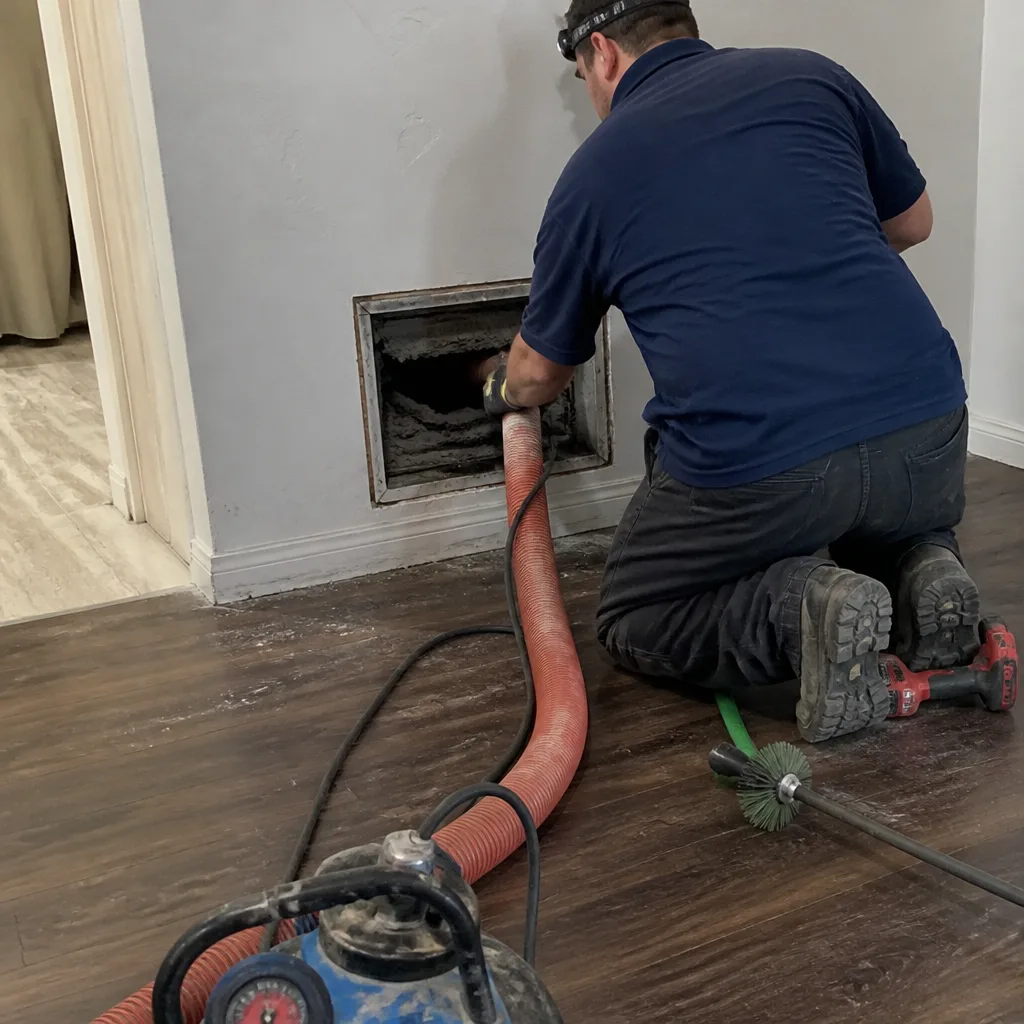 Before
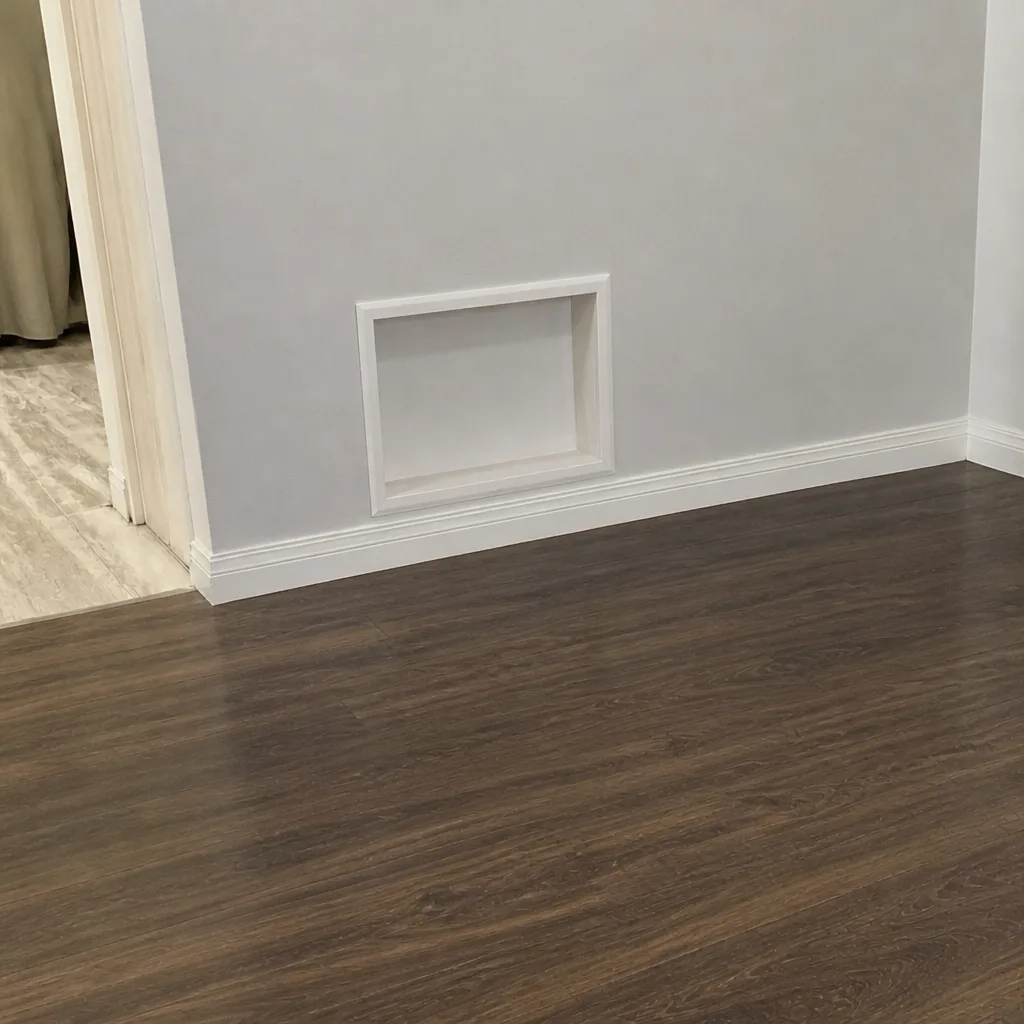 After
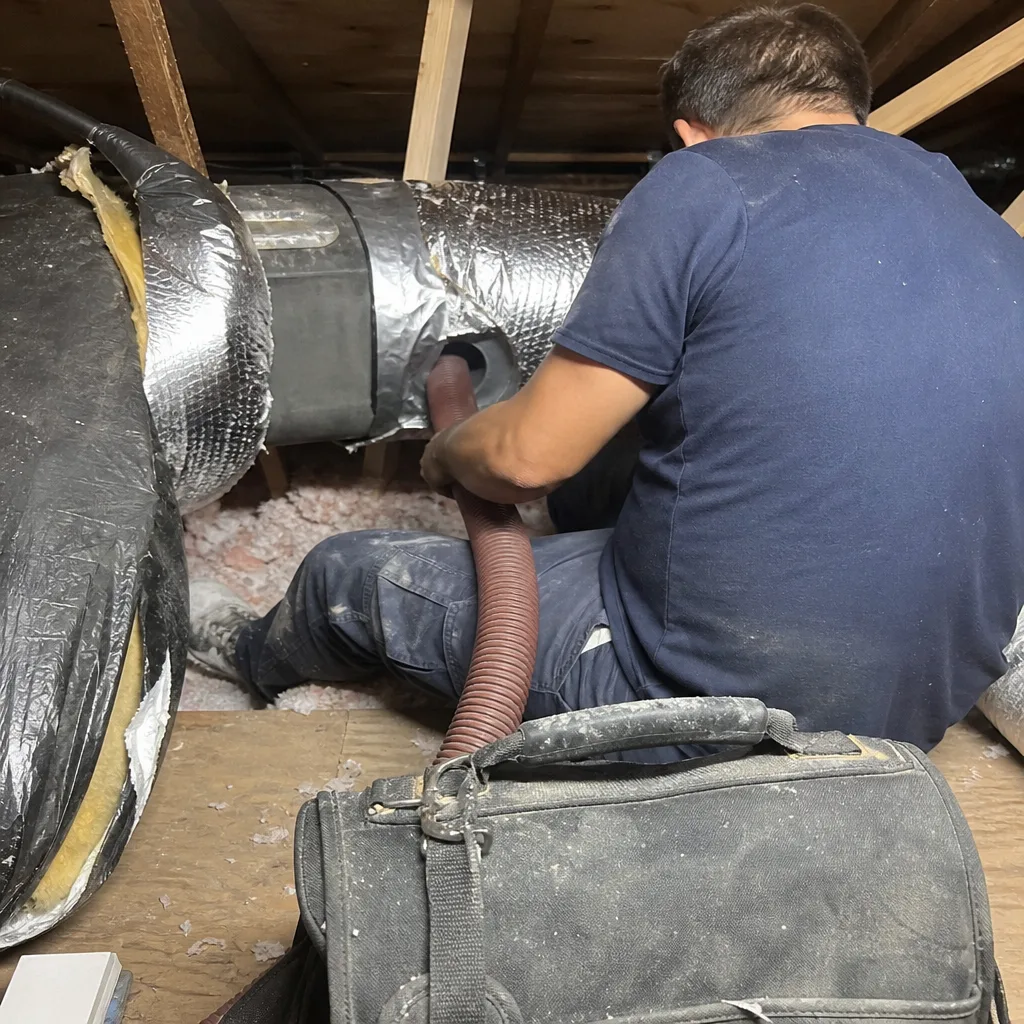 Before
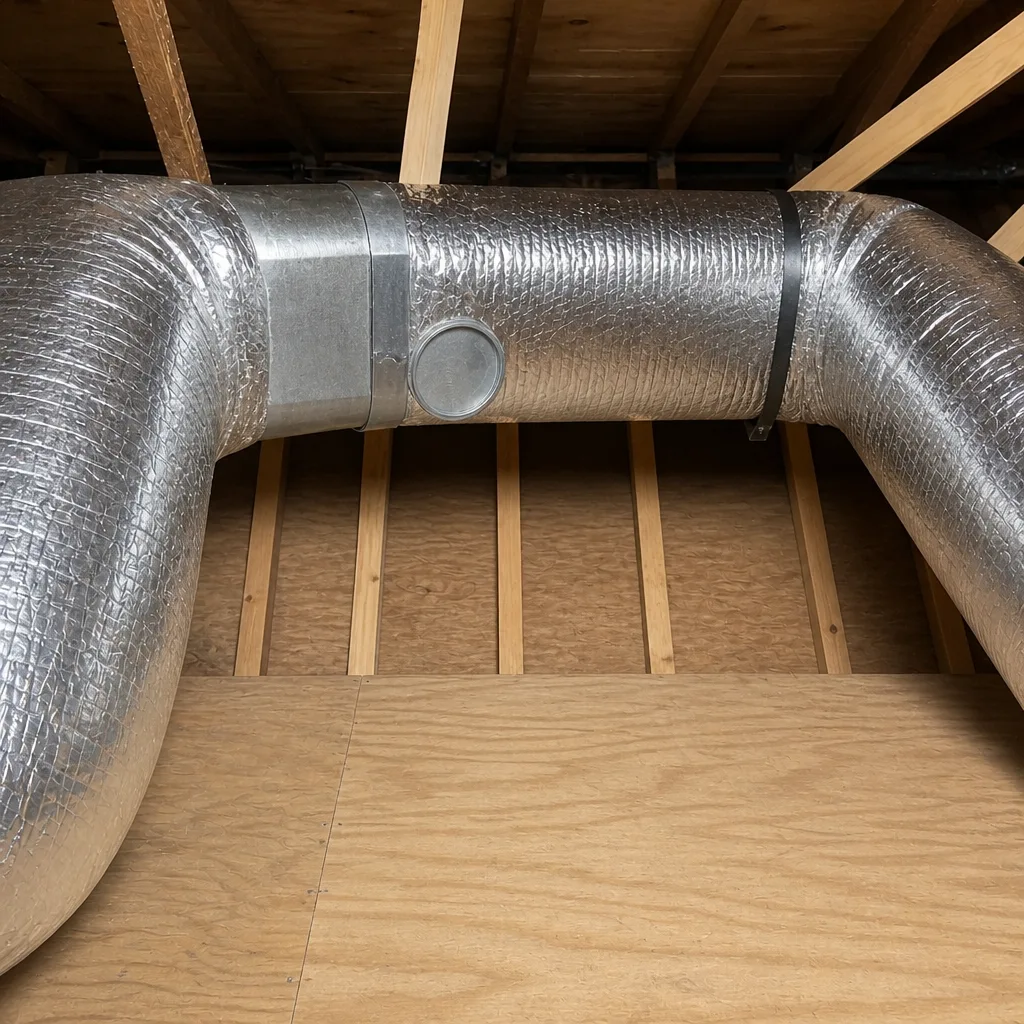 After
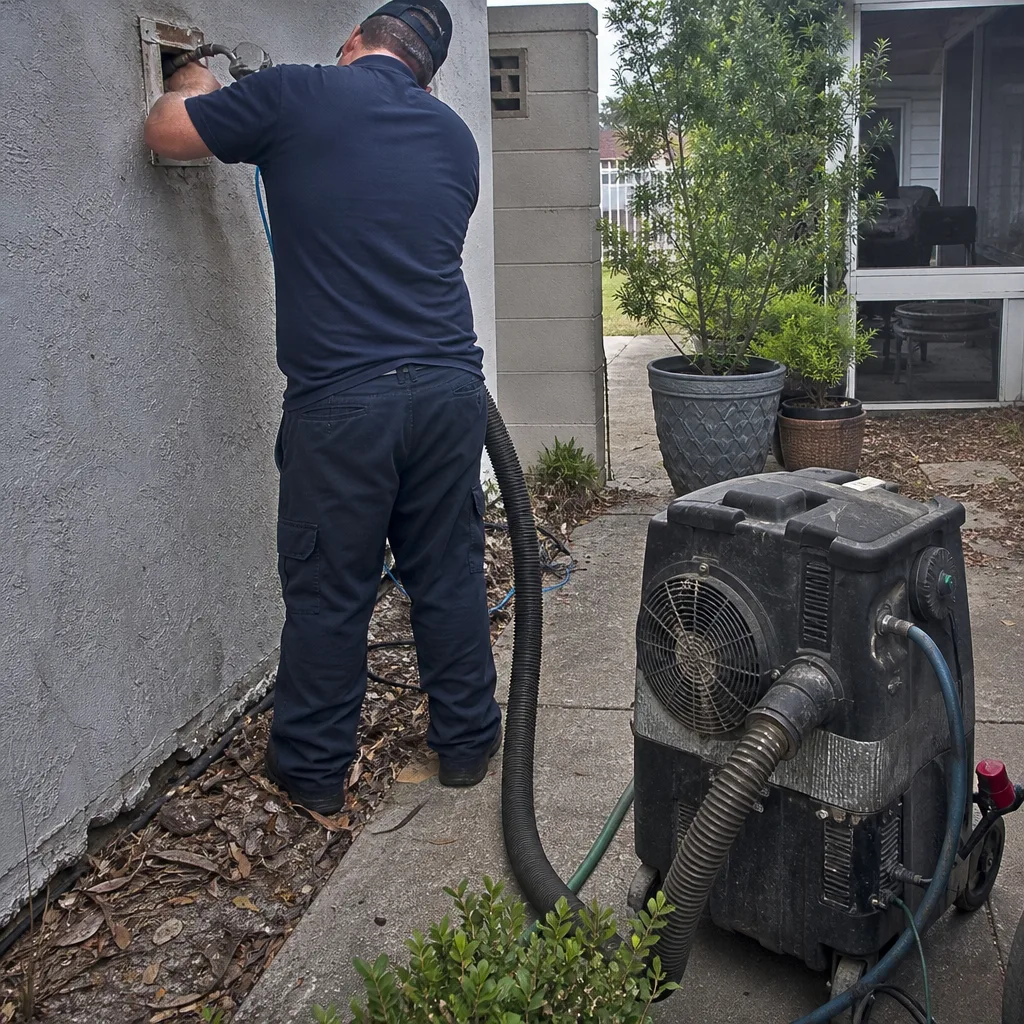 Before
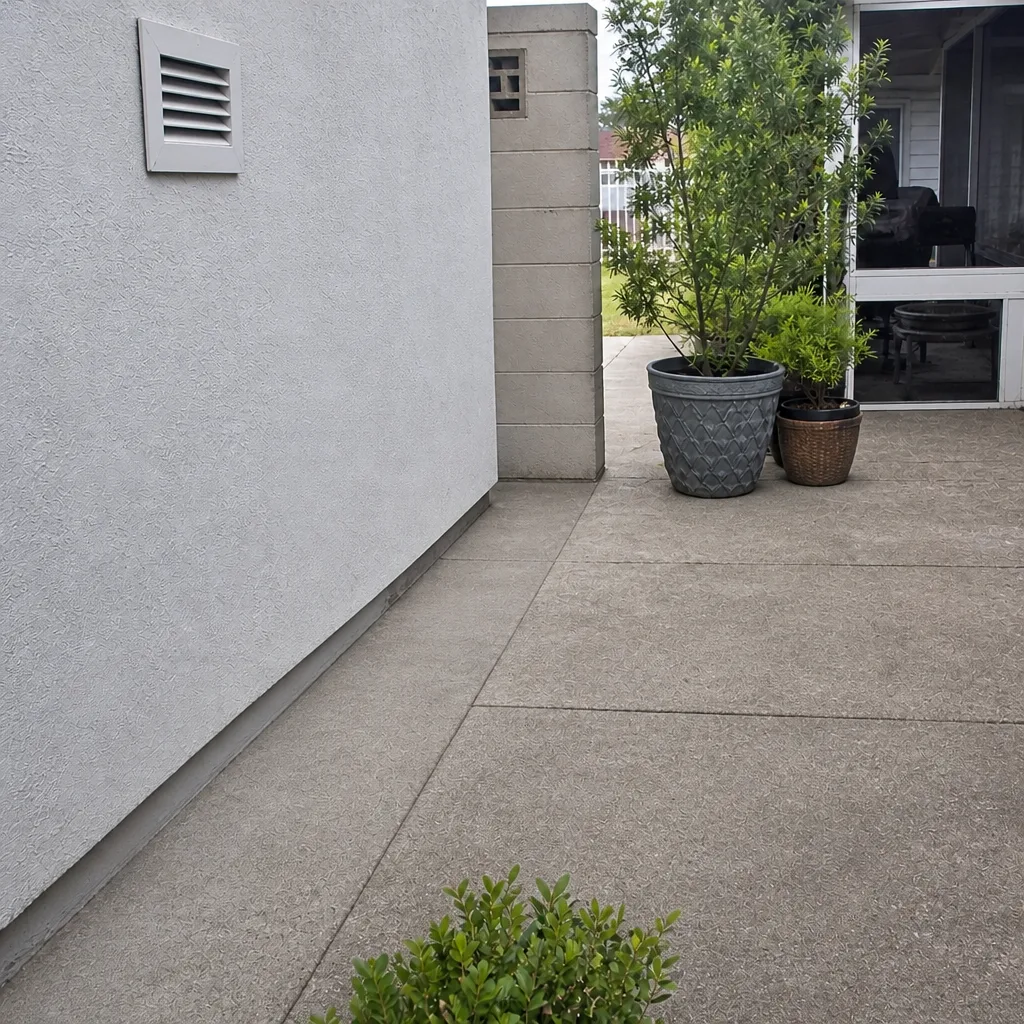 After
When to Call a Professional
Call for duct service when the filter is loading faster than it used to, when a musty smell appears at startup, when there’s visible staining on flex duct insulation, or when a renovation has just wrapped and the registers weren’t covered. Call if a pre-purchase inspection left you without a clear read on the duct system. Call if you’ve had a pest issue in the return ducts, or if you’re noticing allergy symptoms that track the airflow in your home. Call before suspecting the HVAC unit itself, because poor airflow from dirty ducts often reads as a system problem. And call if you’ve had a cheap clean in the past and want a second opinion on what was actually done. Shield Air Duct Cleaning offers free estimates in St. Petersburg. Call (855) 967-4983. We answer 24/7. Fast dispatch from 7am to 7pm, Sunday through Friday.
Frequently Asked Questions
Most St. Petersburg homes benefit from air duct cleaning every four to six years, though the local climate can shorten that interval. Continuous air handler operation (the system typically runs close to year-round here) means debris accumulates faster than in seasonal climates. Read the filter loading rate as your real interval signal: if it’s darkening noticeably faster than a year ago, that’s the cue.
Because they’re often not quoting the same job. A very low quote usually covers a suction-only pass without agitation, doesn’t touch the evaporator coil, and isn’t priced per system. The equipment itself (Rotobrush and Nikro systems) is professional-grade and priced accordingly. A written per-system estimate doesn’t move; a coupon price usually does. Call (855) 967-4983 for a free estimate and an honest comparison.
You see before-and-after photos of your own ducts, taken during the job, and you get a written summary of what was found and addressed. That includes the coil, the blower housing, the registers, and any joint issues that turned up during the assessment. A legitimate cleaner will show you; a vacuum-and-leave operator will avoid the question.
Yes. The air handler operates continuously and produces condensate at the evaporator coil, and any moisture that migrates into flex duct insulation stays there. Over time, that’s the substrate where microbial growth begins. Cleaning the ducts is only part of the fix; ensuring the drain and venting work correctly is the other half, and a professional assessment should cover both.
Homes built before 1990 often have rigid flex duct configurations that respond to mechanical agitation, not suction alone. Ask specifically how the contractor plans to agitate the ducts, and whether they use a Rotobrush or Nikro system. If the answer involves a brush on a cordless drill and a shop vac, the job will not remove bonded debris. If duct repair is needed, that should be identified at the assessment, not discovered after the cleaning.
Yes, and it’s worth doing. Dryer vent cleaning in St. Petersburg addresses lint accumulation that’s both a fire risk and an efficiency hit, and pairing it with duct cleaning means one visit, one assessment, and a complete picture of the home’s air paths. Our dryer vent cleaning service is scheduled as a separate scope but often booked alongside the duct job. Call (855) 967-4983 to discuss both.
The Bottom Line
Duct cleaning in St. Petersburg isn’t a commodity. The local climate, the housing stock, and the equipment requirements all push the job well beyond what a $49 coupon removes, and the gap between a vacuum-only clean and a professional-grade agitate-and-extract job is the difference between solving the problem and hiding it for a season. Read your filter, watch for the smell, inspect the flex duct, and when you book, insist on per-system pricing in writing with before-and-after photos of your own ducts. That’s the Shield-standard clean. We clean it. We repair it. We protect it. Shield Air Duct Cleaning handles air duct cleaning, dryer vent cleaning, and air duct repair across St. Petersburg, with professional-grade Rotobrush and Nikro equipment and HEPA-level containment on heavier jobs. Our technicians have up to 12 years of experience. Call (855) 967-4983 for a free estimate. We answer 24/7. Fast dispatch from 7am to 7pm, Sunday through Friday.
Written by the team at Shield Air Duct Cleaning.