
Last updated November 15, 2026
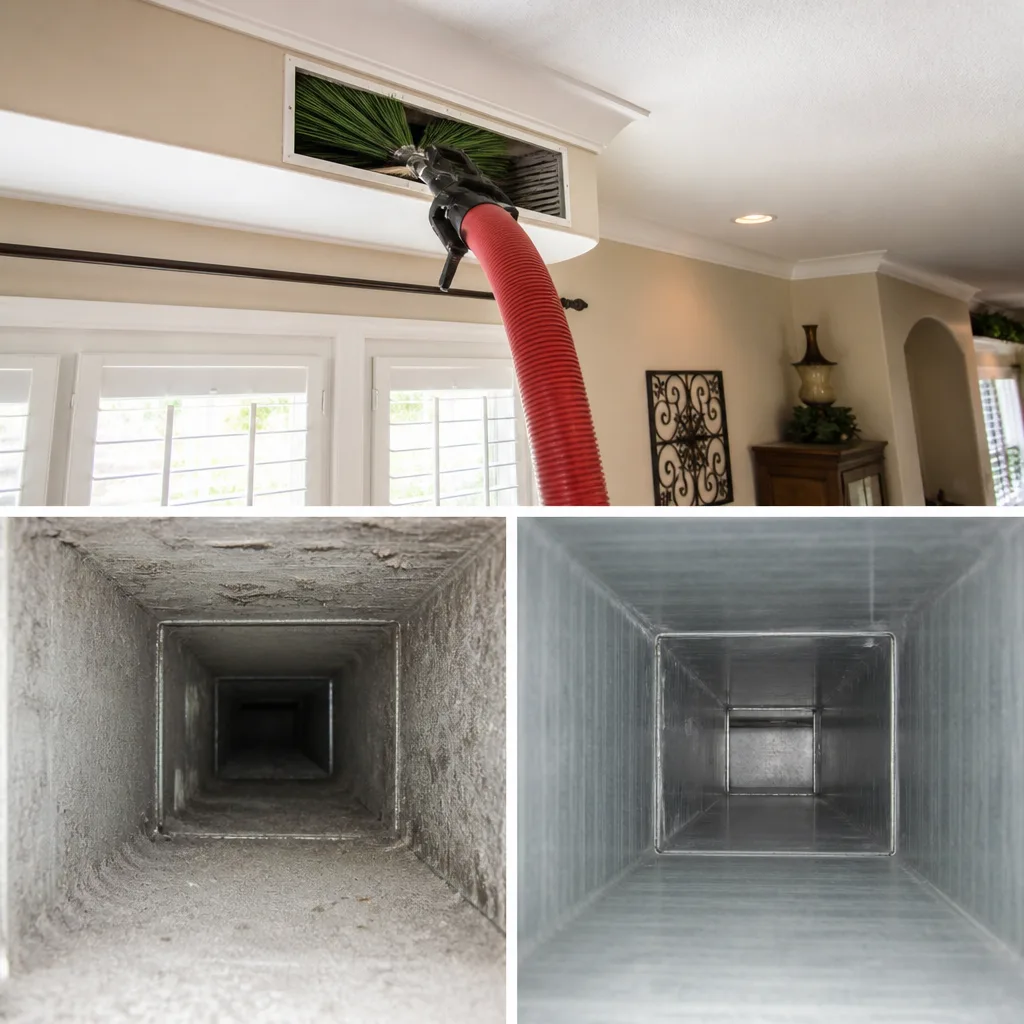 Whole-home duct cleaning
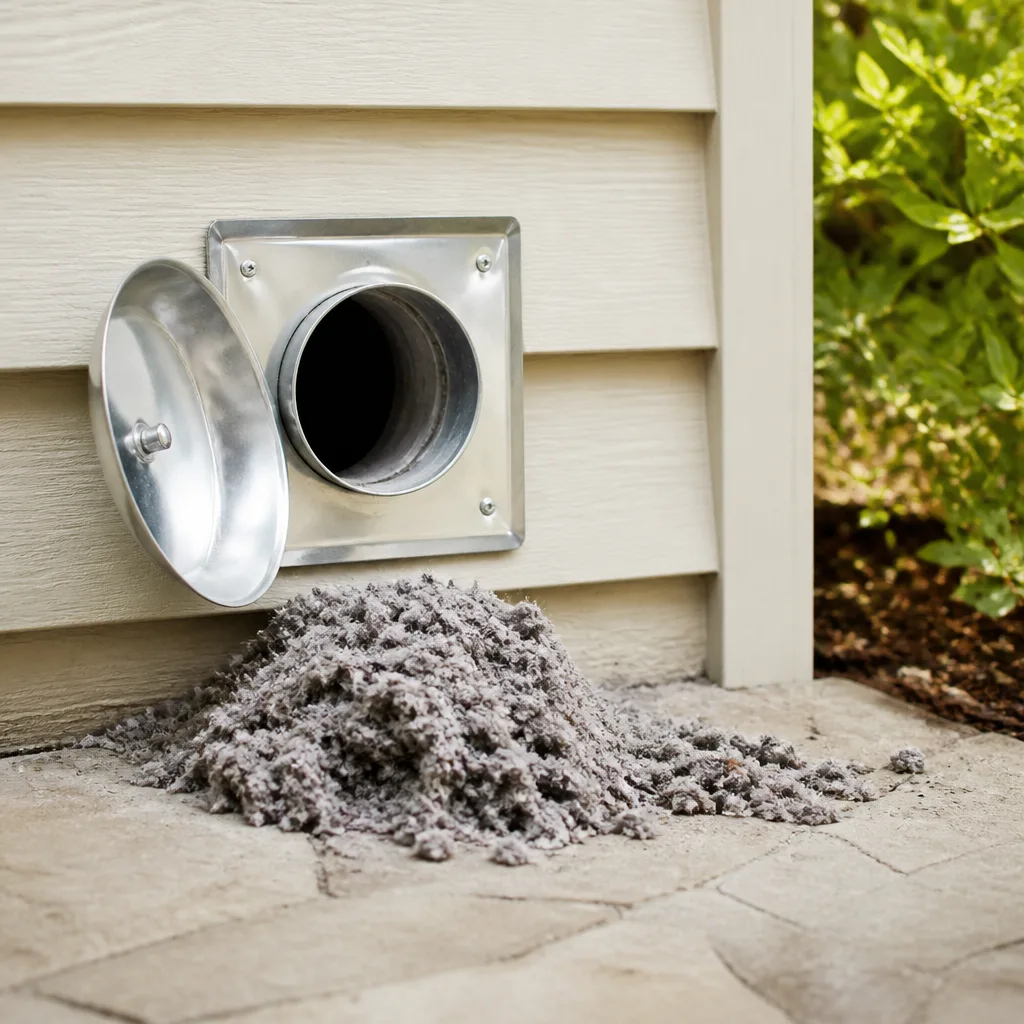 Dryer vent cleaning
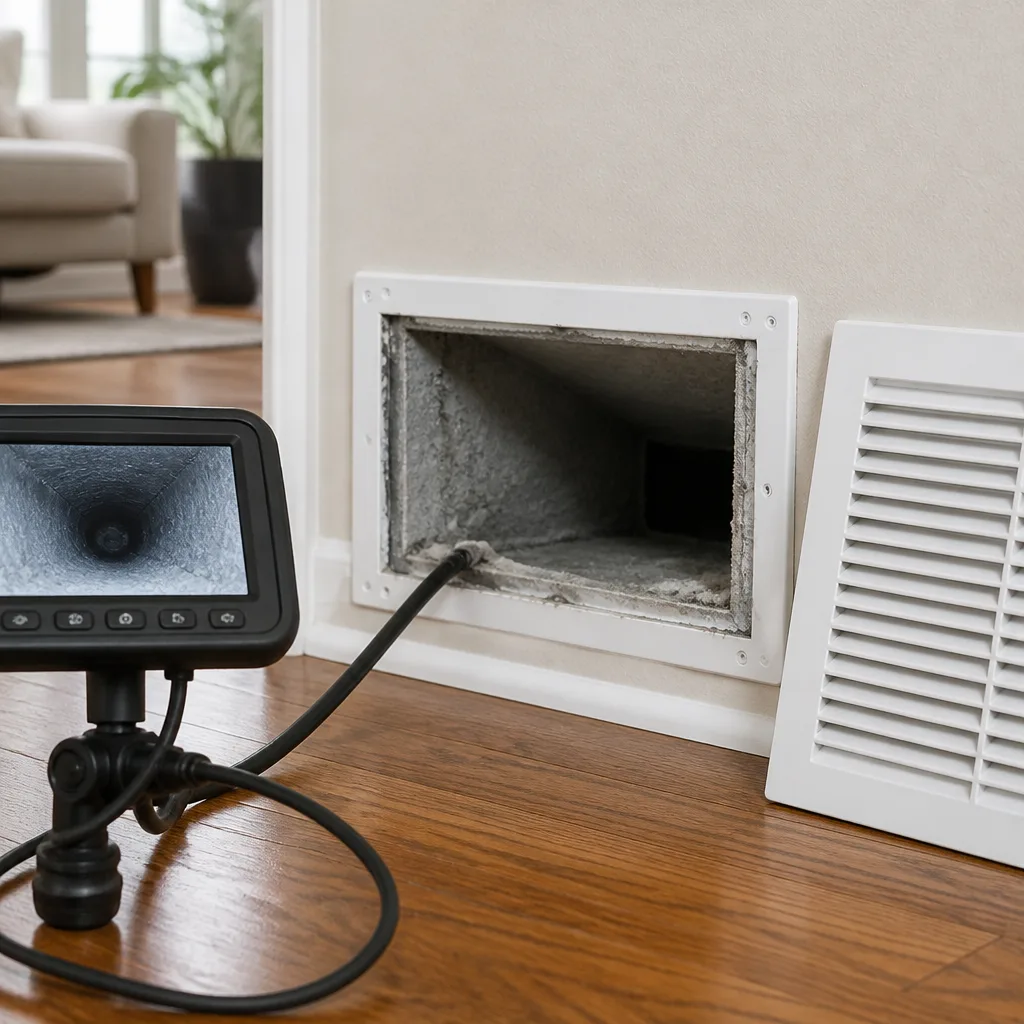 Camera inspection
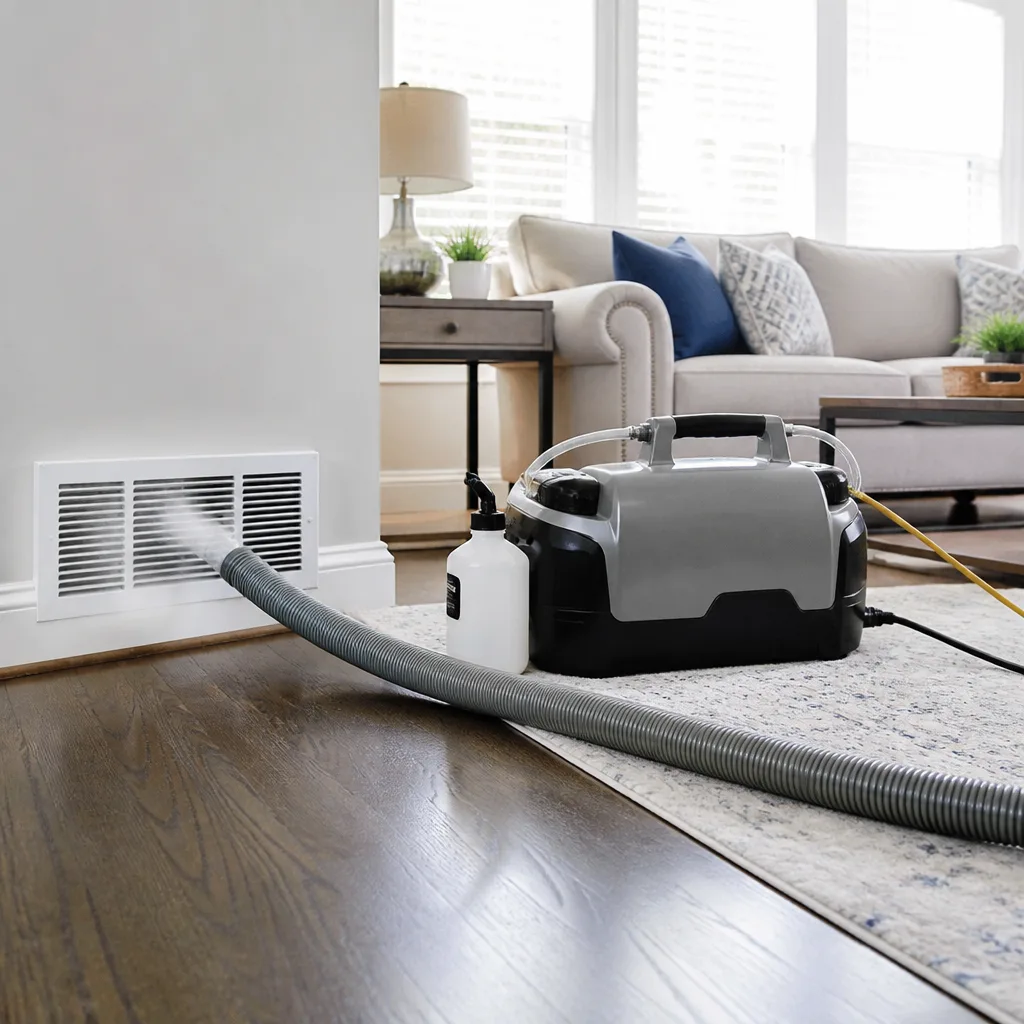 Sanitizing & deodorizing
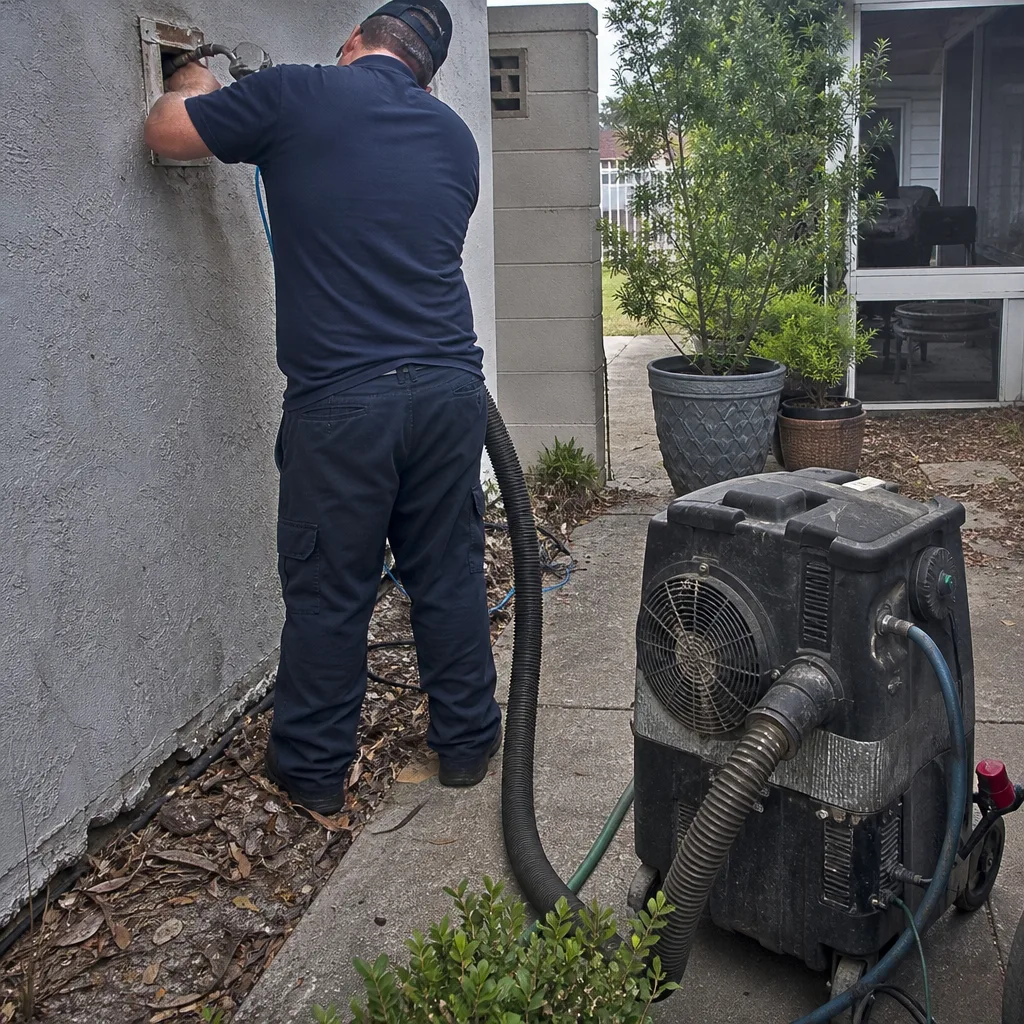
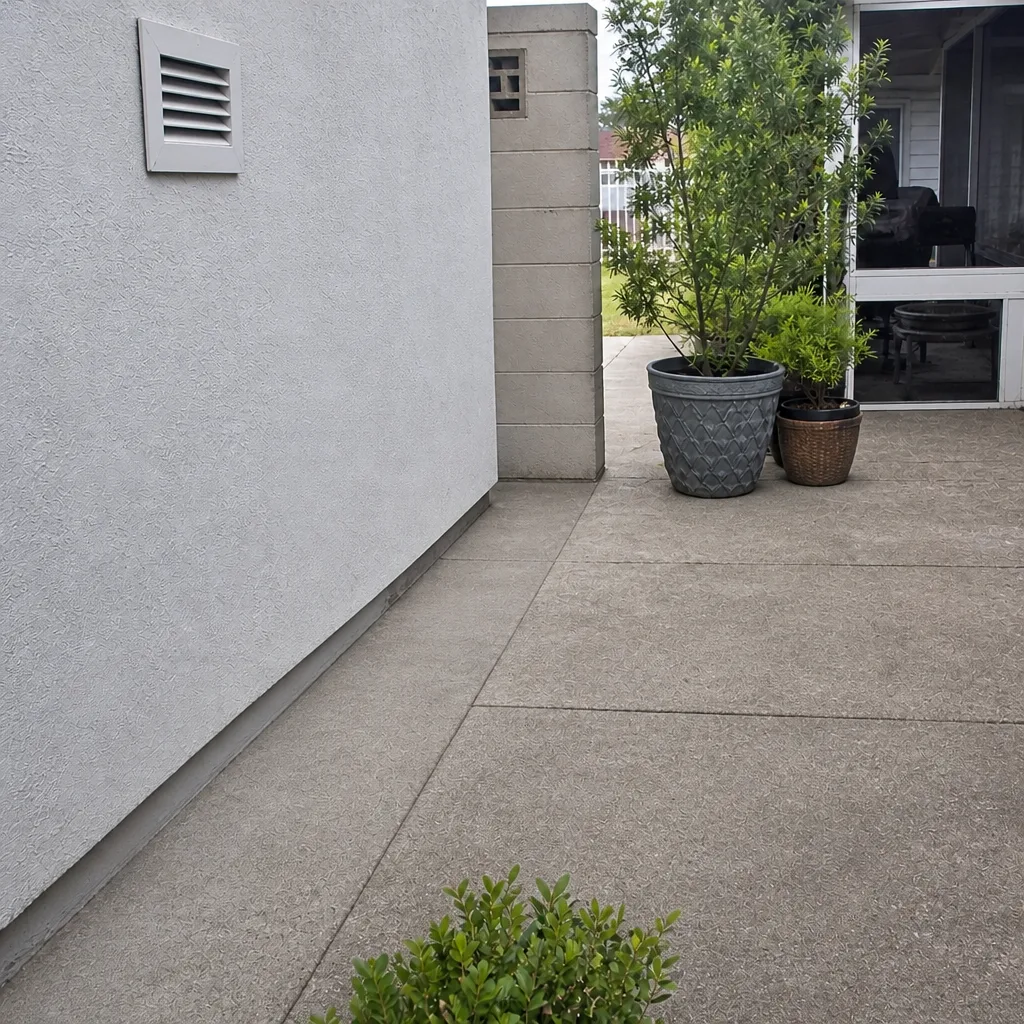
Whole-system duct and dryer vent check with before-and-after photos - you see exactly what came out of your vents
That "$99 whole-house special" is a bait ad - the real number appears once they are in your hallway, or the "clean" is a shop-vac at the register. We photograph the inside of your ducts before and after instead.
Air Duct Cleaning Maintenance Checklist for St. Petersburg Homeowners
“Change your filter every 90 days.” You’ve read it on a hundred sites, and it’s the least useful instruction in home maintenance. Ninety days in a St. Petersburg house with two dogs, a spring pollen dump, and a kitchen renovation is a completely different duct environment than ninety days in a sealed, empty condo. The interval is a placeholder. What actually tells you whether your ducts are protecting your household or quietly degrading is a set of checkpoints you look at, smell, and write down over a year. This guide gives you those checkpoints: a month-by-month framework calibrated to St. Petersburg conditions, the trigger thresholds that mean it’s time to call, and a way to document duct condition so you have a real record when you sell or file a claim.
Quick Answer
A workable air duct maintenance checklist for a St. Petersburg home has four moving parts: filter checks on a real schedule (monthly in heavy pollen or pet season, not quarterly by default), a monthly visual and smell inspection at the registers and return, a written log of what you find, and professional cleaning triggered by conditions rather than a calendar. Most homes here don’t need duct cleaning on a fixed yearly clock. They need it when the evidence says so.
Styles & brands we work with
- Whole-home duct cleaning
- Dryer vent cleaning
- Camera inspection
- Sanitizing & deodorizing
Table of Contents
- Why Generic Duct Maintenance Advice Fails in St. Petersburg
- The Month-by-Month Duct Tracking Framework
- Visual and Olfactory Checkpoints You Can Do Without Tools
- How to Document Duct Condition Over Time
- The Trigger Thresholds That Mean It’s Time to Call
- Post-Cleaning Verification: Confirming the Work Was Done to Depth
- What Professional Equipment Actually Looks Like
- Common Mistakes to Avoid
- When to Call a Professional
- Frequently Asked Questions
Why Generic Duct Maintenance Advice Fails in St. Petersburg
National duct-cleaning advice is written for an average climate that doesn’t exist. St. Petersburg runs hot and humid for most of the year, which means your air handler runs far more hours than a northern system’s does. More runtime means more air moving through the same ducts, more condensation cycles on the coil and interior surfaces, and more opportunity for the dust that does settle to become damp dust. That’s the detail the checklist sites skip: in this climate, the problem inside a duct isn’t always dry dust. It’s often dust that has been through humid air cycles and stuck to surfaces.
Then there’s the seasonal reality. St. Petersburg has a distinct pollen push in late winter and spring, a wet season that drives people indoors and keeps the system running hard, and a stretch of cooler months when windows open and the system idles. Those three phases load your ducts differently. A filter that’s fine in January may be loaded by April. A checklist built around “every 90 days” catches none of that.
On top of climate, the housing stock is varied. Mid-century bungalows in neighborhoods like Crescent Lake and Historic Kenwood often have original or reworked duct runs with flexible connections that have aged. Newer construction and condo conversions bring their own issues: tight returns, short runs, and air handlers tucked into closets where filter access is awkward and therefore neglected. A St. Petersburg maintenance checklist has to account for which kind of home you have, not just the month on the calendar.
Here’s the shift this guide asks of you. Stop thinking of duct cleaning as a single line item you schedule once and forget. Think of it as one checkpoint in an air system that includes filtration, the return path, the air handler, and the supply registers. When you track those checkpoints over a year, you start to see whether your ducts are working for you or slowly working against you. That’s the framework behind what we call a Shield-standard clean: protect the air quality of the home, don’t just complete a task.
The Month-by-Month Duct Tracking Framework
This framework is calibrated to St. Petersburg’s real seasonal conditions rather than a national template. It’s a tracking rhythm, not a cleaning schedule – you’re gathering evidence each month so the cleaning decision is based on what your home is actually doing. Adjust the months slightly based on your household, but keep the rhythm.
First Quarter (January through March)
This is your baseline and pollen ramp-up period. Early in the quarter, before the pollen push, do a full walkthrough of every register and the return, note filter condition, and photograph everything. By March, the spring pollen load starts showing up on return grilles and filters. Check filters every two to three weeks through this stretch and note the color and density of what you pull out.
Second Quarter (April through June)
Peak pollen and the start of the wet season. This is when filters load fastest in St. Petersburg. If you have pets or anyone with allergies in the house, monthly filter checks are the minimum. Watch for the first signs of mustiness at the return – that’s the humidity signal, not just a dust signal.
Third Quarter (July through September)
The system runs its heaviest hours. Interior duct surfaces go through repeated moisture cycles. This is the quarter to look for anything that smells damp, to check the air handler closet for condensation, and to note whether registers have visible dust buildup at the vanes. If a problem was going to develop, it usually becomes obvious here.
Fourth Quarter (October through December)
Cooler months, more open windows, lower runtime. Use this quarter to review your log for the year, compare your photos to the baseline, and make your cleaning decision for the coming year. This is also the best window to schedule professional work in St. Petersburg because you’re not in the middle of peak cooling season when you’d rather not interrupt the system.
The Framework as a Checklist
- Monthly: Change or check the filter based on your log history, not a fixed interval. Photograph the return grille and one supply register. Note any change in smell.
- Quarterly: Full walkthrough of every register and return. Check the air handler closet for condensation or debris. Write a one-paragraph note on anything that changed.
- Seasonally: Review the year’s photos against the baseline. Decide whether a professional evaluation is warranted.
- After any renovation: Add a special inspection regardless of where you are in the cycle. Drywall dust and sawdust load ducts fast.
Visual and Olfactory Checkpoints You Can Do Without Tools
You don’t need equipment to learn a lot about your ducts. In our experience, the most useful early warning signs are things a homeowner can see and smell at three locations: the supply registers, the return vent, and the air handler.
At the Supply Registers
- Look at the vanes and the edges of the grille. A light, even film of dust is normal. Dark, textured buildup or anything that looks like it has accumulated in layers is not.
- Wipe a finger across the inside of one register. Streaking is normal; clumping or a smear that feels tacky suggests moisture involvement.
- Check the air coming out of a register with your hand. Weak, uneven, or noisy airflow from one room to another can point to a compromised duct, not just a dirty one.
At the Return Vent
The return is where the air comes home, so it’s the truest read on duct condition. Look at the grille and the visible duct interior behind it. If you can see debris settled on the duct floor, insulation fibers, or a fuzzy dark layer on the walls, log it and photograph it. Now smell: with the system running, get close to the return and pay attention. A dusty smell is normal. A musty, damp, or “old basement” smell is a humidity and microbial signal worth acting on.
At the Air Handler
The air handler is the equipment side of the system, and depending on your home it may be in a closet, attic, or garage. You don’t need to open anything up. Look for the filter slot, check whether the filter is seated and clean, check for standing water or condensation in the pan, and note whether the surrounding area looks clean. If the filter slot is dirty, the system is pulling unfiltered air somewhere. If you have a Honeywell or Aprilaire filtration or IAQ accessory, note its condition too – those systems work best when they’re maintained consistently, which is a detail a lot of general cleaners don’t pay attention to.
How Often to Do These Checks
Monthly is the right rhythm for the register and return checks, and quarterly for the air handler. It takes about ten minutes total. The point isn’t to become a technician. It’s to build a memory of what normal looks and smells like in your home, so that when something changes you notice it instead of ignoring it for a year.
How to Document Duct Condition Over Time
This is the part of the checklist almost no one keeps, and it’s the part that pays off. A dated record of duct condition does two things: it makes the cleaning decision obvious, and it gives you a defensible record when you sell the house or when you need to make an insurance-related claim about air quality or water intrusion.
What to Record
- Photos: A clear, well-lit shot of each register, the return grille, and the filter at each check. Same angle each time so comparison is meaningful. Date the filenames.
- Filter history: Brand, type, size, install date, and condition when removed. This tells you what your real replacement interval is in St. Petersburg, which is never the generic 90 days.
- Observations: One or two sentences per check. “Return smells slightly musty, first noticed this month.” “Register vanes have visible dark buildup.” Keep it plain.
- Service events: Anything a professional did – cleaning, repair, filtration upgrade – with the date and what was done.
How to Keep It
A simple folder on your phone works. So does a paper binder in the hall closet. What matters is that the record is dated, systematic, and kept in one place. When you do sell, a documented maintenance record is a strong signal to a buyer that the home’s systems have been cared for, and it answers the inevitable “when was the last time the ducts were cleaned?” with evidence instead of a shrug. For insurance, a clean log of the home’s air system condition is genuinely useful if a water event or renovation ever leads to questions about contamination.
What “Good” Documentation Looks Like
You’re not building a case file. You’re building a short, honest history. Ten minutes a month, a photo or two each time, and a sentence of plain observation. After a year you’ll have a document that tells the real story of your home’s air system, which is far more useful than any generic maintenance schedule you could download.
The Trigger Thresholds That Mean It’s Time to Call
Forget the vague “every three to five years” advice you’ll read elsewhere. It’s not wrong, but it’s not useful. The real question is what conditions should prompt a call, regardless of how long it’s been. In our experience, these are the thresholds that actually matter.
The Thresholds
- Visible settled debris in more than one supply run or the return. If you can see it, the system is moving it around.
- A persistent musty or damp smell from the return that doesn’t clear after a filter change. That’s a humidity and contamination signal, and no filter fixes it.
- Filter loading faster than your log says is normal for your home. If your real interval is shrinking, something upstream is producing more material.
- Recent renovation, drywall, or heavy construction dust. Drywall dust is fine and goes everywhere. Add it to the log and evaluate.
- New home purchase without service records. You don’t know the history, so get it evaluated once and start your own log.
- A new baby, or an allergy diagnosis in the household. These are the times to know for certain what’s in your ducts.
- Visible damage to any duct, or a connection that has come loose. This is a repair call, not just a cleaning one. A cleaning that doesn’t address a compromised duct is incomplete.
What to Do When a Threshold Is Met
Photograph it, note it in your log, and get a professional evaluation. Ask for a written assessment of what they find, not just a quote for a cleaning. Any competent company should be willing to explain what they see and why it matters. If your ducts have damage, a cleaning-only company will clean and walk away, leaving the problem intact. Because our scope includes air duct repair, we can identify and address compromised ductwork rather than cleaning around it.
Why Intervals Aren’t the Answer
A household with pets, an open-plan layout, and a recent renovation might legitimately need service years sooner than a minimal-allergen condo with a well-sealed system. The calendar can’t tell you that. The thresholds can.
Post-Cleaning Verification: Confirming the Work Was Done to Depth
This is the step homeowners skip, and it’s the one that protects you from a cleaning that was more theater than service. Verification is something you do yourself, after the work, with your own eyes and your own log. It takes about twenty minutes and it’s how you know the cleaning was real.
The Verification Steps
- Ask for before-and-after photos of your own ducts. Not stock photos. Not a brochure. Photos of the ducts in your home, showing the interior of at least a couple of runs and the return. A company that won’t provide these is telling you something.
- Do your own visual walkthrough. After the crew leaves, look at every register and the return. Interior surfaces should look uniform and free of visible buildup. Pull a register and use a flashlight if you can.
- Check the air handler area. The equipment area should be cleaner than before, not covered in a fine layer of the debris that came out of the ducts. Negative-air containment and HEPA-level equipment matter here, which is why we deploy Abatement Technologies equipment on jobs where contamination control actually counts.
- Do the smell test again. The musty or dusty smell should be noticeably reduced. If it isn’t, ask why.
- Run the system and feel the airflow. Registers should move air with the same or slightly better force than before. A marked drop can indicate something shifted or a connection loosened during the work.
- Update your log. Date, what was cleaned, photos, and your own observations. This becomes your new baseline.
The One Thing to Insist On
Before the work starts, the price should be agreed in writing, per system, not per vent. Per-vent pricing is how a reasonable quote turns into a much larger invoice once the technician is on site with a flashlight pointed at a dirty duct. A flat price per system, agreed in advance, is the standard we hold ourselves to. If the work is quoted that way and verified with your own photos and eyes, the cleaning is real.
If Something Doesn’t Look Right
Say so. Reputable companies welcome a callback. A company that did a thorough job will want to confirm it and will stand behind the work. One that took shortcuts will get defensive. That difference tells you everything.
What Professional Equipment Actually Looks Like
You can’t verify quality from a truck slogan, but you can ask what equipment a company uses, and the answer tells you what kind of operation it is. Consumer-grade vacuums passed off as professional tools are common in this trade, and they’re the reason duct cleaning has a reputation problem.
Professional duct-cleaning systems like Rotobrush and Nikro are the equipment used by commercial HVAC contractors, and they’re built to reach into the full length of a duct run and agitate the interior surfaces, not just vacuum the first few feet you can see from the register. For jobs where contamination control matters – post-renovation, water events, or homes with seepage or pest history – Abatement Technologies equipment brings negative-air containment and HEPA-level filtration to the job. You can ask any company what systems they run. The answer is a useful measure.
Beyond the equipment, the company should understand the filtration and air quality side of the system, not just the duct interiors. Familiarity with Honeywell and Aprilaire systems means technicians can read the whole air picture, including filtration and IAQ accessories. And a company that can also handle structural duct repair – not just cleaning – closes the loop. If you want to see how that full scope looks in our own work, this is the place to start: Shield Air Duct Cleaning.
See the difference
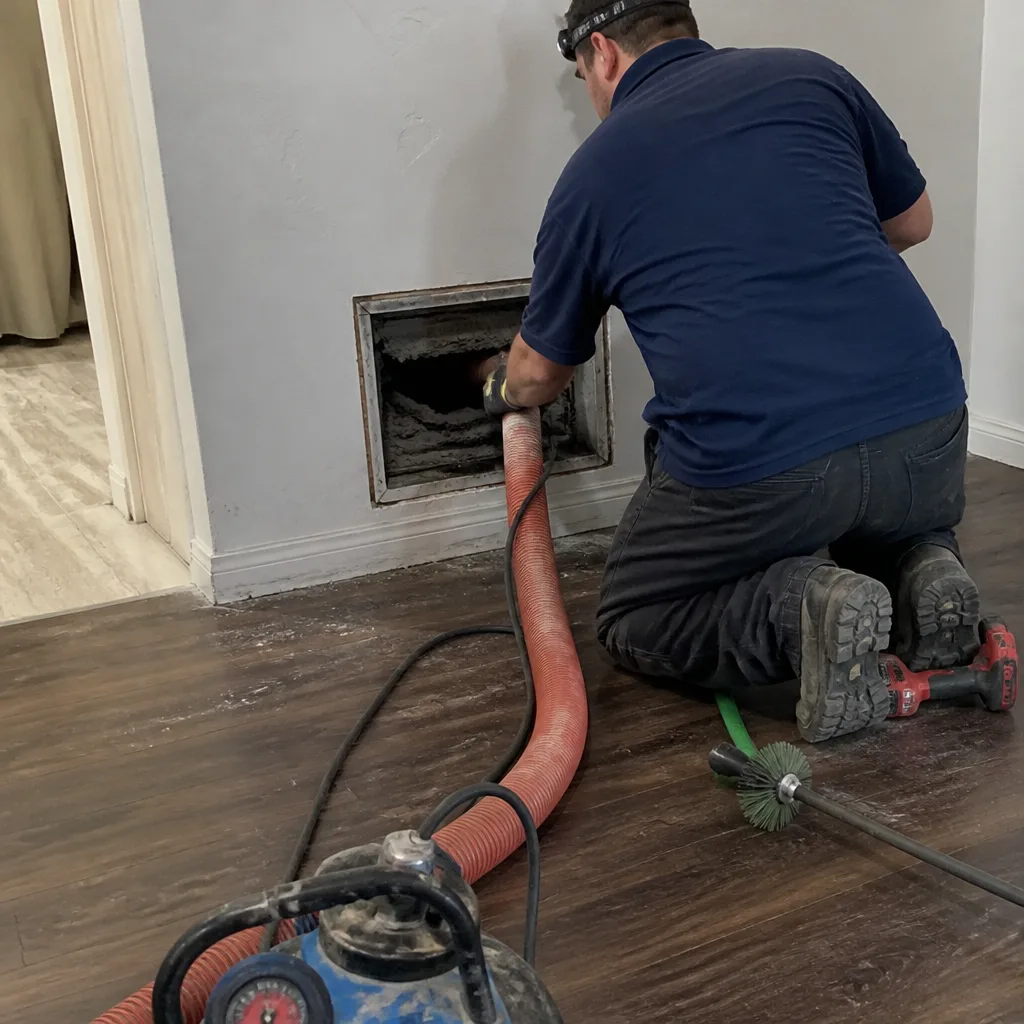 Before
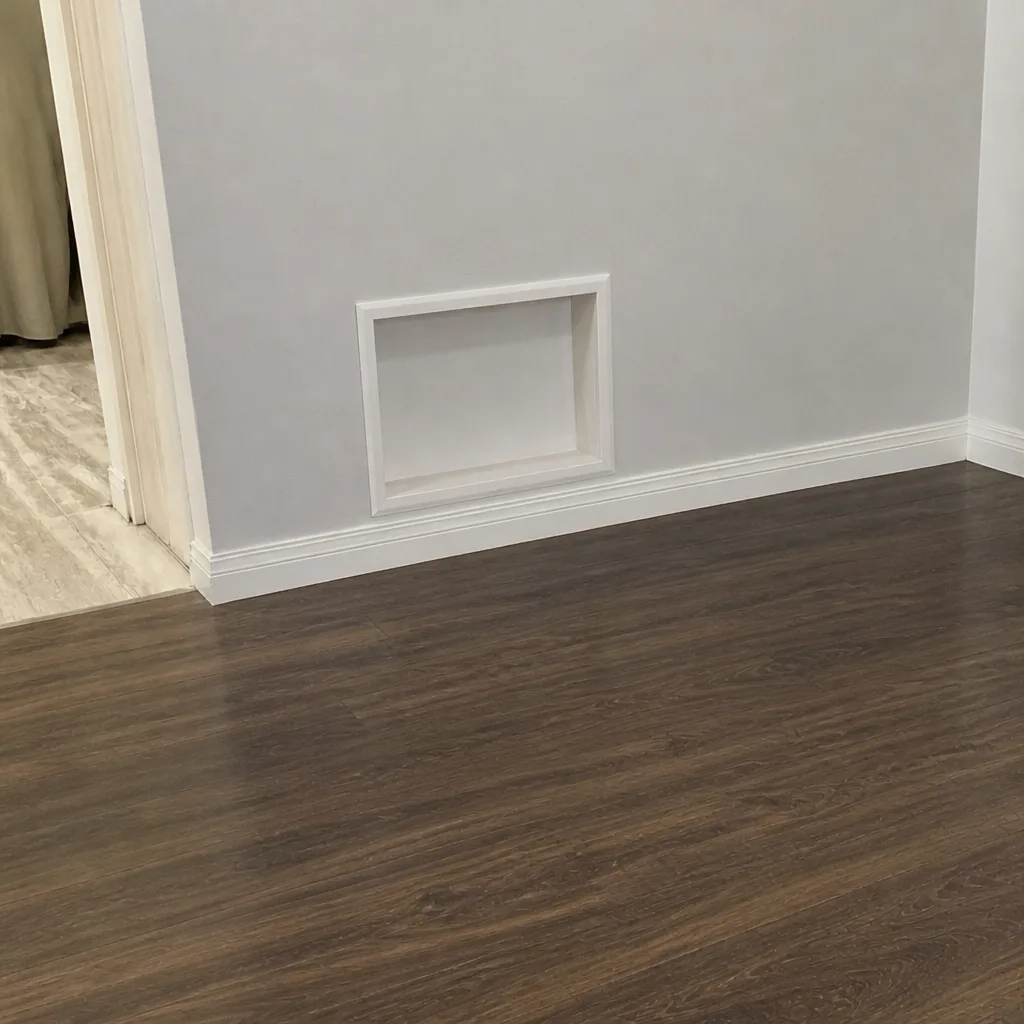 After
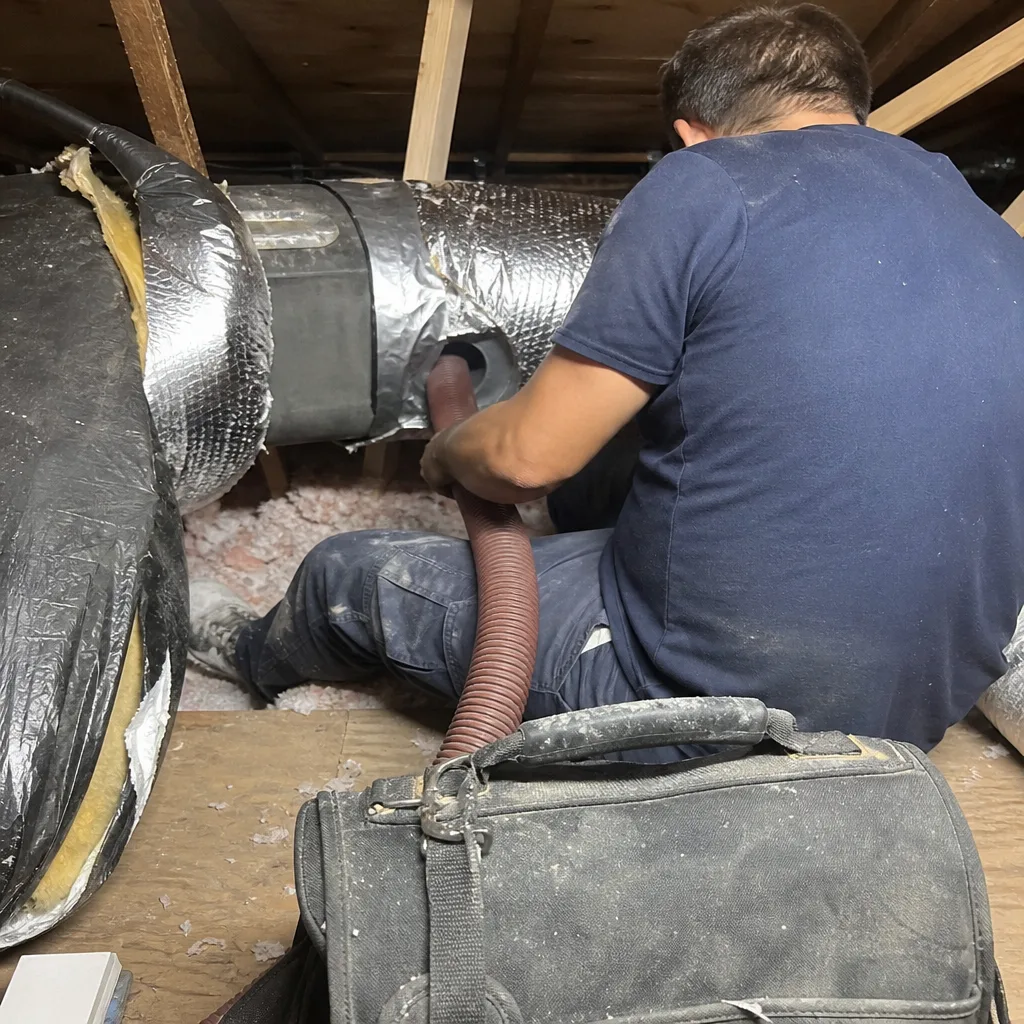 Before
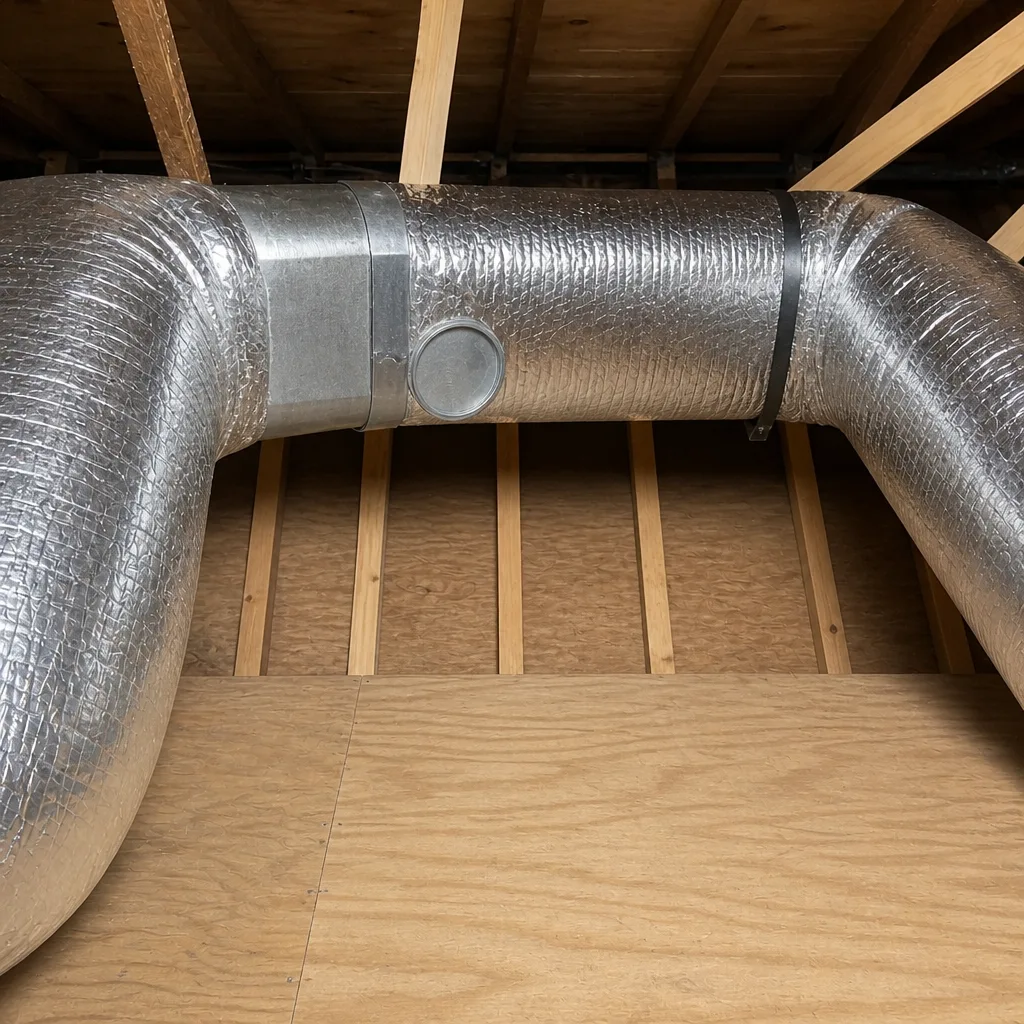 After
 Before
 After
Common Mistakes to Avoid
- Treating the 90-day filter rule as gospel. In St. Petersburg, your real interval depends on pollen, pets, and renovation activity. Let your log tell you when to change it, not a generic number.
- Ignoring the smell. A musty return smell is a moisture and contamination signal, not something a stronger filter will fix. Log it and act on it.
- Skipping the photos. Without dated photos, you have no way to know whether your ducts are getting better or worse year over year. Your memory isn’t a maintenance record.
- Choosing a cleaner on price alone. The lowest quote is frequently a per-vent teaser that grows once the technician is inside. Agree on a flat price per system in writing before any work begins.
- Not asking for before-and-after photos of your own ducts. Stock photos aren’t proof. Your photos are.
- Cleaning when the real problem is a repair. A loose connection or a damaged run will undo a cleaning in weeks. Find out whether the ducts are structurally sound before you decide cleaning alone is the answer.
- Ignoring the dryer vent. It’s part of the same air system in your home and a fire-prevention concern, not a cleaning afterthought. If you haven’t looked at it in a year, add it to the checklist.
When to Call a Professional
Call when evidence crosses a threshold: visible settled debris in more than one run, a musty return smell that filters don’t fix, a filter interval that keeps shrinking, a recent renovation, a new home without records, a new baby or an allergy diagnosis, or visible duct damage. Any of these warrants a professional evaluation, and a proper evaluation comes with a written assessment, not just a quote. If the report points to cleaning, ask for a flat price per system before work starts. If it points to repair, ask whether the company can do it, because a cleaning-only company will clean around the problem. A home that has been tracking these checkpoints is in a much stronger position to know exactly what it needs. Shield Air Duct Cleaning offers free estimates in St. Petersburg – call (855) 967-4983.
Frequently Asked Questions
There’s no single interval that fits every home. In St. Petersburg, the right time is driven by conditions: how fast filters load, whether there’s a persistent smell, whether there’s been a renovation, and whether the home has pets or allergy concerns. Track those checkpoints and let the evidence tell you when to schedule. A fixed calendar is a starting point, not a rule.
The cheap quote is often a per-vent teaser price that grows once the technician is on site, and the cleaning behind it is often a surface pass with a consumer-grade vacuum. A professional job uses professional-grade equipment and agrees on a flat price per system before work starts. If a quote can’t be explained as a flat price for the whole system, ask why before you book. Call (855) 967-4983 for an exact quote – estimates are free.
Ask for before-and-after photos of your own ducts, not stock images, and do a quick visual inspection yourself once the crew is gone. Look at the register interiors, the return, and the air handler area. Then update your log with dated photos. If the ducts don’t look genuinely clean and the smell hasn’t changed, call the company back and ask them to stand behind the work. Call (855) 967-4983 for an exact quote – estimates are free.
It can help when the ducts are actually part of the problem – settled debris, contamination, or a compromised duct moving material into the living space. A proper cleaning and, where needed, a filtration review can reduce what’s circulating. It isn’t a substitute for medical advice, and if the ducts aren’t the issue, cleaning them won’t fix it. An evaluation tells you which situation you’re in.
Cleaning addresses what’s inside the ducts; repair addresses the structure of the duct system itself, which matters when a connection is loose or a run is damaged; dryer vent cleaning is a separate service focused on fire prevention and dryer efficiency. All three are part of the same air system in your home, which is why one company that handles all three makes the checklist simpler. You can read more about the air duct cleaning side of the service and the dryer vent cleaning side separately.
A new home purchase is one of the strongest reasons to schedule an evaluation, because you have no service history and no idea what the ducts have been through. An evaluation with a written assessment gives you a baseline, and you can start your own log from there. If you’re new to the area, this is also a good time to read up on how the St. Petersburg climate affects air systems.
The Bottom Line
A maintenance checklist worth keeping is a tracking system, not a calendar. In St. Petersburg, the variables that matter – pollen load, humidity, pets, renovations, and the age of your ductwork – change the answer every year. Check filters on a real schedule, look and smell at the registers and return monthly, photograph everything, and act when a threshold is crossed rather than when a website says it’s time. When you do call, agree on a flat price per system, ask for before-and-after photos of your own ducts, and verify the work yourself. That’s how you know your ducts are protecting your household instead of quietly working against it.
We clean it. We repair it. We protect it. Our technicians have up to 12 years of experience, and we use professional-grade Rotobrush and Nikro systems on every job. If your checklist is pointing toward a professional evaluation, call (855) 967-4983 for a free estimate. We answer 24/7. Fast dispatch, 7am-7pm, Sunday through Friday.
Written by the team at Shield Air Duct Cleaning.