
Last updated November 15, 2026
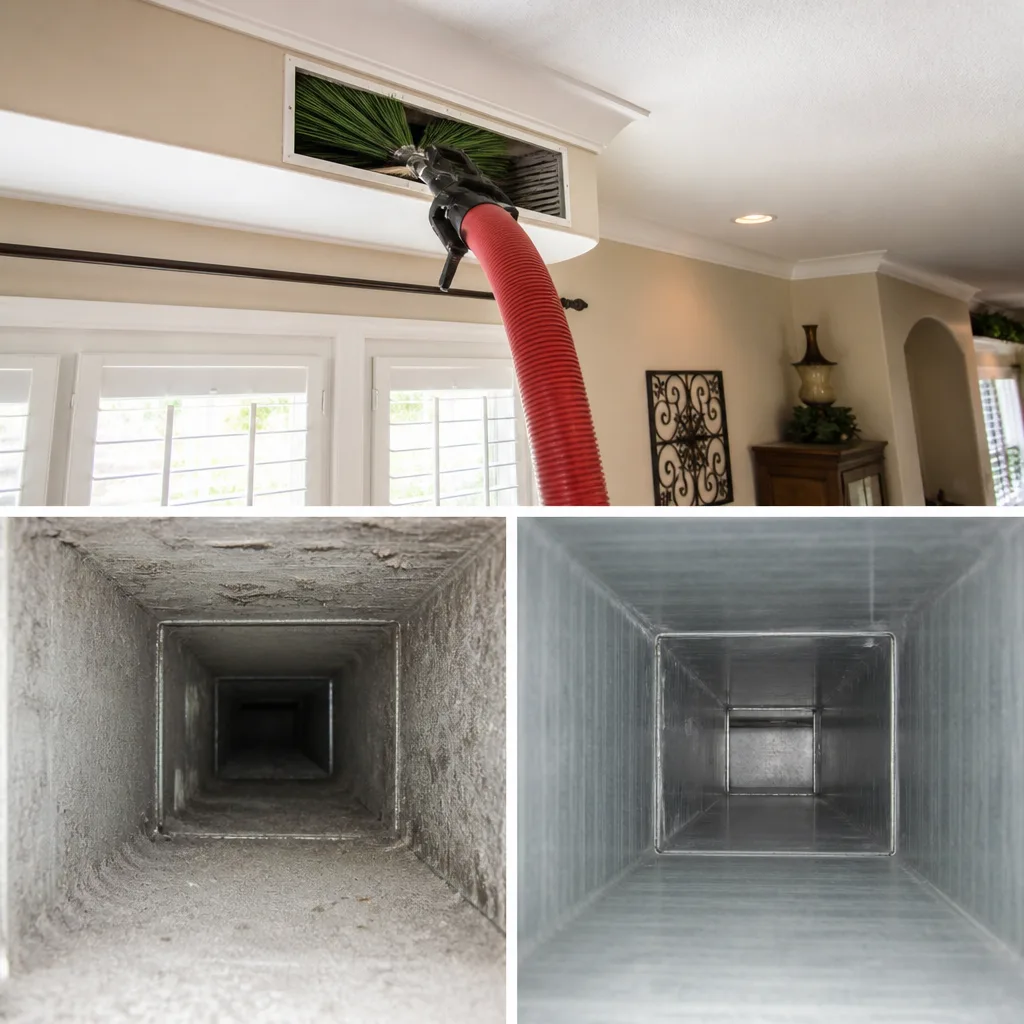 Whole-home duct cleaning
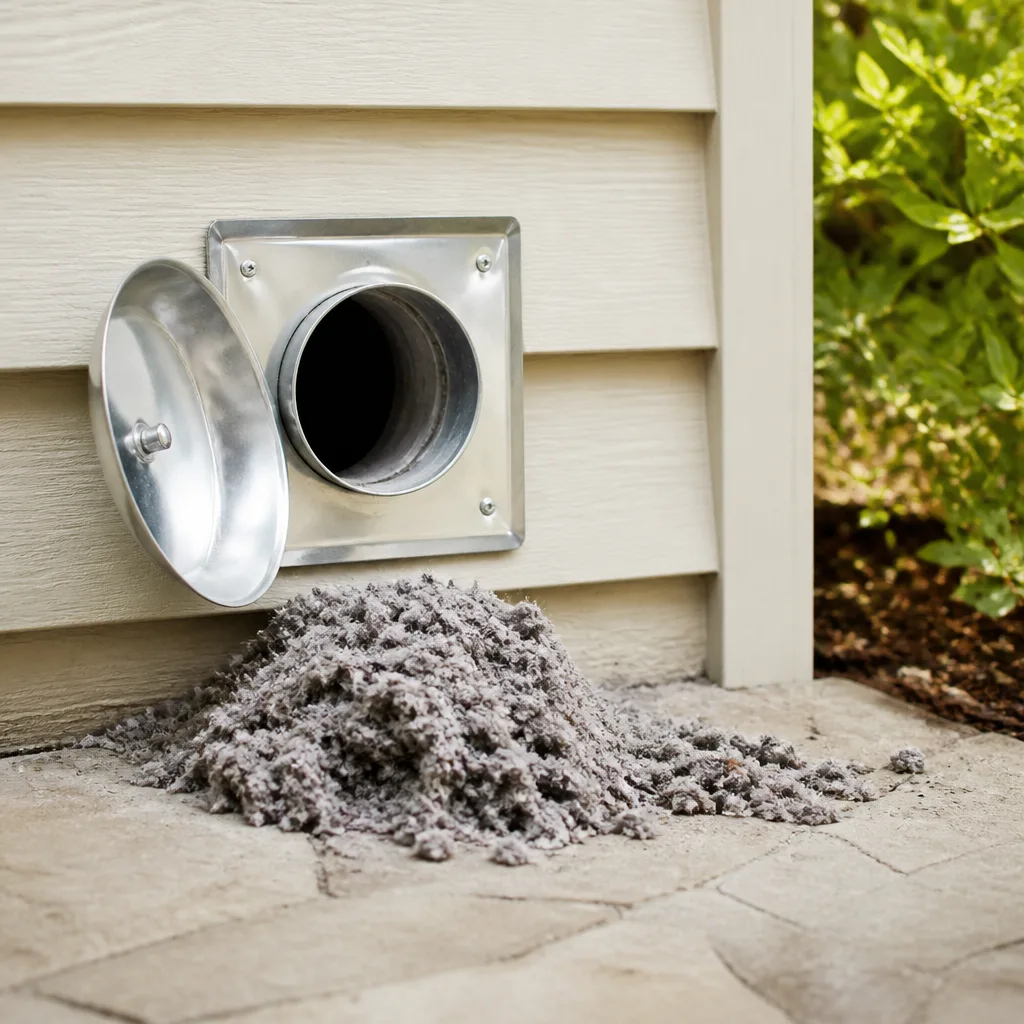 Dryer vent cleaning
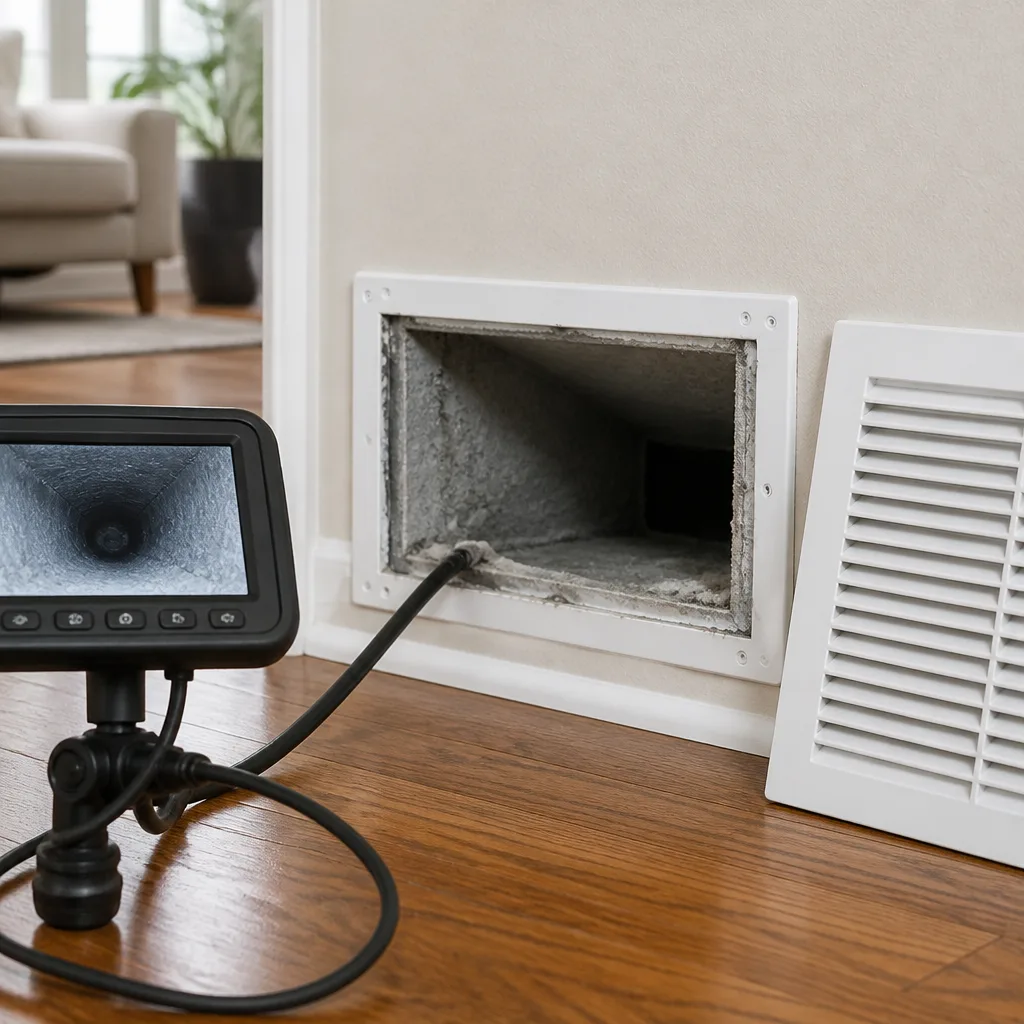 Camera inspection
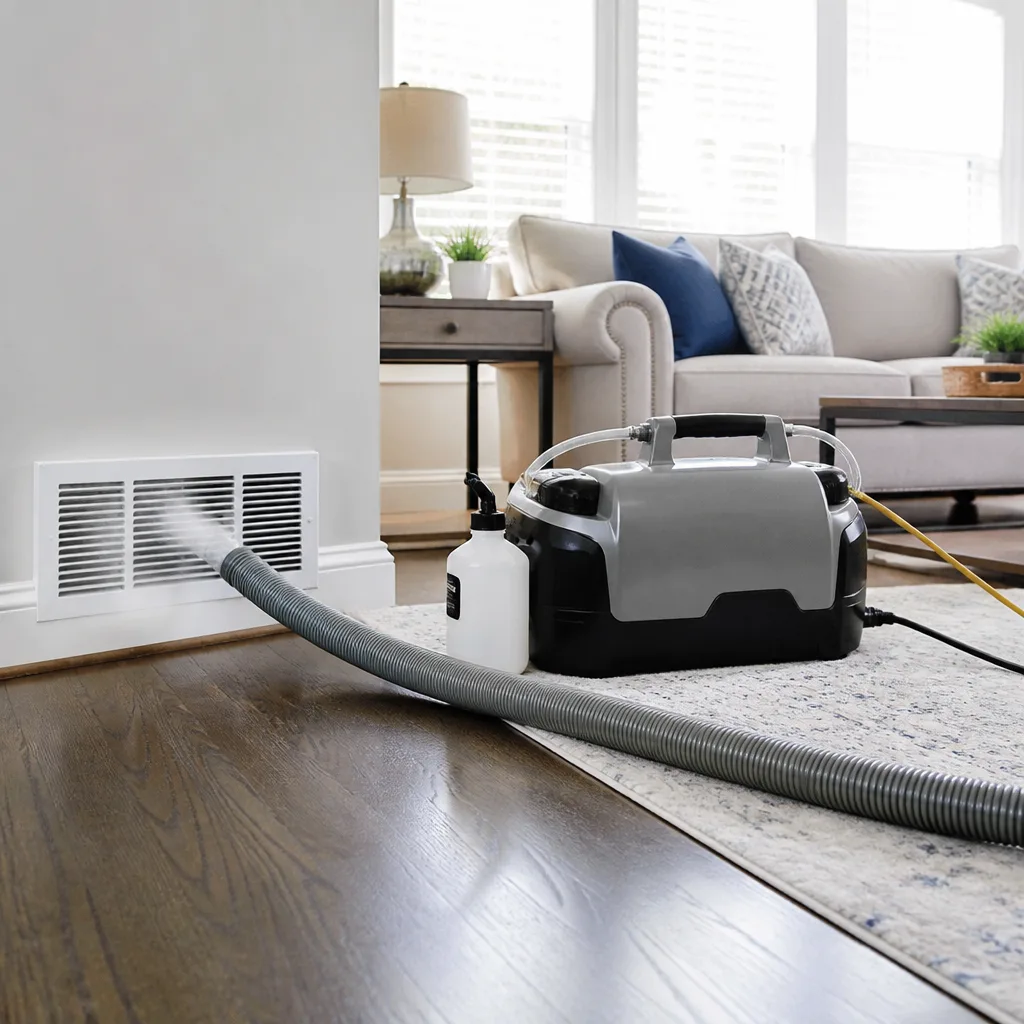 Sanitizing & deodorizing
Whole-system duct and dryer vent check with before-and-after photos - you see exactly what came out of your vents
That "$99 whole-house special" is a bait ad - the real number appears once they are in your hallway, or the "clean" is a shop-vac at the register. We photograph the inside of your ducts before and after instead.
Seasonal Air Duct Cleaning Care for St. Petersburg: Year-Round Homeowner’s Guide
Most homeowners here set a duct cleaning reminder for “every three to five years” and never think about which month it lands in. That habit assumes four seasons. St. Petersburg doesn’t really have four. It has a long humid stretch from May through October when your system pulls damp air across every coil and duct surface, and a drier winter run that changes what accumulates and how. Ducts cleaned in September, after a full Florida summer, carry a completely different contamination load than ducts cleaned in February. In this guide we’ll walk through what actually happens inside your ductwork month by month, when to prepare, when to clean, and what to do after a tropical storm pushes through.
Quick Answer
The best time for a deep duct cleaning in St. Petersburg is late fall through early winter (November to January), when humidity drops and dust that settled over the summer can be removed before it gets stirred up again. If you missed that window, April and May are the second-best slot because you’re cleaning ahead of peak humidity rather than after it. Homes with allergies, recent renovations, or new purchases should clean on condition, not on a calendar.
Styles & brands we work with
- Whole-home duct cleaning
- Dryer vent cleaning
- Camera inspection
- Sanitizing & deodorizing
Table of Contents
- Why St. Petersburg Has Two Duct Seasons, Not Four
- Inside Your Ducts During the Rainy Season
- The Pre-Summer Prep Sequence (April-May)
- The Dry Stretch: Best Window for Deep Cleaning
- Pollen Season Overlap: Oak and Pine in Your Ducts
- Post-Hurricane and Tropical Storm Protocol
- Filter Timing and IAQ Accessories
- Building a Year-Round Schedule
Why St. Petersburg Has Two Duct Seasons, Not Four
Generic duct maintenance advice is written for a climate that gets a hard freeze. When a house in Chicago runs its furnace November through March, dry heated air moves through the ducts at a steady pace and keeps interior surfaces relatively dry. When a house in St. Petersburg runs its air handler through an eight-month cooling season, the duct interior becomes a condensation surface as much as an airflow path. That’s the difference that should drive your schedule.
Here’s how the two seasons actually behave:
- Humid season (May-October): Warm, moisture-loaded return air meets cold evaporator coils and cold flex duct walls. Condensation forms on interior surfaces. That moisture reactivates settled dust and gives mold spores the conditions they need to colonize. Flex duct with even a small tear or a loose boot becomes a gathering point rather than a passageway.
- Dry stretch (November-April): Ambient humidity drops, condensation stops, and previously damp debris dries into a fine static dust layer. That dust consolidates and gets redistributed into the living space the moment you turn the system back on in spring.
Two seasons. Not four. That means two maintenance windows that matter and one that mostly doesn’t. If your reminder app says “clean ducts every three years,” you’re likely cleaning at the wrong time of year regardless of how many years pass. What matters is which season you’re cleaning after, not just how long it’s been.
We see this in houses near the waterfront in Old Northeast as clearly as we do in the newer builds out toward the Gateway area – the timing question is the same, but the condition of the ductwork differs. Older homes in St. Petersburg frequently run rigid metal trunk lines with flex branches, and that mix behaves differently in humidity than a fully flexed system does.
Inside Your Ducts During the Rainy Season
The rainy season from May through October is the highest-risk window for a duct system in St. Petersburg. Not because anything dramatic happens, but because a chain of small, cumulative conditions builds up over five or six months. Understanding the chain matters more than any single cleaning recommendation.
Condensation cycling
When the AC runs hard in July, cool air inside the supply ducts meets warm humid attic air through any uninsulated joint. A small amount of condensation forms on the interior cold surfaces. When the system cycles off, that moisture has nowhere to go. Over a summer of run-and-stop cycles, damp patches come and go on the same ducts dozens of times weekly.
Spore activation
Dust sitting in a dry duct is largely inert. Dust sitting in a damp duct is a growth medium. The moment interior humidity rises above the dry baseline, mold spores that were dormant on settled dust have a host. The ducts themselves may not visibly show it. But the particles getting pulled into the return are carrying biological load that wasn’t there in March.
Filter bypass
A filter only works if air actually passes through it. In a hot, high-load summer, static pressure in an undersized return can push air around the filter frame instead of through the filter media. The dust ends up in the blower compartment, the coil, and the downstream ducts. This is one reason we inspect the filter rack on every air duct cleaning visit and flag gaps at the edges of the filter, not just a dirty filter face.
Flex duct weaknesses
Flexible duct runs in attic installations are vulnerable to sagging, kinks, and rest on rough surfaces. A sag collects moisture and debris in the low point. That’s a repair question as much as a cleaning question, and it’s why we bring Rotobrush and Nikro equipment on every job – the equipment reaches inside the run, but our eyes are on the duct’s physical condition at the same time.
None of this happens in a dramatic event. It’s slow accumulation. That’s exactly why calendar-based duct cleaning written for other climates misses it.
The Pre-Summer Prep Sequence (April-May)
April and May are the narrow window where you can prepare a St. Petersburg home for the humidity that arrives in June. This isn’t the only time to clean ducts – it’s the best time to prevent. If the system hasn’t been serviced since last year, the sequence below reduces how much contamination accumulates over the summer.
- Inspect the filter rack for bypass. Remove the filter and look at the edges of the frame. Gaps, warped flanges, or a filter that sits loose in its slot are allowing unfiltered air past. Seal the frame or replace the filter with the correct dimensions before the cooling season starts.
- Check flex duct in the attic for sag and kinks. A sagging run traps moisture. A kinked run strangles airflow and drives up static pressure, which makes filter bypass worse. Correct the physical problem before cleaning.
- Clean ducts if it’s warranted for condition, not schedule. If you haven’t cleaned in several years, or the home just had a renovation, this is the window. Cleaning now means the system starts the humid season without a settled dust base for spores to activate against.
- Verify IAQ accessories are working. Whole-home filters and media cabinets from Honeywell and Aprilaire need filter changes and occasionally need a media bypass check. An accessory that’s not doing its job is worse than no accessory at all because it creates false confidence.
- Book the cleaning before the peak-season crunch. Demand for duct work in St. Petersburg spikes in June and July when people turn the system on and notice an odor. Getting ahead of the rush means a more thorough inspection, not a rushed one.
This sequence takes a homeowner maybe ninety minutes if nothing needs repair, and it converts one deep cleaning into a season of reduced load. That’s the trade. If you do the April window right, you can push your next deep cleaning out an extra year compared to cleaning after a full summer of accumulated contamination.
The Dry Stretch: Best Window for Deep Cleaning
The November through January window is when the humidity drops enough that condensation stops and dust dries out. That’s both why it feels less urgent and why it’s the right moment to act. Ducts cleaned in February – after two or three months of dry accumulation – enter spring clean. Ducts cleaned in September bring last summer’s moisture and biological load forward.
Here’s the practical difference between the two cleaning types so you know what to book:
- Deep cleaning (November-December): Full contact cleaning of all supply and return runs, boot cavities, and the air handler compartment. Uses professional equipment with negative-pressure containment where needed – which is where Abatement Technologies systems come in for homes with elevated contamination.
- Touch-up cleaning (February-March): Lighter cleaning focused on the return plenum and accessible branch runs. Appropriate for homes that were deep-cleaned in the fall but had a renovation during the winter.
- Post-summer catch-up (September-October): Cleaning the humid season’s accumulation. Less optimal than the November window because you’re cleaning after the damage window has already closed, but far better than waiting to next spring.
One thing that surprises homeowners: ducts that sat idle through the dry stretch can look worse than ducts that ran all summer. Dust that settles in a non-moving air column consolidates into a hard film on the duct walls. That film lifts when the system comes back on in March and gets pushed into the living space in one concentrated load rather than a steady trickle. If you notice a burst of dust on the first cool-ish day of spring, that’s what you’re seeing.
Pollen Season Overlap: Oak and Pine in Your Ducts
February through April brings a pollen load that coastal Florida duct systems handle differently than systems in other regions. Oak and pine pollen both matter, but they behave differently once they’re pulled into the return:
- Oak pollen is small and dry and stays airborne longer. It passes through most standard filter media relatively easily when airflow is high, and settles in the return plenum and drop ducts where velocity is low.
- Pine pollen is larger and coats surfaces as a visible yellow film. It tends to stick to the return grille and the inside of the filter box more than it travels deep into supply runs. When it gets wet, it can clump and slow airflow through the filter media.
The practical implication: if your filter is loading heavily during February-April, replace it more often, and don’t be surprised if the filter box itself looks worse than the filter face. Pollen that bypassed the filter during a heavy load week sometimes sits on the inside of the return plenum where the homeowner can’t see it. That’s a reason we pull return grilles and inspect the plenum on any spring cleaning call, not just the ducts themselves.
Pollen season also overlaps with the last weeks of the dry stretch, so a February or early March cleaning catches both pollen accumulation and the winter dust film in one visit. For homeowners in dense tree canopy neighborhoods around Crescent Lake or the Old Southeast, this timing tends to pay off – the local pollen load is heavier than what a build on cleared land sees.
One caution that’s easy to miss: a new high-MERV filter installed mid-pollen season can restrict airflow enough to drive up static pressure and worsen filter bypass at the frame. Match the filter to what the blower can move, not to the highest number on the box.
Post-Hurricane and Tropical Storm Protocol
Hurricane season runs June through November and overlaps the entire humid window. When a storm threatens or passes near St. Petersburg, the duct system in your home can be affected in ways that aren’t visible when you walk back in. The protocol for a home that experienced a tropical storm is different from the standard cleaning schedule.
What to check first
- Visual inspection of the air handler and attic duct runs. Look for water staining, disconnected flex joints, and displaced insulation. A storm doesn’t have to breach the roof to move attic air around; pressure changes can shake loose connections.
- Filter check immediately after the storm. If a window was open during the storm or if the system ran during power instability, the filter may need replacing regardless of how recently it was changed.
- Odor and moisture test. Turn the system on and pay attention to whether the supply air smells musty. If it does, moisture has entered somewhere in the run and needs to be found before more biological growth takes hold.
- Contractor-grade inspection if there’s been any roof or exterior work nearby. Construction dust is fine and silica-loaded and travels into the return more easily than household dust. Ducts in homes near active rebuilds benefit from cleaning at the end of the work, not before.
When to call for cleaning after a storm
If the home had any moisture intrusion, visible water damage, or hours of open windows during wind-driven rain, schedule cleaning before the next cooling cycle runs continuously. The combination of residual moisture and a running system is what turns a small problem into a full contamination issue. This is exactly the situation where Abatement Technologies negative-air equipment matters – it holds the working environment contained so cleaning doesn’t redistribute the load through the house.
If the home was closed up and undamaged through the storm, cleaning can wait for the normal autumn window. Storm protocol is about moisture, not about wind.
Filter Timing and IAQ Accessories
Filter timing in St. Petersburg shouldn’t be a fixed “change every ninety days” rule. It should track the two seasons and the events within them.
- May: Fresh filter installed for the humid season. Check that it sits tight in the rack.
- July-August: Mid-season filter check. Heavy cooling loads and high pollen residues from spring both load the media faster than the rest of the year.
- October: Replace before the dry stretch to start the next window clean.
- February: Fresh filter for pollen season. Highest-load weeks of the year often land here.
- After any storm, renovation, or extended vacancy: Replace on condition rather than calendar.
Whole-home IAQ accessories change the equation. A media cabinet filter from Honeywell or Aprilaire captures far more than a 1-inch filter slot without the same airflow restriction, but it only performs if the cabinet is sealed and the filter is changed when it loads. We’ve found homes where the media cabinet hadn’t been opened in years because the homeowner didn’t know it existed. That’s a maintenance gap, not a cleaning gap.
Our technicians have up to 12 years of experience with these systems, and the reason it matters is that we’re looking at your ductwork and your filter infrastructure as one system. When we quote a job, the estimate reflects the whole system, and the written estimate sets the final price before any work starts.
Building a Year-Round Schedule
Here’s the schedule we recommend to homeowners in St. Petersburg based on the two-season reality. This isn’t a rigid calendar – it’s the rhythm that matches what the climate is actually doing.
- January: Deep clean if you didn’t hit the November-December window. Catch-up deep cleaning still beats waiting.
- February: Filter change for pollen season; return plenum inspection if pollen load was heavy last year.
- April-May: Pre-summer prep sequence. Filter rack check, flex duct visual, IAQ accessory verification, book cleaning if warranted by condition.
- July-August: Filter check. No cleaning unless there’s been a storm or renovation.
- September-October: Post-summer evaluation. If the system’s been running without a mid-season filter change, clean now rather than waiting.
- Any hurricane or tropical storm passage: Storm protocol inspection before the system runs continuously again.
The reason to build your schedule around these anchors is that discount cleaners who pitch a flat interval don’t take seasonal risk into account. Every quarter of the year in St. Petersburg creates a different load profile in the ductwork, and the cleaning schedule should reflect that. When we assess a home in Shore Acres or out in the Disston Heights area, the first question we ask is which cleaning window the system last ran through – not which year it was last cleaned.
We clean it. We repair it. We protect it. That scope is exactly why a seasonal approach makes sense: cleaning without attention to the physical duct condition is a line item; cleaning plus inspection plus necessary duct repair is protection. The three-service scope – cleaning, dryer vent work, and structural repair – also means one call covers related air-system work rather than juggling contractors.
Common Mistakes to Avoid
- Cleaning in September after a full summer as the standard schedule. You’re cleaning the humid season’s accumulation after it’s already happened, rather than preventing it. The best window is late fall or early spring, not right after peak humidity.
- Trusting the “$49 whole house” pitch as a baseline. A low teaser price rarely reflects the real scope of a proper system-wide cleaning with professional equipment. Ask what’s actually included, what equipment is being used, and what the final price will be before anyone starts.
- Assuming a high-MERV filter is always better. A filter that restricts airflow beyond what the blower can move causes filter bypass and drives contamination downstream. Match the filter to the system, especially in a home with an older air handler.
- Skipping the flex duct inspection because the ducts “looked clean.” The most common problem we find is a sag or kink in the attic flex that traps moisture; the visible supply grilles can look fine while the run above them is loading up. Treated properly, that’s a repair; ignored, it becomes a recurring cleaning problem.
- Not running the system for months and then turning it on without a check. The dry stretch consolidates dust into a film that lifts in one burst on the first cool spring morning. A quick filter change and a visual before first run saves a much larger cleaning later.
- Opening the house during a tropical storm while the system runs. Even a brief window opening during wind-driven rain loads the return with moisture-laden air. Shut the system off and address it after the storm before resuming normal operation.
- Buying IAQ accessories and then never checking them. Media cabinets and whole-home filters get overlooked because they’re out of sight. Add an annual check to your calendar; the accessory is only as good as its last filter change.
See the difference
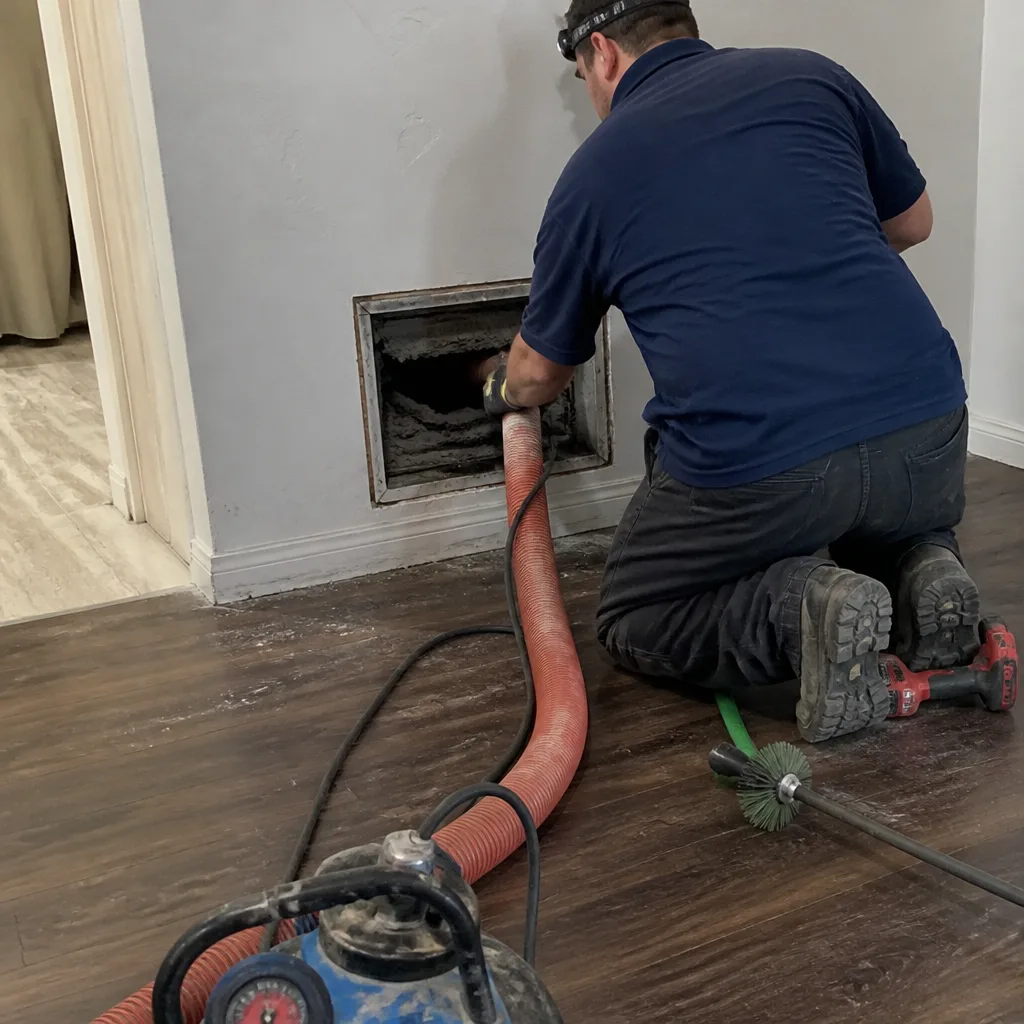 Before
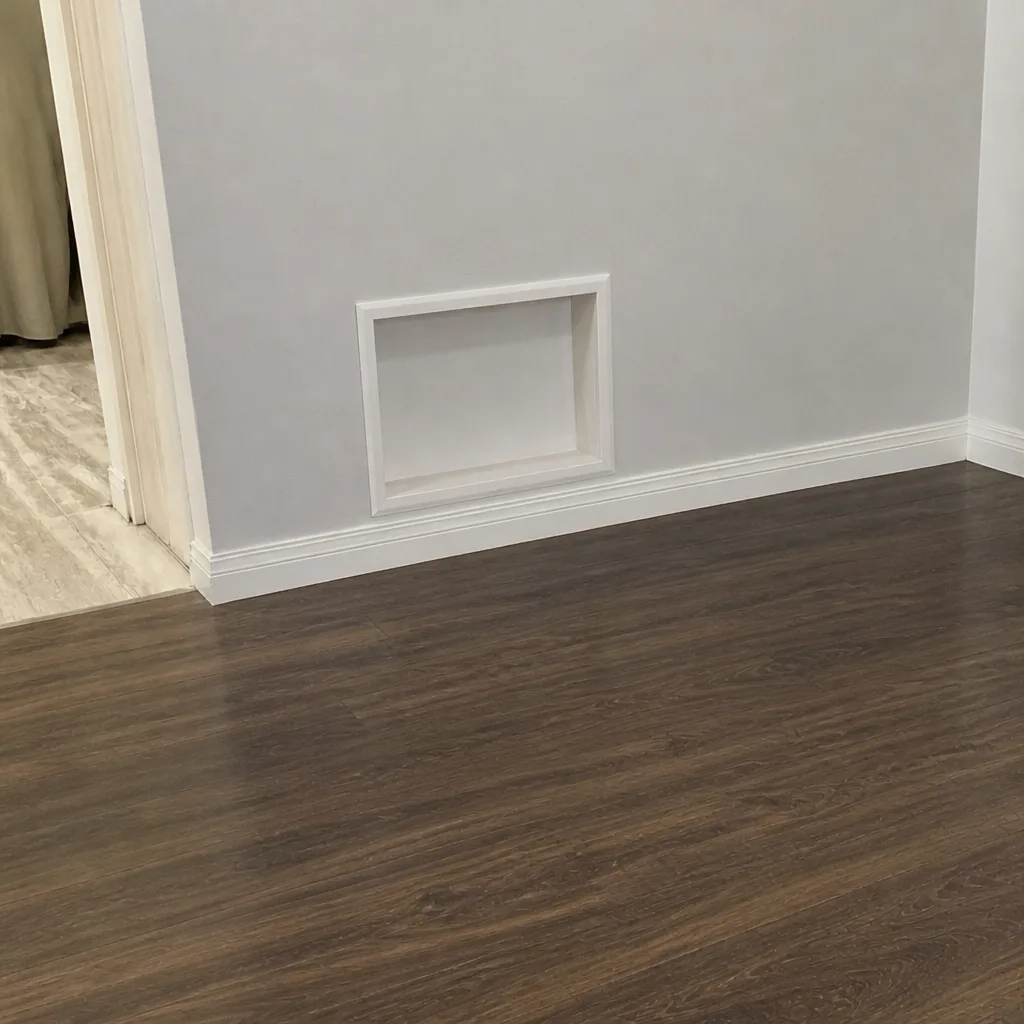 After
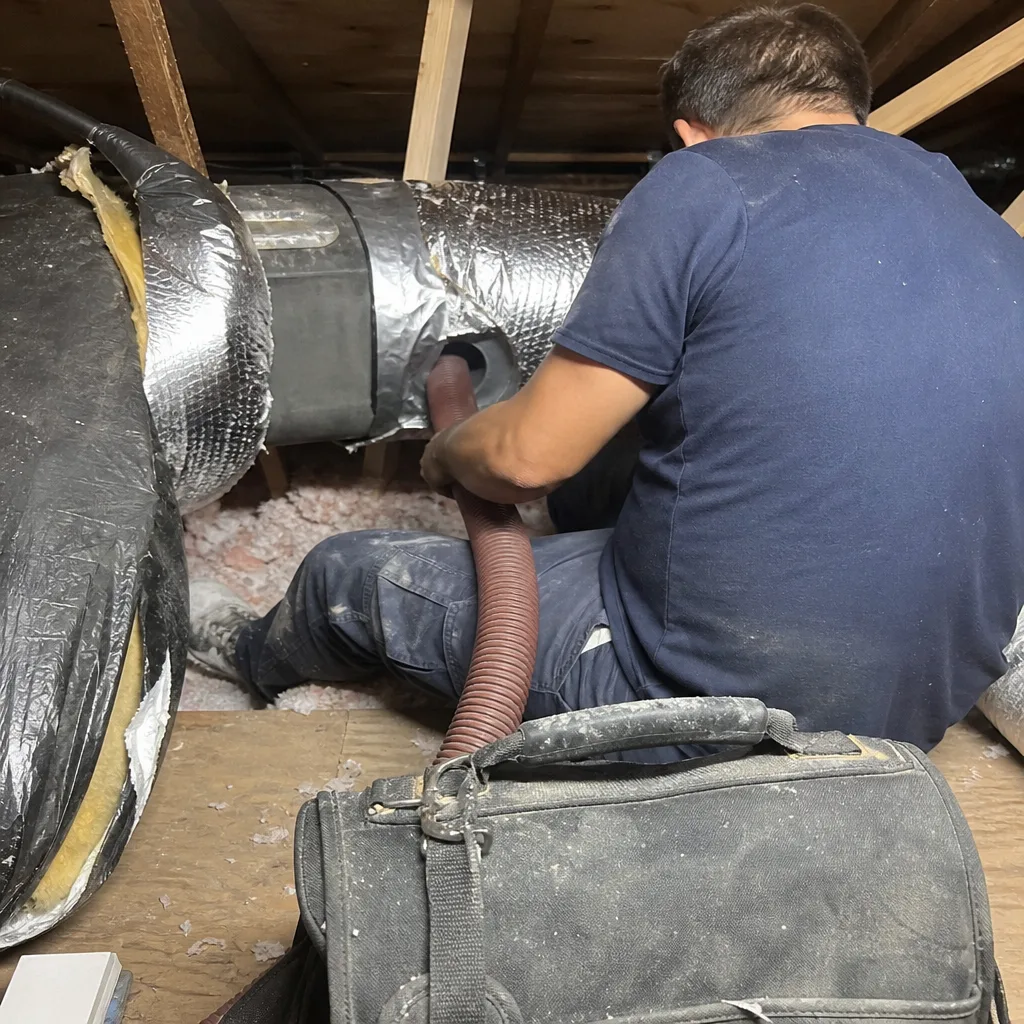 Before
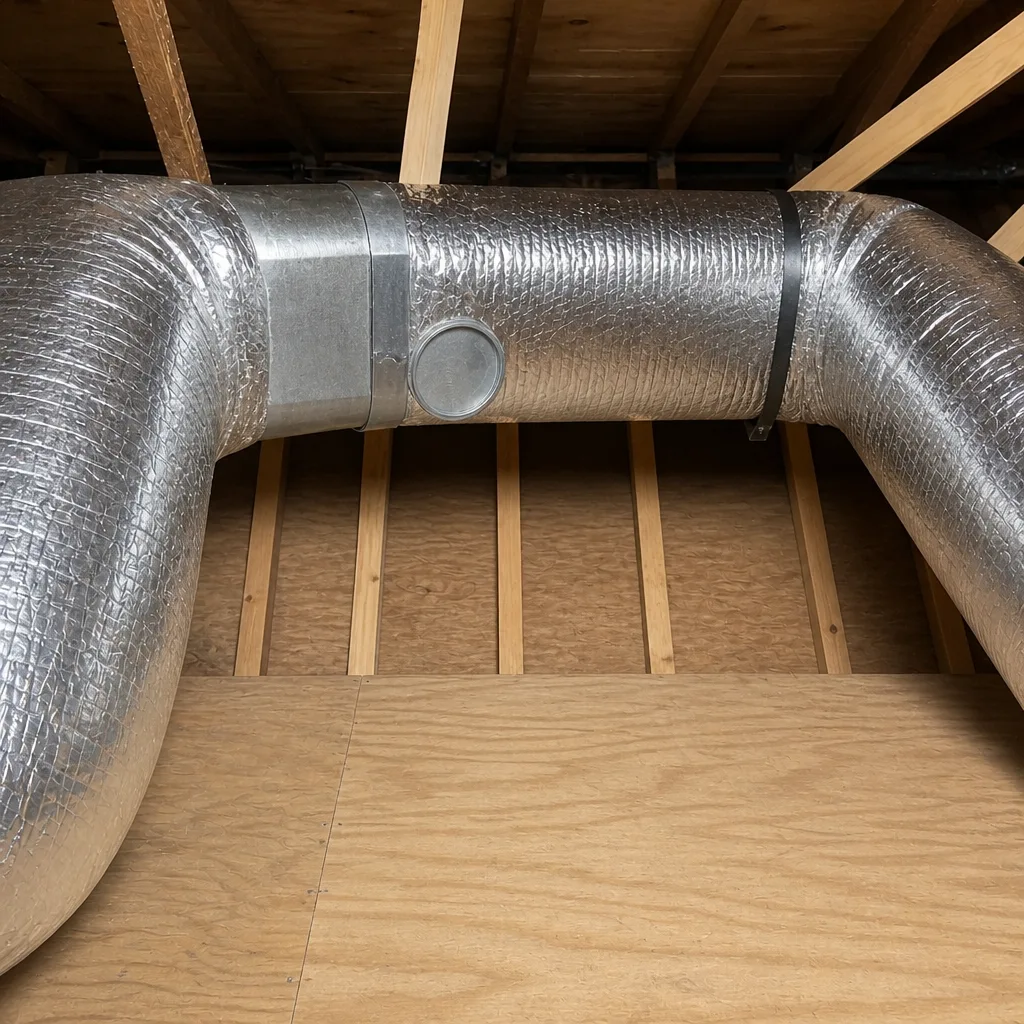 After
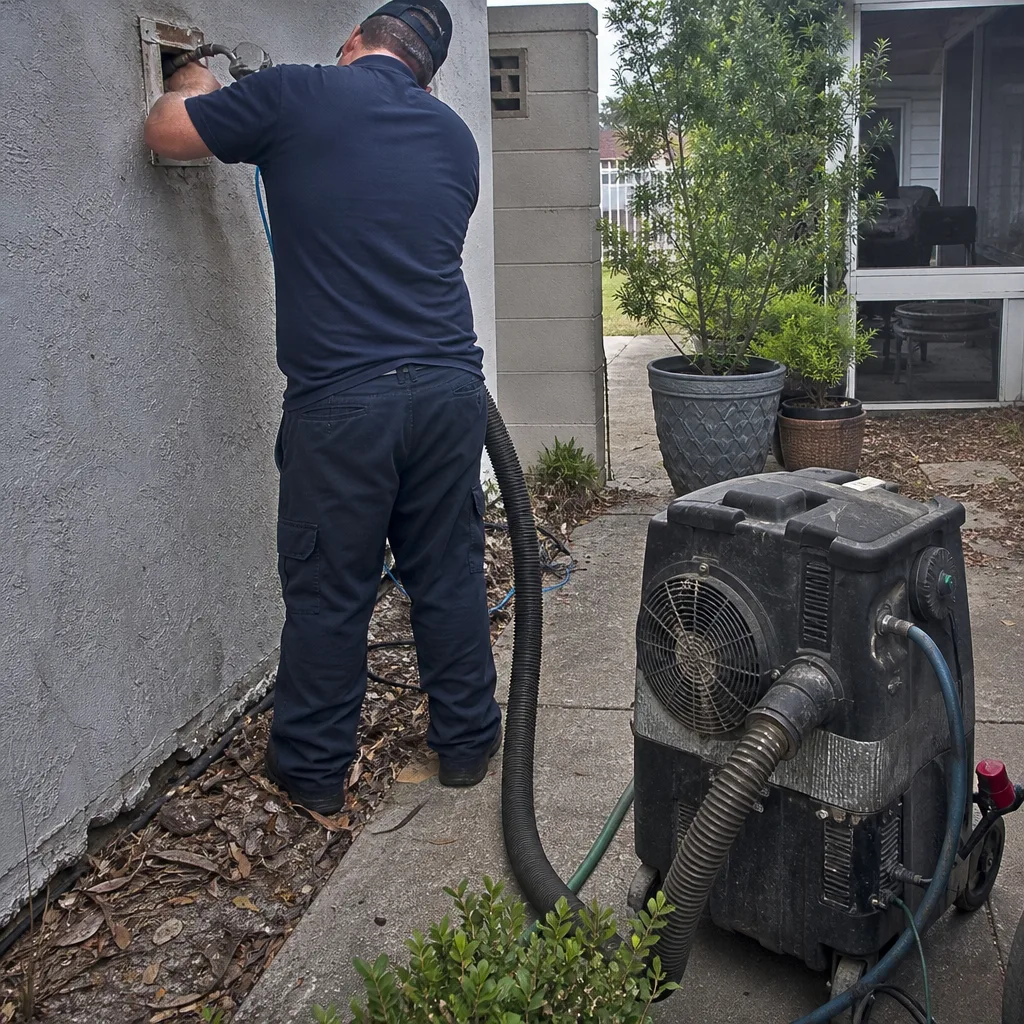 Before
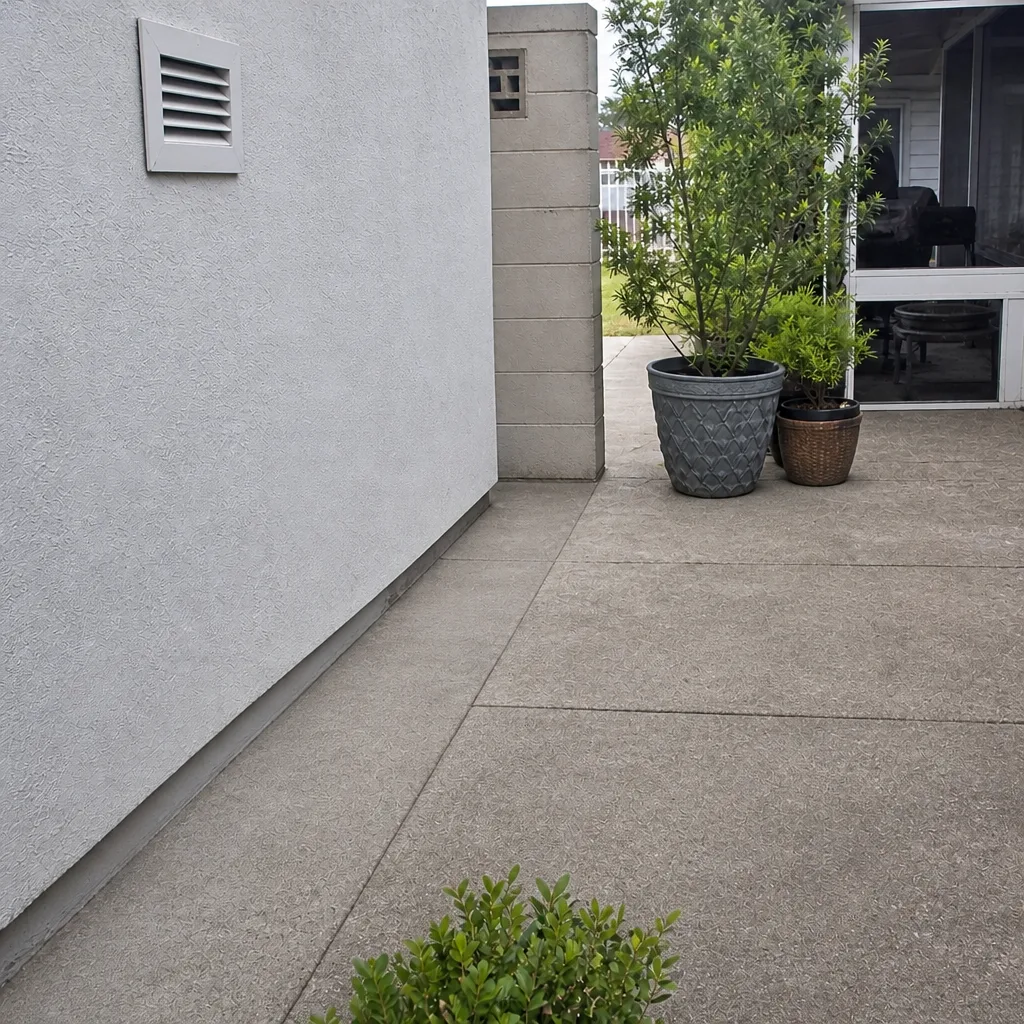 After
When to Call a Professional
There are a handful of situations in St. Petersburg where waiting for your next scheduled cleaning window is not the right call. If you smell a musty odor from the supply grilles, if you’ve had a storm with moisture intrusion, if you just finished a renovation or moved into a home you don’t know the history of, or if allergy symptoms in the household spike when the system runs, get an inspection. The same is true if you find flex duct disconnected in the attic or notice the filter rack is allowing air past the filter. Shield Air Duct Cleaning offers free estimates in St. Petersburg – call (855) 967-4983. We answer 24/7. Fast dispatch from 7am to 7pm, Sunday through Friday. Every job uses professional Rotobrush and Nikro equipment with Abatement Technologies systems for jobs needing HEPA-level containment, and every estimate is written before work starts so the price is set per job.
Frequently Asked Questions
Most St. Petersburg homes benefit from a deep cleaning every two to four years, with an annual filter check and a visual duct inspection. The exact interval depends on allergen sensitivity in the household, whether the home has had a renovation or a new purchase, and whether the system has run through the humid season without any catch-up maintenance. Homes with coastal vegetation nearby or residents with respiratory conditions may need cleaning more often.
Winter is better for a deep cleaning. The November through January window is when humidity drops, condensation stops, and dust that settled over the summer can be removed before spring redistribution. Summer cleaning is still useful and often necessary if there’s been a renovation or storm, but as a preventative maintenance timing, the dry stretch is more effective.
Cleaning during rainy season is sometimes the right answer – for example, if a home has just been occupied, renovated, or had moisture intrusion during a storm. The months between May and October are the highest-risk window for contamination, but cleaning during them is corrective rather than preventative. If you can pick the timing, late fall or early spring makes more sense.
The two-season pattern from the humidity cycle changes how contamination builds up. St. Petersburg’s long humid stretch creates interior condensation on duct surfaces that climates with hard freezes don’t experience, and the pollen window in February through April delivers oak and pine loads at the same time the dry stretch is ending. That timing overlap is local, and it’s why a generic interval-based cleaning schedule doesn’t fit well here.
Not necessarily. If the home was closed up and there was no moisture intrusion, storm cleaning can wait for the normal autumn window. If there was any water intrusion, extended window opening during wind-driven rain, or significant construction nearby, clean before the system runs continuously. Storm protocol is about moisture and construction load, not about wind alone.
Routine seasonal care – filter changes, visual inspection of the return plenum, checking flex duct in the attic – is something a homeowner can and should do. Deep cleaning of a duct system requires professional equipment like Rotobrush and Nikro systems and, for homes with elevated contamination, Abatement Technologies containment; a consumer vacuum doesn’t reach the full run and can redistribute contamination into the living space. Call (855) 967-4983 for an estimate and we’ll lay out what’s appropriate for your home’s condition. We answer 24/7.
The Bottom Line
St. Petersburg duct maintenance isn’t a yearly chore washed out by the calendar; it’s a two-season rhythm. Clean after the dry stretch consolidates dust in late fall or early winter, prep before the humid season in April and May, and treat storms as their own protocol. Match your filter timing to the pollen window and to the humid-season load, and don’t rely on a flat interval designed for a colder climate. If you’re not sure what condition your system is in, an inspection is a free first step. Our goal with any home is the same: protective care for the air, not just a clean duct. Written by the team at Shield Air Duct Cleaning.
When you’re ready to sort out the seasonal timing for your own home, we’re here. Shield Air Duct Cleaning handles air duct cleaning, dryer vent cleaning, and duct repair for homes across St. Petersburg. Call (855) 967-4983 for a free estimate. We answer 24/7. Fast dispatch from 7am to 7pm, Sunday through Friday.
Written by the team at Shield Air Duct Cleaning.